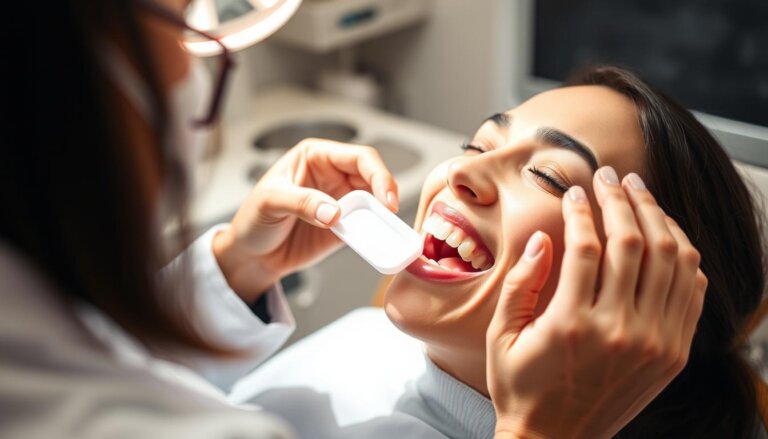
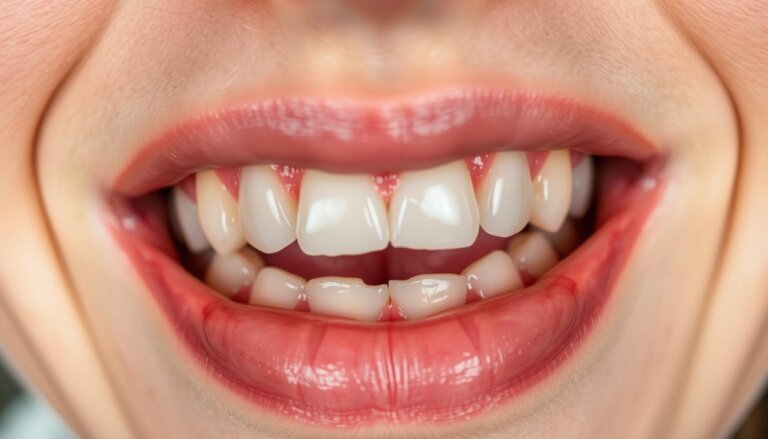
Does Teeth Whitening Damage Enamel?
Used as it’s intended to be used, professional teeth whitening does absolutely no damage to enamel. The peroxide gel works by altering the color of the stain within the tooth. It doesn’t sand, it doesn’t etch, it doesn’t dissolve the outer layer at all. What you might experience afterward is irritation rather than damage (a day or two of zingy sensitivity perhaps, a bit of white blanching on the gums), and that will go away.
Where the enamel actually gets damaged is through overuse and the internet’s favorite “home remedies”. If you’re thinking of going in for professional teeth whitening at our Upper East Side practice, here’s precisely what happens to your teeth and what you absolutely must avoid.
How does whitening work without removing enamel?
The two main ingredients doing the bulk of the work in professional whitening are hydrogen peroxide and carbamide peroxide (which turns into hydrogen peroxide when it’s wet; a 10% carbamide gel is roughly equivalent to 3.5% hydrogen peroxide). The in-office gels are much stronger (typically 25 to 40%), which is why they’re applied with the gums covered.
Peroxide is a very small molecule which diffuses right through the enamel to the dentin where it breaks down the colored compounds into smaller, lighter ones. The tooth therefore lightens from the inside.
Nothing is sanded off. That’s the key difference from simply scrubbing the stains away with an abrasive. Enamel is only a millimeter or two thick on most teeth, and once it’s gone, it’s gone for good; whitening is all about changing the color inside that shell without damaging or removing the shell itself.
Is sensitivity a sign of enamel damage?
It’s by far the most common question and the answer is no. Sensitivity arises because the peroxide travels down the tiny tubes in the dentin to the nerve and irritates it for a short time. What you’re going to feel is a brief, sharp zing with cold air or iced water, which will typically last for 24 to 48 hours following the in-office treatment. It’s the nerve being irritated, not the enamel actually being abraded. A lot of people feel nothing at all.
Your dentist can reduce the chances of it. One option is to use a desensitizing toothpaste containing potassium nitrate for a couple of weeks prior. Having shorter appointments or more spaced-out appointments if you’re prone to it is another option. Sensitivity after a cleaning is a whole different animal with a different set of causes; our post on sensitivity after a dental cleaning will go into that.
What do studies show about whitening and enamel?
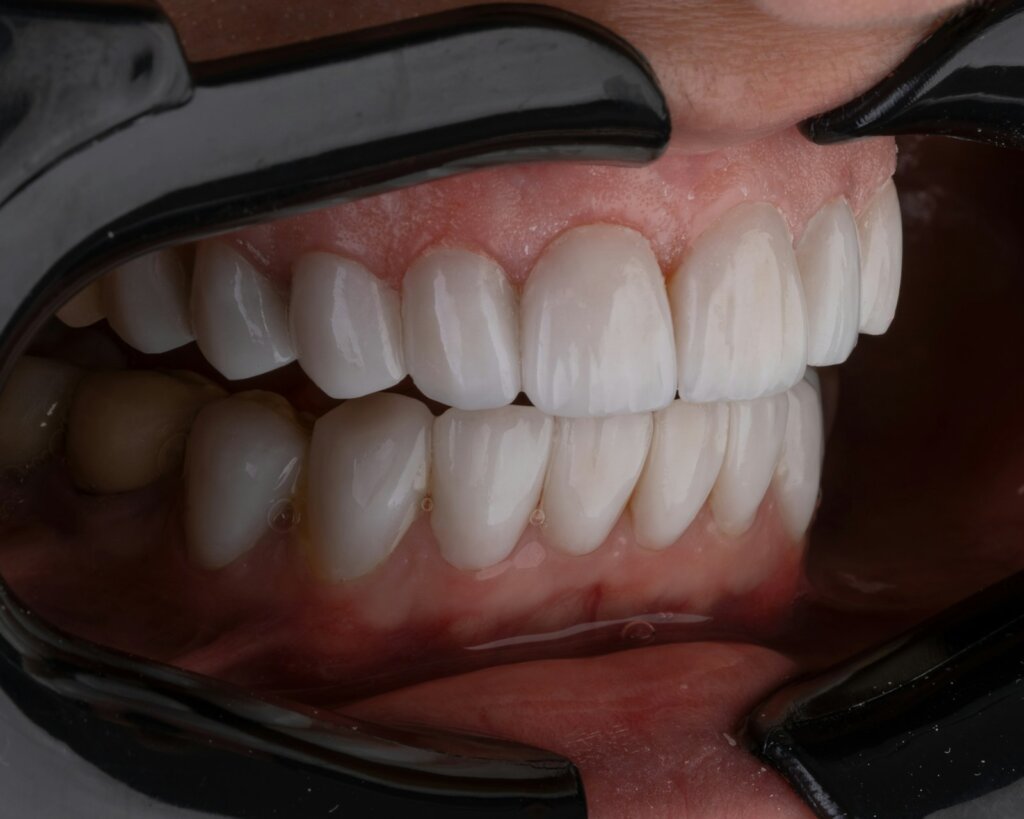
Dentists have been sending patients home with bleaching trays since 1989, so there’s a lot of data. The short answer is that on healthy teeth, used as directed, peroxide bleaching is considered safe.
The fine print is actually quite interesting. Some of the lab studies have shown a small, transient reduction in enamel surface hardness immediately after bleaching, which saliva (full of calcium and phosphate) and fluoride will generally reverse. Clinical studies haven’t found any lasting damage from normal use. The American Dental Association’s overview of tooth whitening looks at the evidence and the usual side effects.
“Healthy teeth” is the key phrase in that sentence, though. Pain can be caused by peroxide getting into an open cavity, a leaky old filling or an exposed root surface due to gum recession. That’s one of the main reasons for an exam prior to whitening (the problems are sorted out first and the gel only goes where it’s meant to). Whitening isn’t recommended in pregnancy or while breastfeeding and is not for children under 14.
Can you whiten your teeth too often?
Yes. Think of the month prior to a June wedding: strips on Monday, trays on Wednesday, an LED gadget from an Instagram ad on the weekend, whitening toothpaste twice a day all the way through. Going too far shows up as sensitivity that just won’t go away, gums that remain sore and front edges that become quite glassy or slightly gray.
There’s a ceiling as well. Each tooth only gets so light, and beyond that point any further peroxide just adds irritation without any additional brightness.
What a sensible schedule would look like is one whitening and then the occasional touch-up months later, at the dentist’s discretion following a review of how your teeth have responded. If the yellowing is just a coffee film on the surface, a cleaning may be all you need; that article on whether cleanings can remove stains will tell you what polishing will and won’t achieve.
Which DIY whitening tricks actually hurt enamel?
Enamel starts to dissolve once the pH around it drops below about 5.5. Lemon juice is around 2. Apple cider vinegar isn’t that far away and strawberries are acidic as well, so any of those “natural” whitening recipes are really just an acid wash, and enamel that’s been eroded doesn’t grow back. Add in baking soda and a toothbrush and you’ve got acid plus abrasion. Lemon water sipped all afternoon at a desk on Lexington is going to have the same effect, just over a long period of time.
Charcoal powders are the other big one. They work (when they work at all) by abrading surface stain. The gritty powders you brush on every day can wear down enamel and irritate gums, and the black particles love to settle into the edges of fillings. There’s very little evidence to suggest they’re safe or effective for whitening. Oddly enough, peroxide from the dentist is the milder route.
Whitening toothpaste is milder. Toothpaste abrasiveness is measured on a standard scale (RDA) and pastes that have the ADA Seal of Acceptance have been assessed for safety. If it feels like fine sand on your teeth, you should switch. The built-in color will of course not come off without the use of a gel.
Frequently asked questions
Is in-office whitening safer than drugstore strips?
Both are regarded as safe when used as directed. The strips use a lower-strength gel at home, while the office uses a higher-strength gel (with your gums protected and the clinician controlling the timing of each application). Sensitive teeth, gum recession or front crowns would make the supervised option the preferred route.
Can whitening cause cavities?
No. Peroxide doesn’t cause decay. Untreated cavities should be fixed prior to whitening as the gel can be quite painful once it’s got into them.
Does whitening permanently weaken teeth?
Not when used as directed. Any minor surface changes after treatment will tend to recover with saliva and fluoride.
Whiten safely on the Upper East Side
At VisoDent NY, whitening starts with an exam so cavities, recession and old fillings are found before any gel is applied, and we use Zoom! and SinSational Smile in the office. Visit us at 903 Park Ave, New York, NY 10075, or call 212-991-9095 to book on the Upper East Side.