
How Can I Prevent My Teeth from Cracking or Breaking?
Did you know that nearly 1 in 5 adults experience a cracked tooth at some point in their lives? Teeth are strong, but they can get damaged. Cracks can happen from chewing hard things, trauma, or grinding teeth. Even a small crack can cause a lot of pain and serious dental problems if not fixed quickly.
Understanding why teeth crack is key in preventive dentistry. These cracks can be small or big, needing different treatments. Too much force on teeth can cause these problems. By knowing the risks and taking steps early, you can lower your chance of a cracked tooth.
To stop teeth from cracking, it’s not just about avoiding hard foods. It’s about keeping your mouth clean, eating right, and using protective gear when needed. Going to the dentist regularly is also important. It helps find problems early and keeps your teeth healthy for a long time.
Key Takeaways
- Nearly 20% of adults may face cracked teeth in their lifetime.
- Causes include hard chewing, trauma, and teeth grinding.
- Small fractures can lead to serious dental problems.
- Preventive measures encompass oral hygiene and dietary choices.
- Regular dental visits are vital for early detection.
Understanding Tooth Structure and Durability
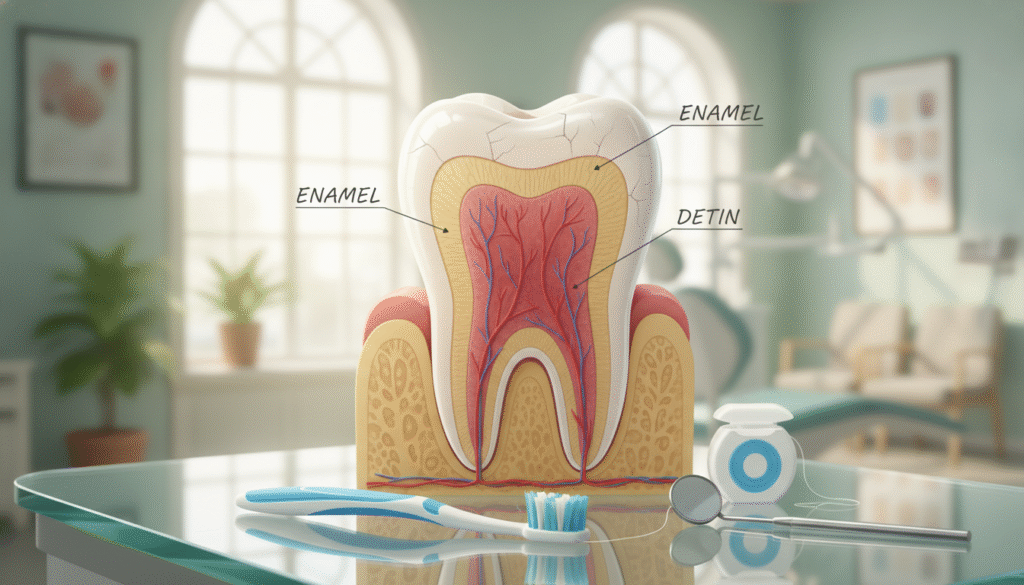
Teeth are strong but can get damaged. It’s important to know their structure. A tooth has three main parts: enamel, dentin, and pulp. Each part is key to the tooth’s strength and function.
The Anatomy of a Tooth
The outer layer, enamel, is the hardest part of our body. It protects teeth from decay and damage. But, enamel can’t heal itself once it’s damaged.
Under the enamel is the dentin. It’s softer and supports the tooth. Dentin has tiny tubules that help us feel sensations. But, dentin can get damaged, making teeth weaker, mainly with big fillings.
The pulp is at the tooth’s center. It has nerves and blood vessels that keep the tooth alive. Damage to the pulp can cause a lot of pain and might need a root canal.
Factors Affecting Tooth Strength
Many things can affect how strong teeth are. Some are inside the tooth, and others are outside.
- Genetic predisposition: Some people might have weaker enamel or dentin because of their genes.
- Age: As we get older, dentin changes, which can make it weaker.
- Large restorations: Big fillings can weaken the tooth.
Things outside the tooth also matter:
- Occlusal forces: Biting too hard can crack or break teeth.
- Parafunctional habits: Grinding teeth can wear down enamel and stress the tooth.
- Environmental exposures: Eating or drinking acidic things can erode enamel over time.
Knowing these factors helps with good dental care. By understanding what makes teeth strong, we can take steps to keep our teeth healthy.
| Layer | Function | Vulnerability |
|---|---|---|
| Enamel | Protects against decay | Non-regenerative, susceptible to erosion |
| Dentin | Supports tooth structure | Weaker than enamel, can be compromised by large fillings |
| Pulp | Contains nerves and blood vessels | Damage can lead to pain and infection |
Common Causes of Tooth Cracking and Breaking
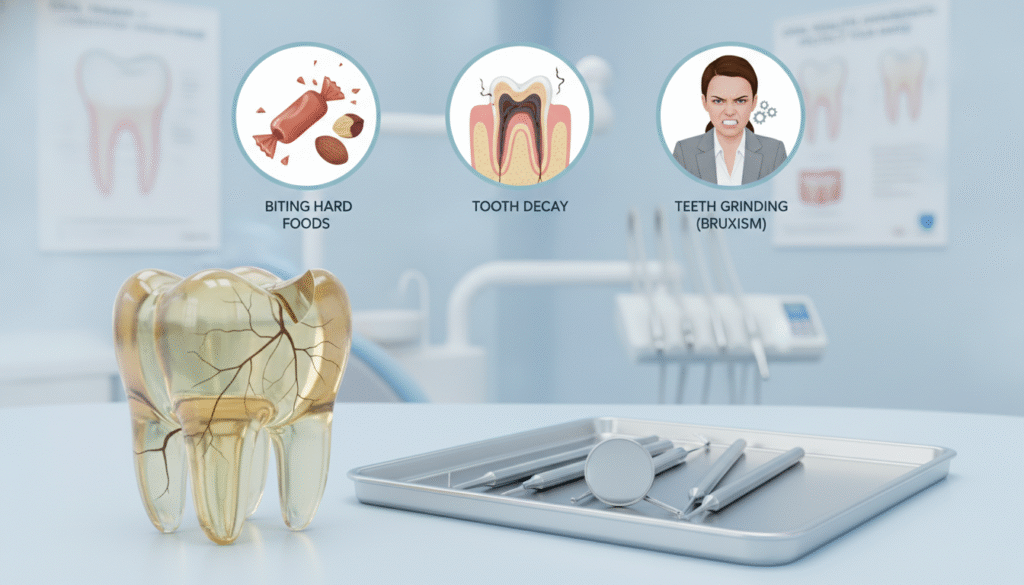
Knowing why teeth crack and break is key to keeping them healthy. Many things can cause this problem. It can lead to pain and dental issues if not fixed quickly.
Trauma and Injury
Trauma is a top reason for cracked teeth. It can happen in many ways, like:
- Sports-related injuries
- Accidents during daily activities
- Using teeth as tools to open packages or bottles
These sudden hits can hurt your teeth right away. It’s important to see a dentist fast if you think you’ve hurt your teeth.
Grinding Teeth (Bruxism)
Bruxism is another big problem. It’s when you grind or clench your teeth, usually when you’re asleep. This puts too much pressure on your teeth, causing:
- Microfractures in the enamel
- Gradual weakening of tooth structure
If you don’t stop bruxism, your teeth can get very damaged. Seeing a dentist early can help avoid big problems.
Poor Oral Hygiene
Good oral hygiene is important to avoid tooth fractures. Bad hygiene can cause:
- Accumulation of plaque and tartar
- Tooth decay and cavities
Not cleaning your teeth well can lead to acid buildup. This acid weakens your teeth, making them more likely to crack.
By knowing these common causes, you can take steps to protect your teeth. Using these oral health tips every day can help prevent dental problems.
Importance of Regular Dental Checkups
Regular dental checkups are key to keeping your teeth healthy. They help catch problems early, before they get worse. By going to the dentist often, you can fix small issues quickly and avoid bigger problems.
Dentists usually say you should go every six months. But, some people might need to go more often. This depends on your dental history, gum health, and lifestyle. Regular visits let your dentist check your teeth and give advice just for you.
How Often Should You Visit the Dentist?
Knowing when to see the dentist is important for strong teeth. Most people need to go twice a year. But, if you have tooth pain or sensitivity, you should go sooner. People with bruxism or wearing braces might need to go more often.
Early Detection of Issues
Going to the dentist regularly helps find problems early. Many dental issues, like cracks, don’t show symptoms right away. Dentists use X-rays and other tools to find these problems.
Finding a small crack early means you can fix it easily. This could be with bonding or smoothing. But, if you ignore it, you might need a root canal or even have the tooth pulled. Catching problems early saves your tooth and money on future treatments.
In short, regular dental visits are essential for teeth protection. They help fix small problems before they get big. For more tips on keeping your teeth healthy, check out this resource.
Daily Oral Care Practices
Keeping your teeth strong is key to avoiding fractures. Good hygiene habits play a big role in this. We’ll look at important practices to help prevent tooth damage.
Brushing Techniques to Strengthen Enamel
Using the right brushing technique is important for strong enamel. The modified Bass method is best for cleaning. It focuses on the gum line to remove plaque.
Using a soft-bristled toothbrush is also important. It prevents enamel wear. Brushing for two minutes, twice a day, is essential. This ensures all surfaces are clean, helping prevent decay and cracks.
The Role of Dental Floss
Flossing every day is critical. It gets rid of food and plaque between teeth, where brushes can’t reach. This is key to stopping tooth weakening and fractures.
Choosing the Right Toothpaste
Picking the right toothpaste is important for your teeth. Toothpastes with fluoride help strengthen enamel. Stannous fluoride and sodium fluoride work in different ways.
Hydroxyapatite-based toothpastes are also good for enamel repair. But, be careful with whitening or abrasive toothpastes. They can harm your enamel if used too much.
In summary, good oral hygiene is essential for preventing tooth fractures. By brushing, flossing, and choosing the right toothpaste, you can keep your teeth healthy and avoid cracks.
Diet and Its Impact on Dental Health
What you eat affects your teeth’s strength and health. Eating a balanced diet full of nutrients helps keep your teeth strong. Knowing which foods are good for your teeth and which are not is key to good dental health.
Foods to Promote Strong Teeth
Adding certain foods to your diet can greatly help your dental health. Here are some important ones:
- Dairy Products: These are full of calcium and vitamin D, which strengthen tooth enamel and support tooth structure.
- Leafy Greens: Spinach and kale are packed with calcium and vitamins that help gums stay healthy.
- Fatty Fish: Foods like salmon, rich in omega-3s, help gums and reduce inflammation.
- Nuts: Almonds and walnuts are good for teeth because they have calcium and help make saliva.
- Crisp Fruits and Vegetables: Apples, carrots, and celery are full of vitamins and help clean teeth. They also make saliva, which fights cavities.
Foods to Avoid for Better Tooth Protection
Some foods are good for your teeth, but others can harm them. Try to eat less of the following:
- Hard Candies and Ice: Eating hard things can cause teeth to crack.
- Sugary Snacks and Beverages: Foods and drinks with lots of sugar can lead to cavities and weaken enamel.
- Acidic Foods: Foods like citrus fruits and sodas can wear away enamel over time.
- Rapid Temperature Changes: Eating hot foods then cold can cause teeth to crack.
The Role of Fluoride in Preventing Cracks
Fluoride is key to keeping teeth healthy and preventing cracks. It strengthens tooth enamel, which is important for oral care. Knowing how fluoride works helps us take better care of our teeth.
Benefits of Fluoride Treatments
Fluoride treatments have many benefits for tooth enamel. Here are some:
- Remineralization: Fluoride helps put minerals back into enamel after acid attacks.
- Enhanced Resistance: It creates a stronger compound that resists acid better than regular enamel.
- Decay Prevention: Fluoride reduces cavity risk, which helps prevent cracks.
Professional fluoride treatments, like varnishes and gels, are used during dental visits. They give a strong dose of fluoride that strengthens enamel more than toothpaste alone.
Fluoride Toothpaste vs. Non-Fluoride Options
Fluoride toothpaste is usually the best choice because of its proven benefits. Here’s why:
| Feature | Fluoride Toothpaste | Non-Fluoride Toothpaste |
|---|---|---|
| Enamel Strengthening | Yes | No |
| Cavity Prevention | High | Lower |
| Remineralization | Effective | Limited |
| Market Availability | Widely Available | Growing Options |
Non-fluoride toothpastes, like those with hydroxyapatite, are becoming more common. But fluoride is the top choice for dental care. Fluoride works best when applied directly to teeth, not swallowed.
In summary, using fluoride in your daily oral care routine can make teeth stronger and less likely to crack. Regular dental visits and fluoride treatments help keep your teeth healthy.
Protective Dental Gear
Protective dental gear is key to keeping your teeth safe from injuries. It’s vital for athletes in contact sports or for those who grind their teeth at night. The right gear can greatly lower the chance of dental damage. This section will look at the importance of mouthguards and night guards in preventing tooth damage.
Mouthguards for Athletes
Mouthguards are a must for anyone in sports where dental injuries are common. There are three main types:
- Stock Mouthguards: These are pre-made and ready to use but often don’t fit well and offer little protection.
- Boil-and-Bite Mouthguards: Made from a special material, these can be shaped by boiling and biting into them. They offer a better fit and some protection.
- Custom-Fabricated Mouthguards: Made from dental impressions, these are tailored to fit perfectly. They offer the best protection and comfort.
A good mouthguard spreads out the force of impact, reducing the chance of teeth hitting each other. This is key in preventing cracks and breaks.
Night Guards for Bruxism
For those who grind their teeth at night, a night guard is essential. Grinding can wear down teeth, leading to microfractures that can cause serious damage. Signs of bruxism include:
- Morning jaw pain
- Temporal headaches
- Wear facets on teeth surfaces
A night guard puts a strong surface between teeth, absorbing and spreading out the forces of grinding. This helps prevent microfractures and keeps teeth strong.
| Type of Guard | Protection Level | Fit Quality | Recommended For |
|---|---|---|---|
| Stock Mouthguard | Low | Poor | Casual sports |
| Boil-and-Bite Mouthguard | Moderate | Average | Recreational sports |
| Custom-Fabricated Mouthguard | High | Excellent | Competitive sports |
The Importance of Hydration for Oral Health
Drinking enough water is key to keeping your teeth healthy. Water helps keep your mouth moist and supports your saliva. Saliva is important for fighting acids, strengthening tooth enamel, and removing food and sugars.
Without enough water, your saliva flow drops. This can cause a dry mouth, making your teeth more vulnerable to problems.
Water also helps dilute sugars and acids in your mouth. This is vital in stopping cavities and protecting your enamel. In areas with fluoridated water, drinking it adds fluoride to your teeth, making them stronger.
How Drinking Water Protects Your Teeth
Water does more than just quench your thirst. It actively guards your teeth in several ways:
- Dilution of Sugars and Acids: Water washes away harmful substances that can cause tooth decay.
- Salivary Flow Maintenance: Drinking enough water keeps your saliva production at its best, which is key for your mouth’s health.
- Fluoride Delivery: Drinking fluoridated water helps strengthen your tooth enamel.
Avoiding Sugary Beverages
On the other hand, sugary drinks can harm your teeth. Drinking them often raises your risk of cavities. The acids in sodas, sports drinks, and fruit juices can weaken your enamel, leading to cracks and breaks.
To keep your teeth safe, consider these tips:
- Drink fewer sugary and acidic drinks.
- Rinse your mouth with water after drinking them.
- Use a straw to reduce contact with your teeth.
| Drink Type | pH Level | Effect on Enamel |
|---|---|---|
| Soda | 2.5 | High risk of erosion |
| Sports Drinks | 3.0 | Moderate risk of erosion |
| Fruit Juice | 3.5 | Low to moderate risk of erosion |
In summary, staying hydrated is a basic part of dental care. Drinking plenty of water and cutting down on sugary drinks can greatly improve your oral health and lower the chance of tooth damage.
Lifestyle Choices That Affect Tooth Strength
Our lifestyle choices greatly impact our tooth strength. It’s important to know how habits like smoking and drinking alcohol affect our teeth. This knowledge helps us keep our mouths healthy.
Smoking and Its Effects on Dental Health
Smoking harms our oral health a lot. It cuts down blood flow to our gums, reducing oxygen and nutrients. This makes it hard for our body to fight off gum diseases.
Smoking also speeds up gum loss and bone breakdown. This weakens our teeth’s support, making them more likely to break. Regular smokers often get gum disease, which weakens their teeth even more.
The Impact of Alcohol Consumption
Drinking alcohol also affects our teeth. Alcohol can dry out our mouth and make it more open to harm. Heavy drinkers often lack nutrients, which hurts their oral health.
Alcohol also causes dry mouth, which is bad for our teeth. Saliva helps clean our teeth and protect them from decay. Many alcoholic drinks are acidic, which can wear down our tooth enamel.
Smoking and drinking together can increase the risk of oral cancer. So, it’s key to take care of our teeth every day to avoid serious problems.
| Lifestyle Choice | Effect on Dental Health | Preventive Measures |
|---|---|---|
| Smoking | Reduces blood flow, increases gum disease risk | Quit smoking, regular dental checkups |
| Alcohol Consumption | Causes dehydration, increases decay risk | Limit intake, maintain hydration |
| Combined Use | Higher risk of oral cancer | Avoid both substances, seek support |
Signs and Symptoms of Weak Teeth
It’s important to know when your teeth might be weak. Weak teeth can show in different ways. Spotting these signs early can help keep your teeth healthy.
Recognizing Pain and Sensitivity
Pain or sensitivity is a common sign of weak teeth. You might feel:
- Sharp pain when biting or chewing, which may suggest a crack that allows fluid movement within the tooth.
- Lingering sensitivity to hot or cold substances, indicating possible pulp issues.
- Intermittent pain that occurs without any apparent cause, which can be concerning for irreversible pulpitis.
Understanding these pain types is key. The hydrodynamic theory says fluid movement in dentinal tubules can cause pain.
Observing Physical Changes
Physical changes in teeth can also signal weakness. Some signs to watch for include:
- Craze lines: These are tiny surface cracks in the enamel that are common and typically painless.
- Fractured cusps: Involving the pointed parts of back teeth, these can cause discomfort when biting.
- Vertical fractures: These extend toward the root and are more serious, often requiring immediate attention.
Using transillumination, a technique where light is shone through the tooth, can help reveal these cracks during clinical examinations.
By being vigilant and recognizing these signs early, individuals can seek professional help. This can prevent serious problems that might need tooth extraction. Early detection is a key strategy in teeth protection.
How to Handle an Injury to the Teeth
A tooth injury can be scary, but knowing what to do can help protect your teeth. It’s important to act fast when an injury happens. This section will guide you on what to do first and when to see a dentist.
Immediate Steps to Take After a Tooth Injury
Here are steps to take right after a tooth injury:
- Recover any tooth fragments: If a piece of your tooth breaks off, try to find it. Put it in milk or a saline solution. This keeps the tooth cells alive for possible reattachment.
- Rinse your mouth: Rinse your mouth with warm water to clean it. Don’t use hot or cold water to avoid more pain.
- Apply a cold compress: A cold compress on the outside of your mouth can help with swelling and pain.
- Manage pain: You can take over-the-counter pain relievers. But don’t put aspirin on your gums as it can irritate them.
It’s key to know the difference between a chipped and a fractured tooth. A chipped tooth is just the enamel or dentin. But a fractured tooth might involve the pulp, which needs quick attention.
When to Seek Emergency Dental Care
It’s important to know when to see a dentist. You should call an emergency dentist if you have:
- Uncontrolled bleeding: If bleeding doesn’t stop after 10 minutes, get help right away.
- Severe pain: If pain is too much and meds don’t help, you need a dentist.
- Visible pulpal exposure: If you can see the inner tooth, you need a dentist fast.
- Tooth mobility or displacement: If your tooth is loose or moved, it needs to be fixed quickly.
- Facial trauma: Any face injury or loss of consciousness means you need urgent care.
While these steps can help, they’re only temporary. Real tooth fracture prevention and care need a dentist’s help. Teeth can’t heal on their own like other tissues do.
The Connection Between Overall Health and Dental Strength
Understanding how your body’s health affects your teeth is key to better teeth protection. Your teeth’s health is closely tied to your overall health. Issues in your body can harm your teeth, making it important to see how health problems affect your mouth.
Understanding Systemic Health Impacts
Many chronic conditions show how oral health and body health are connected. For example, diabetes can hurt blood flow and immune function, making teeth more prone to disease. This can cause bone loss around teeth.
Osteoporosis weakens bones that support teeth. Eating disorders, like those involving purging, can also harm teeth by exposing them to acid.
Research also shows a link between gum disease and serious health issues like heart disease and arthritis. This highlights the importance of dental health in overall health.
The Role of Nutrition in Dental Health
Nutrition is key to keeping teeth healthy and preventing problems. Eating foods rich in calcium and vitamin D helps teeth grow strong. These nutrients are important for tooth and bone health.
Getting enough magnesium and phosphorus also helps teeth. It’s important to avoid malnutrition, as it weakens the immune system and makes infections more likely.
Not getting enough nutrients can also hurt mouth health. Eating a diet full of nutrients can help protect teeth and make them stronger.
Alternative Treatments for Stronger Teeth
Looking into different treatments can make your teeth stronger and healthier. Dentists offer many options to prevent and fix dental problems. These methods help keep your teeth in good shape and improve your dental health.
Dental sealants are a great way to protect your teeth. They are thin, plastic coatings applied to the back teeth. They block food and bacteria from getting stuck in the grooves, preventing cavities and tooth damage.
Dental Sealants
Getting dental sealants is easy and doesn’t hurt. A dentist will clean your tooth and apply the sealant. It sticks to the enamel. This helps a lot in preventing cavities and keeps your teeth strong. Regular dental visits are important to make sure the sealants work well.
Cosmetic and Restorative Options
If your teeth are damaged, there are many ways to fix them:
- Dental Bonding: This is a fast fix for small chips and cracks. A tooth-colored resin is used to make the tooth look and work like new.
- Porcelain Veneers: These thin shells cover the front of your teeth. They make your teeth look better and add some strength.
- Crowns: For bigger damage, crowns cover the whole tooth. They make your tooth strong and safe. You can choose from different materials like ceramic, porcelain, or gold.
- Root Canal Therapy: If a crack reaches the pulp, this treatment might be needed to save your tooth from being pulled.
New technologies in dentistry aim to make restorations as natural as possible. They try to keep as much of your natural tooth as they can while fixing it.
| Treatment Option | Purpose | Ideal For |
|---|---|---|
| Dental Sealants | Prevent cavities | Children and adults with deep grooves |
| Dental Bonding | Repair minor damage | Chips and cracks |
| Porcelain Veneers | Aesthetic enhancement | Discolored or misshapen teeth |
| Crowns | Protect damaged teeth | Severely cracked or decayed teeth |
| Root Canal Therapy | Save infected teeth | Teeth with pulp damage |
Choosing the right treatment needs a dentist’s expert opinion. They consider the fracture, tooth structure, and your overall health. Getting dental advice helps find the best way to keep your teeth strong and healthy.
Conclusion: Your Action Plan for Healthy Teeth
Keeping your smile healthy is key to feeling good. To avoid cracked teeth, knowing why they happen and how to stop them is important. This way, you can avoid painful dental problems and expensive fixes.
For lasting dental health, make good habits part of your daily life. Brush your teeth twice a day, floss often, and use fluoride toothpaste. Also, find a dentist you trust. Regular visits help catch problems early.
Making Long-Term Commitments to Dental Health
Building lasting habits takes work. Begin by setting reminders for dental care. Over time, these habits will become automatic. Drinking plenty of water, not smoking, and drinking less alcohol also help your teeth.
Summary of Preventive Measures
- Maintain consistent oral hygiene with proper brushing and flossing techniques.
- Attend regular professional examinations and cleanings.
- Utilize fluoride products to support tooth enamel strength.
- Wear protective gear during sports and for bruxism management.
- Make informed dietary choices that promote dental health.
- Stay hydrated and avoid sugary beverages.
- Seek prompt professional evaluation for any signs of dental issues.
Preventive dentistry is a lifelong journey. By following these steps, you can keep your teeth strong and healthy. This not only improves your smile but also your overall health and happiness.
