How Do I Track My Progress with Invisalign?
Did you know over 90% of Invisalign users are happy with their results? This shows how powerful this orthodontic treatment is. But, many people start expecting quick changes, not knowing it’s all about small steps over time.
Wearing new aligners and sticking to the treatment plan is key to a great smile. Visits to experts like Dr. Paresh B. Patel at Family Dentistry of Frisco are important. They check if you’re on the right path, showing the value of patience and dedication.
Knowing how to track your Invisalign journey keeps you motivated and confident. Seeing small changes adds up makes you appreciate each step. This article will show you how to stay updated and involved in your orthodontic journey.
Key Takeaways
- Over 90% of Invisalign users report satisfaction with their treatment.
- Transformative results come from consistent, small changes.
- Regular check-ups are key for tracking progress.
- Understanding your treatment boosts motivation and confidence.
- Every hour of aligner wear helps shape your smile.
Understanding Invisalign Treatment
Invisalign treatment is a new way to straighten teeth. It uses clear aligners to move teeth slowly. Each aligner is made just for you and is worn for 1 to 2 weeks.
The material of the aligners applies gentle pressure. This ensures teeth move smoothly and predictably.
Most people finish Invisalign in 6 to 18 months. Wearing the aligners all the time is key. This includes meals, drinks, and even sleep. Only take them out for brushing.
Sticking to the schedule will show small improvements. You might notice:
- Smoother edges of your teeth
- Straighter lines in your dental arch
- Improved bite contact
These changes add up to a big smile makeover over time.
Overview of Invisalign
Invisalign uses advanced tech for a custom plan. It starts with digital impressions of your teeth. This plan guides each stage of treatment.
3D imaging helps orthodontists predict the outcome. They can adjust the plan as needed. This ensures the treatment stays on track.
Importance of Tracking Progress
Tracking your progress is key. It lets you see if your teeth are moving as planned. This makes the treatment feel real and achievable.
By tracking, you can:
- See small improvements
- Stay on track with the plan
- Feel more confident in your progress
Dr. Paresh B. Patel says tracking progress keeps patients engaged. Seeing small wins keeps them motivated and excited about their Invisalign journey.
Initial Consultation and Planning
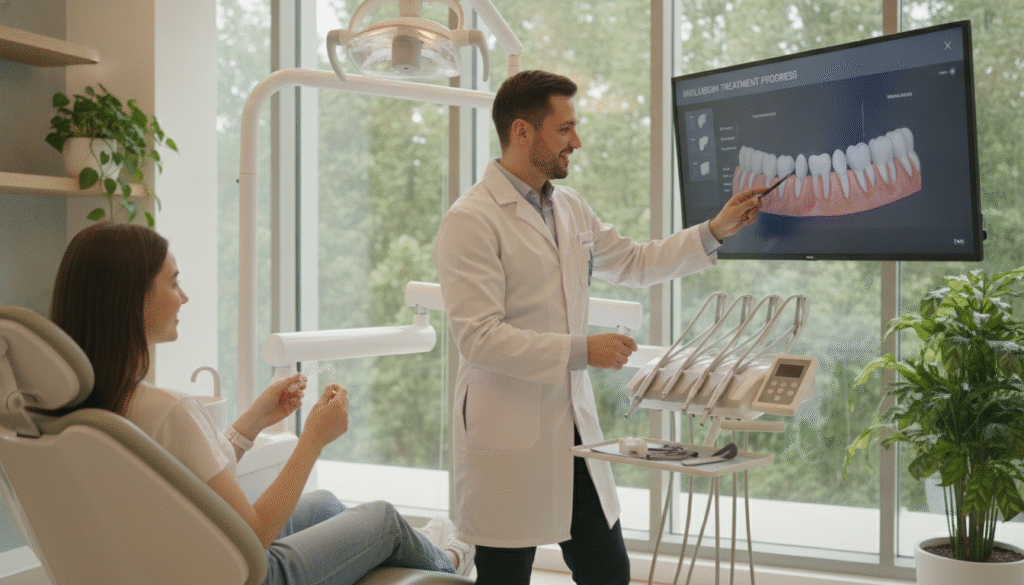
Your Invisalign journey starts with a detailed first visit. Here, a skilled orthodontist, like Dr. Paresh B. Patel, will assess your teeth. They use digital scans, photos, and talk about your goals.
The orthodontist will look at your teeth and what you want. This teamwork makes sure your needs are met. The info from this visit helps create a plan just for you.
What to Expect During Your First Visit
At your first visit, several important steps happen:
- Digital Scans: These scans make a detailed 3D model of your teeth for planning.
- Photographs: Photos of your teeth and smile track your progress.
- Goal Discussion: Talking about your goals helps shape your treatment.
After collecting this info, the orthodontist starts making your treatment plan. This plan is a guide for all your Invisalign visits. It lets you and your orthodontist see how you’re doing against the plan.
Creating a Custom Treatment Plan
The next step is using ClinCheck software. It shows a 3D simulation of how your teeth will move. This helps you see how your smile will change.
Your treatment plan is made just for you. It ensures every step of your journey is tailored. With a clear plan, you can track your progress and make smart choices during your Invisalign treatment.
Regular Check-Ups: Frequency and Importance
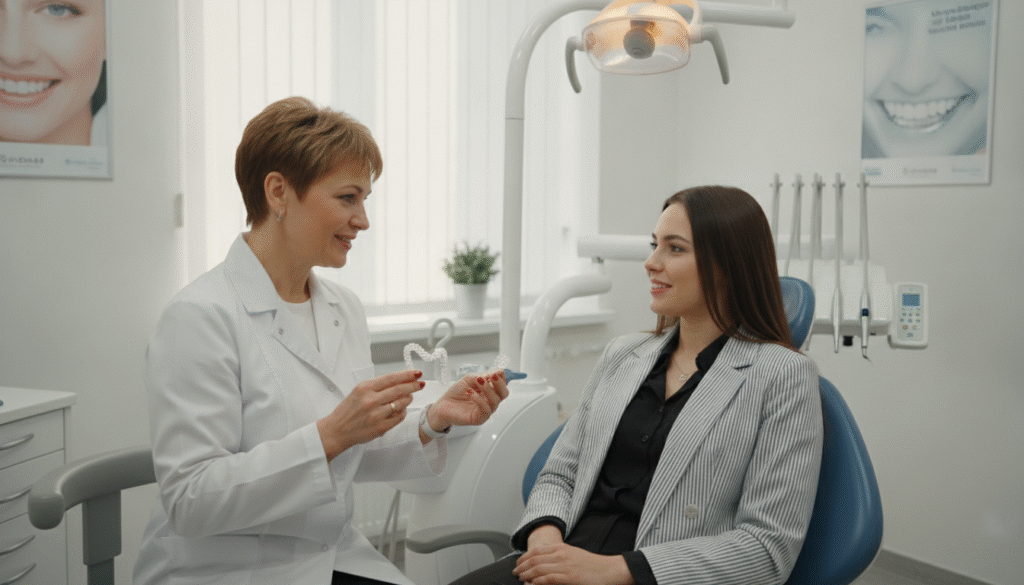
Regular check-ups are key to keeping your Invisalign treatment on track. These visits let your orthodontist check your progress and make any needed changes. Most people see their orthodontist every 6 to 8 weeks. This keeps your treatment working well.
At these visits, your orthodontist uses special tools to check your teeth’s movement. They use digital scans to see how your teeth are changing. This tech makes sure your treatment is going as planned.
How Often Will You Visit Your Orthodontist?
Visiting your orthodontist for Invisalign check-ups is very important. You’ll usually go every 6 to 8 weeks. But, your orthodontist might change this based on how you’re doing and what you need.
What Happens During a Check-Up?
Check-ups are carefully planned to keep your treatment on track. Here’s what usually happens:
- Evaluation of Aligner Fit: Your orthodontist checks if your aligners fit right and makes changes if needed.
- Inspection of Composite Attachments: They look at the attachments on your teeth to make sure they’re working right.
- Bite Analysis: A bite exam is done to make sure your teeth are moving the right way.
- Discussion of Patient Concerns: This is your chance to talk about any problems or questions you have.
Also, your orthodontist will see if you need any extra aligners. This might mean planning for more aligners to keep your results precise.
| Check-Up Component | Description | Importance |
|---|---|---|
| Aligner Fit Evaluation | Checking how well the aligners fit your teeth. | Ensures teeth move properly. |
| Attachment Inspection | Looking at the composite attachments on teeth. | Confirms they’re in the right spot. |
| Bite Analysis | Examining how your teeth come together. | Helps prevent misalignment during treatment. |
Monitoring Your Progress at Home
Tracking your Invisalign progress at home is easy and helpful. Simple habits can give you insights into your treatment journey. This way, you stay involved and can share your progress with your orthodontist.
Recommended Tools for Tracking
Here are some tools to track your progress:
- Progress Journal: Keep a journal for your experiences, like how your aligners feel and any changes you notice.
- Small Dental Mirror: Check your aligners weekly with a mirror. They should fit snugly without gaps.
- Smartphone Camera: Take photos regularly to document your progress. Try to use the same lighting and angle each time.
These tools help you see your treatment progress clearly. Looking at your journal and photos often will show you small changes you might miss.
Taking Progress Photos
Progress photos are key to your Invisalign journey. Here’s how to take them consistently:
- Always use the same lighting for your photos.
- Take pictures from the front and sides.
- Keep the same distance from your face for comparison.
These photos will show big changes, like spaces closing or teeth aligning better. Looking at your ClinCheck plan with your photos will help you understand your treatment better.
By tracking your progress, you become more involved in your treatment. This not only helps you understand your journey but also makes you feel accomplished as you see your progress.
Evaluating Aligners: When to Change Them
Knowing when to switch your aligners is key to a good Invisalign experience. Each aligner is made to move your teeth a little bit at a time. It’s important to change them when they start to feel too loose.
At first, the new tray should fit tightly. This means your teeth are moving as planned. But, don’t switch too soon. Your orthodontist knows the best time to change them.
Your orthodontist might suggest using chewies to help your aligners fit better. Chewies make sure the trays fit right, helping your teeth move smoothly. Always follow the schedule for changing aligners. This is usually every 1 to 2 weeks.
Dr. Paresh B. Patel says following these steps is important for the best results. By understanding when to change and using the right tools, you’ll get the most out of Invisalign. This careful approach helps you move smoothly towards your perfect smile.
Dental Monitoring: Technology in Treatment
Dental monitoring is changing orthodontics. It uses a smartphone app and a scan box to take detailed pictures of teeth. These pictures are then checked by artificial intelligence, helping orthodontists track progress very accurately.
This technology makes things easier for patients. They don’t have to come in as often for Invisalign check-in visits. Now, they can check in from home, saving time.
Dental monitoring also finds problems early. Orthodontists can spot issues by looking at pictures often. This way, they can fix problems quickly, keeping treatment on track.
Dr. Paresh B. Patel uses dental monitoring in his practice. He combines it with regular visits for a complete treatment plan. This mix ensures every detail is checked carefully.
In short, dental monitoring is a big step forward in orthodontics. It mixes technology with orthodontist skills for better care. For those starting Invisalign, this tech can make their journey smoother and help them get the smile they want.
Understanding Treatment Milestones
During your Invisalign journey, you’ll hit several key milestones. These milestones show how well your treatment is working. They help both you and your orthodontist see if your teeth are moving right.
Key Milestones During Your Invisalign Journey
Invisalign treatment is divided into phases, each with its own milestones. Knowing these phases helps you track your progress. Here’s a quick overview of the main milestones:
| Time Frame | Milestones | Signs of Progress |
|---|---|---|
| Week 1 to 3 | Tight feeling with new trays | Minor pressure on certain teeth, subtle cosmetic improvements |
| Month 1 to 3 | Visible movement | Better symmetry, reduced crowding, small spaces closing |
| Month 4 to 6 | More defined alignment | Bite improvements, easier brushing and flossing, enhanced facial balance |
| Month 6 to 12 | Final detailing | Fine adjustments to bite and spacing, clearer smile lines |
Each milestone is a big check-in during your treatment. For example, feeling tightness in your aligners early on means they’re working. By the first month, you might see big changes in how your teeth look and feel.
Signs of Effective Progress
Seeing progress with Invisalign means looking for certain signs. These include:
- Reduction of anterior crowding
- Leveling of the curve of Spee
- Correction of overjet
But remember, everyone’s journey is different. Regular check-ups with your orthodontist, like Dr. Paresh B. Patel, help catch any off-track moments. This keeps your treatment on the right path.
When to Communicate with Your Orthodontist
Talking openly with your orthodontist is key for a good Invisalign experience. You should reach out anytime you have worries or questions. This way, you can get better results and feel more comfortable.
There are some common worries that you should talk to your orthodontist about right away:
- Persistent Aligner Gaps: If your aligners don’t fit right, it might mean there’s a problem.
- Sharp Pain: Feeling a lot of pain could mean something’s wrong with your aligners or how your teeth are moving.
- Teeth Not Tracking: If your teeth don’t seem to be moving as they should, tell your orthodontist.
Telling Dr. Patel about these issues lets them check things out fast. They can fix the problem quickly, getting you back on track. Always wear your trays, except when eating, drinking, or brushing your teeth.
Using chewies, if your orthodontist suggests it, can also help your aligners fit better.
Importance of Open Communication
Talking openly is not just good; it’s vital. It helps you and your orthodontist work together better. This teamwork makes your treatment better.
By sharing your worries, you help make your treatment plan work better. Your orthodontist can change things based on what you say, keeping you on the right path to your perfect smile.
| Concern | Action | Outcome |
|---|---|---|
| Persistent Aligner Gaps | Contact Orthodontist | Fit Adjustment |
| Sharp Pain | Schedule Evaluation | Relief from Discomfort |
| Teeth Not Tracking | Discuss with Orthodontist | Revised Treatment Plan |
In conclusion, keeping in touch with your orthodontist is key for tracking your progress well. By talking about your worries quickly, you make your Invisalign journey better and get closer to your dream smile.
Adjusting Your Treatment Plan
During your Invisalign treatment, you might need to make changes to your plan. These adjustments are common and can be key to getting the best results. Knowing when and how to work with your orthodontist is important for success.
When Adjustments May Be Necessary
It’s normal to feel like your smile isn’t changing fast enough. Several things can make you feel this way:
- You might not notice small changes because you’re too close to them.
- Teeth moving into complex spots can take more time.
- Comparing yourself to others can set unrealistic expectations.
- Not wearing aligners for the right amount of time can slow progress.
- Attachments might need extra help to move teeth as planned.
Dr. Patel stresses the need for regular check-ups. He might suggest changes to your plan, like more aligners or tweaks to what you’re doing now.
Working with Your Orthodontist on Changes
Talking openly with your orthodontist is key when you need changes. Here’s what to do:
- Share any worries about your progress.
- Learn why changes are suggested.
- Ask about the refinement process, which might include new scans and more aligners.
The refinement stage is very important. Your orthodontist will check your progress and decide if more aligners are needed. This ensures your final look meets your goals.
| Adjustment Reason | Possible Solutions | Expected Outcome |
|---|---|---|
| Slow Progress | Additional aligners | Enhanced movement towards goals |
| Complex Teeth Movement | Revised treatment plan | Improved alignment |
| Non-compliance | Increased education on wear time | Better adherence to treatment |
Understanding the need for adjustments and being active in the process helps keep your Invisalign journey on track. This way, you’re sure to get the smile you’ve always wanted.
The Role of Compliance in Progress
Patient compliance is key to successful Invisalign treatment. Wearing your aligners all day is important for the best results. Studies show you should wear them for at least 22 hours a day.
Removing your aligners too often can slow down progress. This can cause your treatment to take longer. It’s important to follow the treatment plan closely.
Importance of Wearing Aligners
It’s important to wear your aligners during meals, drinking, and sleep. Only take them out for brushing or cleaning your teeth. Dr. Patel suggests sticking to a routine to stay on track.
| Activity | Recommended Action | Duration |
|---|---|---|
| Eating | Remove aligners | Only during meals |
| Drinking | Keep aligners in | Except for hot beverages |
| Sleeping | Keep aligners in | All night |
| Brushing | Remove aligners | During oral hygiene |
Tips for Staying Compliant
Here are some tips to help you stay compliant:
- Use a timer to remind you when to wear your aligners.
- Wear your aligners during meals to avoid forgetting.
- Make a daily routine to check your aligner wear time.
“Consistency is key to success with Invisalign. Adhering to your treatment plan ensures that you achieve your dream smile on time.”
By following these tips, you can improve your compliance. This will make your treatment smoother and more effective. The goal is to keep your aligners in place as much as possible.
Tracking Progress in Children vs. Adults
Children and adults have different needs when it comes to tracking Invisalign progress. Knowing these differences is key for successful treatment and monitoring.
Differences in Treatment Monitoring
Monitoring Invisalign treatment varies for kids and adults. Kids are growing, so their faces are changing. They need more check-ups to make sure treatment is working right.
Adults have fully grown faces but might have other issues like old fillings or gum problems. These things affect how treatment is watched, so orthodontists must tailor their care.
Specific Considerations for Kids
Children face unique challenges with Invisalign. They might forget to wear their aligners, which is a big problem. Parents play a big role in making sure kids wear them as they should.
Aligners for kids can change color or show wear patterns. This helps kids and their orthodontists see if they’re wearing them right. It’s a helpful tool for tracking progress.
Experts like Dr. Paresh B. Patel say it’s important to make monitoring plans for each patient. This way, kids and adults can both get the best results from their treatment.
| Age Group | Monitoring Frequency | Key Considerations |
|---|---|---|
| Children | Every 4-6 weeks | Growth changes, compliance challenges |
| Adults | Every 6-8 weeks | Existing restorations, periodontal health |
| General | As needed based on progress | Customized monitoring protocols |
Using Invisalign Apps for Tracking
In today’s world, mobile apps have changed how we track our Invisalign progress. These tools make it easier to talk to orthodontists and make the treatment better.
Many apps help patients keep an eye on their progress. They offer features like:
- Progress photo galleries: Patients can take and save photos to see how their teeth have changed.
- Appointment reminders: These apps remind patients when it’s time for their next visit.
- Direct messaging: Patients can easily talk to their orthodontist’s office with any questions.
These apps work well with ClinCheck, showing how your teeth match the plan. Dr. Paresh B. Patel says using these apps makes the experience more interactive.
By using these apps, patients can feel more in control and confident. This mix of professional care and technology helps patients get the best results.
Understanding Treatment Duration
Knowing how long Invisalign treatment takes is key for those starting their orthodontic journey. Most people can expect it to last 6 to 18 months. But, this time can change a lot based on different things.
For example, if you need big changes or many tooth movements, it might take longer. Here are some main things that can change how long treatment lasts:
- Initial Malocclusion Severity: The more serious the problem, the longer it might take.
- Patient Age: Kids might adjust faster than adults.
- Compliance with Wear Time: Wearing the aligners as directed is key for quick progress.
- Need for Refinements: You might need extra adjustments based on how you respond to treatment.
Dr. Paresh B. Patel says knowing these factors helps set realistic goals. It makes sure treatment goes smoothly. Talking openly with your orthodontist helps you get through Invisalign better.
Keeping Up with Oral Hygiene
Keeping your mouth clean is key during Invisalign treatment. If you don’t, plaque and food can get stuck. This can cause cavities and gum disease, slowing down your treatment.
Good oral hygiene is very important. Brushing after meals removes food and plaque. Flossing with special tools cleans between teeth and around your aligners. Antimicrobial rinses also help keep your mouth healthy and prevent gum inflammation.
Importance of Hygiene During Treatment
Good oral hygiene is not just about looks. It’s necessary for your teeth to move properly. If your mouth is not clean, your treatment can slow down. Staying on top of your oral care helps your treatment go smoothly and gives you the best results.
Recommended Oral Care Products
Here are some products to keep your mouth clean:
- Aligner cleaning crystals: These keep your aligners clean and free from bacteria.
- Soft-bristled toothbrushes: They’re gentle on your gums and clean your teeth well.
- Water flossers: Great for getting rid of food and plaque between teeth and around your aligners.
Final Stages of Treatment: What to Expect
As you near the end of your Invisalign treatment, knowing what’s next can help calm your nerves. This stage is key for fine-tuning your smile. Dr. Paresh B. Patel will guide you through each step to keep your teeth on track.
At your last visit, your orthodontist will check if your teeth have moved as planned. They will also make sure your bite and spacing are just right. This is the moment of truth, where your treatment’s success is confirmed.
Preparing for Your Last Check-Up
Getting ready for your final visit is easy but important. Here are a few things to do:
- Book your appointment early to avoid any delays.
- Bring your current aligners for a check.
- Write down any questions or concerns you have.
Retainers: Post-Treatment Care
Once you’ve finished your treatment, you’ll start wearing retainers. They’re key to keeping your smile in place. Dr. Patel will explain the different types of retainers you can use.
| Type of Retainer | Description | Recommended Wear Schedule |
|---|---|---|
| Fixed Retainer | A wire bonded to the back of your teeth for continuous support. | Indefinitely, unless advised differently. |
| Removable Retainer | A custom-fit retainer that can be taken out for cleaning. | Full-time for the first 6 months, then nights only. |
| Clear Retainer | Similar to aligners, these are less visible and comfortable. | Initially full-time, then as directed by your orthodontist. |
Wearing your retainer as recommended is key to keeping your smile perfect. Dr. Paresh B. Patel’s careful approach ensures your smile is not just beautiful but also healthy. Celebrate this milestone as you move forward in your Invisalign journey!
Conclusion: Embracing Your Invisalign Journey
Tracking your Invisalign progress is rewarding. Every small change adds up to a big transformation. The journey may seem slow, but the results are worth it.
Dr. Paresh B. Patel and Family Dentistry of Frisco guide you. They help you stay informed and motivated. This makes your journey smoother.
Wearing your aligners and following the plan is key. Each step brings you closer to your dream smile. Celebrate every milestone, big or small.
As treatment ends, imagine the confidence with your new smile. Trust the process and enjoy the subtle changes. Every tray brings you closer to your dream smile.