
What if I only want to straighten my top (or bottom) teeth?
Did you know about 30% of people getting orthodontic treatment want to fix just one arch of teeth? This shows a common question in orthodontics. Many wonder if it’s possible and good to only straighten the upper or lower teeth.
Yes, you can get orthodontic treatment for just one row of teeth. Some people like this because it might save money or be quicker. But, it’s important to think about how it affects your dental health.
While single-arch braces might work in some cases, they’re not usually the best choice. The teeth in both arches work together, so fixing just one can cause problems. So, talking to a professional is key to find the best treatment for you.
Key Takeaways
- Single-arch orthodontic treatment is possible but not commonly advised.
- Many patients consider this option for cost and time efficiency.
- Consultation with an orthodontist is essential for personalized care.
- Interdependence of dental arches can complicate treatment outcomes.
- Understanding the balance between aesthetics and function is vital.
Understanding Teeth Alignment
Teeth alignment is key for good oral health. Straight teeth are more than just pretty; they help us chew better. They also protect our teeth and gums from damage.
Having straight teeth means we can chew food properly. This helps our body digest food better. It also means our teeth wear down evenly, which is good for them.
Teeth that are straight help keep our gums healthy. They also make it easier to speak clearly. And, they help avoid problems with our jaw.
Importance of Straight Teeth
There are many reasons why straight teeth are important:
- Efficient Mastication: Straight teeth help us chew food well, which helps our body digest it.
- Reduced Wear: They wear down evenly, which means less damage to our teeth.
- Periodontal Health: Straight teeth make it harder for plaque to build up, which helps our gums stay healthy.
- Clear Phonetics: They help us speak clearly.
So, straight teeth are important for our overall health and how we eat and speak. As we’ve seen, “Your upper and lower teeth work together as a system. Every time you chew, speak, or even rest your jaw, the alignment between both arches matters.”
Different Types of Misalignments
There are different kinds of misalignments that can affect our teeth. Knowing about these can help us find the best teeth straightening options. Here are some common ones:
| Type of Misalignment | Description | Impact on Dental Health |
|---|---|---|
| Crowding | Teeth overlap due to lack of space. | Increased plaque retention and difficulty cleaning. |
| Spacing | Excess space between teeth. | Potential for gum disease and aesthetic concerns. |
| Overbite | Upper teeth significantly overlap lower teeth. | Can lead to jaw pain and wear on teeth. |
| Crossbite | Upper teeth sit inside lower teeth. | May cause uneven wear and jaw issues. |
| Open Bite | Teeth do not touch when biting down. | Can affect chewing and speech. |
Each type of misalignment can affect both arches of teeth. This makes treatment more complicated. Even small issues can impact the other side of our mouth, showing why a full check-up is needed for good treatment.
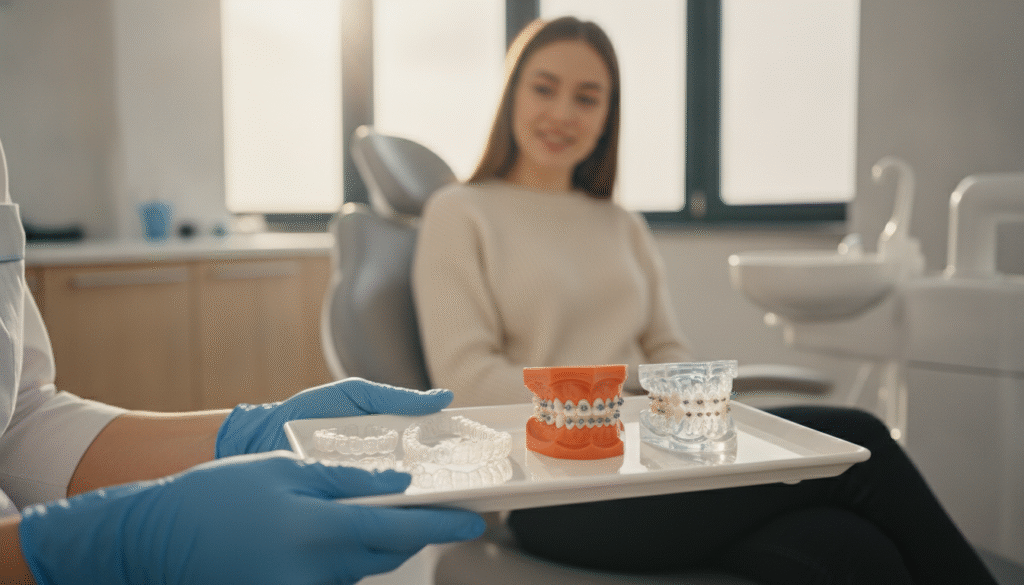
Initial Considerations
Deciding whether to straighten your top or bottom teeth is a big first step. It’s not just about looks. It also affects how well your teeth work together.
Thinking about orthodontic treatment? You might wonder: Should you straighten your top or bottom teeth? It’s often about wanting a better smile. But remember, teeth alignment does more than just look good.
Small issues like gaps or slightly crooked teeth might make you want to focus on one area. But, talking to an orthodontist is key. They can see the big picture and tell if you need to fix more than just looks.
Think about what you want from your smile. Do you want to make your smile more symmetrical? Or maybe fix a gap or a crooked tooth? Knowing what you want helps plan for your treatment.
The term cosmetic dental treatment means different things to different people. Some just want to look better. But good orthodontic care makes sure your smile is healthy too. It’s about looking good and feeling good.
Before you decide, take some time to think about it. But then, get a professional to check it out. They might use special tools to see if there are hidden problems that could change your treatment plan.
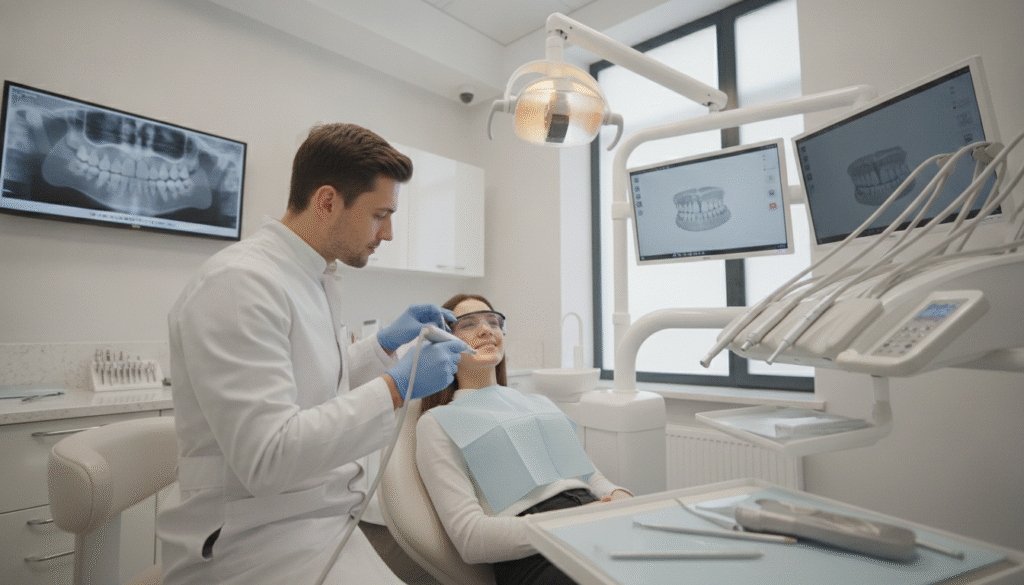
Treatment Options for Top Teeth
Choosing the right way to straighten your top teeth is key for good results. You have two main options: traditional braces and clear aligners. Each has its own benefits for different needs.
Braces for Upper Teeth
Braces are a proven method for fixing upper teeth alignment. They use brackets and wires to gently move teeth. They work best for complex cases needing detailed control.
- Metal and Ceramic Options: Metal braces are strong and effective, while ceramic ones are less visible.
- Controlled Movement: Braces let you adjust how teeth move in three dimensions.
- Effective for All Cases: They can fix a wide range of misalignments, from small to big.
Clear Aligners for Top Teeth
Clear aligners, like Invisalign, are popular for their looks and ease. They offer many benefits:
- Hassle-Free Oral Care: You can take them out for meals and brushing, making cleaning easier.
- Discreet Treatment: Their clear design makes them less noticeable than braces.
- Fewer Appointments: You need fewer visits to the orthodontist than with braces.
- Quicker Treatment Timelines: Many see faster results with aligners for mild to moderate issues.
But, clear aligners might not be the best for just the top teeth. Orthodontists check the lower teeth too to avoid problems like open bites.
| Feature | Braces | Clear Aligners |
|---|---|---|
| Visibility | Visible | Discreet |
| Oral Hygiene | More Challenging | Easier |
| Treatment Duration | Varies | Often Shorter |
| Complex Cases | Highly Effective | Limited Effectiveness |
Treatment Options for Bottom Teeth
Looking to improve your smile? Focusing on your bottom teeth can make a big difference. You have two main choices: braces and clear aligners. Each has its own benefits, so it’s good to know what they are.
Braces for Lower Teeth
Braces for just the lower teeth are great for fixing many issues. They work best when your upper teeth are already straight. This treatment is perfect for:
- Minor crowding
- Spacing issues
- Slight misalignments
Traditional metal braces are often used. They’re good for tight spaces and shallow areas. For those who don’t want to show off their braces, lingual braces are a hidden option. They go on the inside of your teeth.
Clear Aligners for Bottom Teeth
Clear aligners are another way to straighten your bottom teeth. These custom trays slowly move your teeth into place. They’re good for fixing crowding and spacing, but they have some limits.
Clear aligners might not work as well for deep bites or midline issues. They’re best when your upper teeth are straight and only need minor adjustments.
Even small changes in your lower teeth can affect your bite. So, it’s important to watch your progress closely. This helps avoid any problems during treatment.
Partial Treatment Approaches
Partial treatment options in orthodontics can be both appealing and complex. They focus on aligning either the top or bottom teeth. This provides targeted solutions for specific aesthetic concerns. But, these methods have their own set of advantages and disadvantages that need careful consideration.
Pros and Cons of Partial Alignment
Partial alignment treatments have several benefits:
- Reduced Appliance Bulk: With fewer teeth being treated, the appliance is less cumbersome.
- Shorter Initial Treatment Time: Patients may see quicker results, as only a section of the mouth is adjusted.
- Lower Upfront Cost: The financial commitment seems more manageable compared to full-arch treatments.
- Focused Correction: These treatments target specific aesthetic concerns, making them ideal for localized issues.
Despite these benefits, there are significant drawbacks to consider:
- Risk of Iatrogenic Malocclusion: Focusing on one arch can lead to misalignment of the bite.
- Development of Posterior Interferences: Neglecting full evaluation may result in complications that require further treatment.
- Potential for Temporomandibular Joint Dysfunction: Partial treatments can sometimes exacerbate jaw issues.
- Compromised Long-Term Stability: Results may not be sustainable without full care.
- Frequent Need for Comprehensives Retreatment: Additional procedures may be necessary if problems arise later.
Cost Considerations
Financial implications are a key aspect of orthodontic care. While partial treatments may seem less expensive initially, it’s important to consider the full scope of costs involved:
- Exclusion of Diagnostic Records: Initial savings may not account for necessary evaluations.
- Retainers and Follow-Up Care: These are often not included in the base price of partial treatments.
- Hidden Costs: Correcting secondary bite problems can lead to expenses that surpass initial savings.
Orthodontic treatment is an investment in long-term oral health. A short-sighted approach to partial alignment may ultimately prove more costly and time-consuming in the long run.
The Role of Orthodontists
Understanding the role of orthodontists is key if you’re thinking about straightening your teeth. These experts have the skills to check your teeth and mouth fully. They can help find the best treatment for you.
Knowing when to see an orthodontist is important. Go if you notice any teeth problems, like jaw pain or uneven wear. Only an orthodontist can tell if it’s just for looks or if there’s something deeper.
When to Consult a Specialist
See an orthodontist if you notice any teeth issues. Early treatment can make things easier and more effective. Look out for these signs:
- Difficulty in chewing or biting
- Jaw pain or discomfort
- Teeth that are crowded or misaligned
- Frequent biting of the inner cheeks
What to Expect During Your Consultation
Your first visit to the orthodontist will be a detailed check-up. You’ll go through:
- Review of your medical and dental history
- Extraoral and intraoral examination
- Periodontal assessment
- Digital photographs of your teeth
- Panoramic and cephalometric radiographs
- Intraoral scanning for study models
After checking you, the orthodontist will talk about your options. They’ll decide if you need single-arch or dual-arch treatment. This helps you make a smart choice for your teeth.
| Consultation Step | Description | Importance |
|---|---|---|
| Medical History Review | Understanding past dental issues and health conditions. | Identifies any risks and tailors treatment. |
| Extraoral Examination | Checking facial structure and jaw alignment. | Highlights any outside issues. |
| Intraoral Examination | Detailed look at teeth and gums. | Points out specific alignment problems. |
Age Considerations for Treatment
The age when people get orthodontic treatment affects their dental alignment journey. It’s important to know how age impacts treatment for the best results. This section looks at orthodontic care for teens and adults, highlighting what makes each unique.
Orthodontics for Teens
Teens go through a lot of dental and skeletal growth. This growth phase is a great time for orthodontic treatment. Interceptive treatment is very helpful during this time. It can fix problems before they get worse.
- Advantages of Early Treatment: Fixing alignment issues early can prevent more serious problems later.
- Compliance Challenges: Teens might find it hard to keep their teeth clean and follow treatment instructions. This needs careful handling.
- Full-Arch Malocclusions: Many teens have full-arch malocclusions. This means treating just one arch is rare.
Adult Treatments: What to Consider
Adults face unique challenges when it comes to orthodontic treatment. Unlike teens, adults deal with:
- Reduced Cellular Turnover: This slows down tooth movement, making treatment less predictable.
- Higher Prevalence of Periodontal Disease: Adults often have gum disease, which makes treatment harder.
- Aesthetic Concerns: Adults usually want to look good, which affects their treatment choices.
Adults might want to straighten just their top or bottom teeth. They might have had treatment before that didn’t last. But, age-related changes like tooth wear and TMJ issues need careful analysis. It’s important to make sure partial alignment doesn’t mess up the teeth.
In conclusion, orthodontic care should be tailored to each person’s age and future needs. By considering these factors, both teens and adults can get great results from orthodontic treatment.
Duration of Treatment
The time it takes for orthodontic treatment varies a lot. Knowing how long it takes to align both upper and lower teeth is key. This helps set realistic goals.
Average Time for Upper Teeth Alignment
Aligning upper teeth depends on how complex the case is. For simple issues like crowding or spacing, treatment can last 6 to 12 months. But, more complex problems like deep overbites or impacted canines might take 18 to 24 months.
Several things affect how fast teeth move:
- Bone Density: Thicker bone slows down movement.
- Patient Compliance: Using aligners regularly is key.
- Biological Response: Everyone reacts differently to orthodontic forces.
Average Time for Lower Teeth Alignment
Aligning lower teeth also varies. Minor issues with lower incisors can be fixed in 6 to 12 months. But, bigger problems might need more time, sometimes over a year.
It’s also important to think about mandibular anterior relapse. This means teeth can move back after treatment. Orthodontists will give a personalized timeline after an initial check-up.
Treating just one arch can make treatment longer. Mid-course corrections might be needed to fix new problems. This shows why a full approach to orthodontic care is best.
| Condition | Average Duration | Factors Influencing Duration |
|---|---|---|
| Mild Upper Teeth Misalignment | 6-12 months | Bone density, compliance |
| Complex Upper Teeth Issues | 18-24 months | Type of misalignment |
| Minor Lower Teeth Crowding | 6-12 months | Patient’s oral health |
| Significant Lower Teeth Issues | 12+ months | Retention needs |
The Impact of Oral Health
Oral health is key to the success of orthodontic treatments. Before starting orthodontic treatment, your teeth and gums must be healthy. This preparation makes treatment more effective and prevents problems.
There are several things you need to do to prepare your teeth:
- Caries-free dentition: Fix any cavities before orthodontic treatment.
- Resolved periodontal disease: Gum disease can cause bone loss, making treatment harder.
- Adequate attached gingiva: Healthy gums help move teeth during treatment.
- Removal of active infections: Treat any infections to avoid complications.
Orthodontic treatment can cause bone loss if you have untreated gum disease. Also, plan any dental work like crowns or implants with your orthodontist. This ensures your treatment works well together.
Preparing Your Teeth for Treatment
Getting your teeth ready for orthodontic treatment is important. Have a detailed dental check-up to find and fix any problems. This proactive step helps your treatment go smoothly.
Maintaining Oral Health During Treatment
Keeping your mouth clean is even more important during treatment. Here’s how to keep your teeth clean with different orthodontic appliances:
- For braces: Use interdental brushes and floss threaders to clean around brackets and wires. Regular fluoride mouth rinses can prevent tooth decay.
- For clear aligners: Clean the trays often and brush your teeth after meals before putting the aligners back in.
See your dentist regularly during treatment. These visits help your orthodontist check your progress and fix any issues, like root resorption. Taking care of your oral health is the first step to a beautiful smile.
“The foundation of orthodontic care is rooted in maintaining excellent oral health.”
Aftercare and Retainers
After your teeth are aligned, it’s important to keep them that way. Retainers are key to this. They help keep your teeth in their new spots, fighting against the natural urge for them to move back.
It’s important to know why teeth might move. The periodontal ligament and gingival elastic fibers change, and your face can grow in ways that affect your teeth. If only one set of teeth is treated, the other can pull them out of place.
Importance of Retainers
Retainers protect your investment in orthodontic treatment. There are different types, each suited for specific needs:
- Fixed Lingual Retainers: These are bonded to the back of your teeth, providing constant support.
- Removable Hawley Retainers: These allow for easy cleaning and adjustment but require consistent wear.
- Vacuum-formed Retainers: These are custom-made for comfort and aesthetics, ideal for those who prefer a discreet option.
Caring for Your Retainers
Proper care for your retainers is vital to ensure their longevity and effectiveness. Here are some practical tips:
- Clean removable retainers with a soft brush and a non-abrasive cleanser.
- Avoid hot water, as it can distort the material.
- Store retainers in a protective case when not in use.
- Schedule periodic checks for fixed retainers to ensure bond integrity.
Wearing your retainers as directed is the most important thing. Your orthodontist will tell you how often to wear them, often starting with full-time and then switching to nighttime wear.
Common Misconceptions
Many people have wrong ideas about partial teeth straightening. These myths can lead to bad choices in orthodontic treatment. It’s key to know these myths if you’re thinking about straightening your teeth.
Some think fixing just one arch is enough. But, this overlooks the importance of the whole mouth’s health.
Myths About Partial Teeth Straightening
Here are some common myths:
- If only my top teeth show, I only need to fix those: This myth doesn’t get the connection between the top and bottom teeth. Fixing just one arch might not look or work right.
- Straightening one arch is always cheaper and faster: It might seem like a good deal, but it can cause problems later. It might not save money in the long run.
- My bite will adapt on its own: Counting on your teeth to adjust by themselves can lead to problems. Getting your teeth aligned right is key for a healthy bite.
- Clear aligners can fix anything without involving the other arch: Clear aligners work well, but they’re not a magic solution. Often, you need to fix both arches for the best results.
Clarifying Treatment Effectiveness
Partial treatment can work in some cases, like fixing a single tooth or closing a small gap. But, these are rare. Good orthodontic treatment means your teeth work well together, not just look good.
Be careful of what orthodontic ads say. It’s best to talk to a specialist to find the right treatment. For more on treating your teeth, check out veneers and their benefits.
Insurance and Financing Options
Looking into insurance and financing options is key for orthodontic planning. Knowing the costs of orthodontic care helps you make better choices. Patients often face many insurance plans and financing options, which can help or hinder their journey to a straighter smile.
Understanding Coverage and Benefits
Dental insurance plans often split orthodontics into medical and cosmetic treatments. For example, treatments just for looks might not be covered. But, treatments for real problems like bad bites are more likely to be paid for.
To make sure you know what you’re dealing with, it’s smart to:
- Get a benefit estimate from your insurance.
- Learn about things like lifetime limits, waiting times, and age rules.
- Talk to your orthodontist about what your coverage means for you.
Flexible Financing Plans
Many orthodontic offices have flexible payment plans for different budgets. You might find:
- Custom payment plans based on your budget.
- Health Savings Accounts (HSAs) and Flexible Spending Accounts (FSAs) for saving before taxes.
- Healthcare credit options like CareCredit for financing medical costs.
Even if starting treatment is cheaper, think about the whole cost. This includes tests, retainers, and any future fixes. Talking openly about money during your visit helps you see the real value of a good result, even if it costs more upfront.
Tracking Progress
It’s key to keep an eye on your orthodontic progress to get the smile you want. Being involved in your treatment journey empowers you. It also makes sure you’re on the right path to your alignment goals. Knowing how to check your progress can greatly improve your treatment experience.
How to Monitor Your Alignment Journey
There are many ways to track your teeth alignment. You can use both objective and subjective methods:
- Standardized Intraoral Photographs: Taking photos at regular times lets you see changes over time.
- Floss Tightness: Noticing how tight floss fits between your teeth shows alignment changes.
- Mirror Observations: Using a mirror to check for midline shifts gives you quick feedback.
- Symptom Journal: Writing down any symptoms, like joint noise or muscle fatigue, helps you talk to your orthodontist.
Orthodontists also use advanced tools like digital models and superimposition software. These tools give a detailed look at your alignment progress.
When to Revisit Your Orthodontist
Regular check-ups are important, but some situations need urgent visits. Watch out for these red flags:
- Sudden Changes in Bite: Any unexpected bite changes need quick attention.
- Broken Appliances: Damaged braces or aligners can slow down progress and need immediate fixing.
- Persistent Discomfort: Ongoing pain or discomfort might mean there’s an issue that needs a doctor’s look.
- Movement of Untreated Teeth: In single-arch treatment, the untreated arch can move, causing new problems.
Keeping in touch with your orthodontist and getting regular progress checks is vital. This teamwork helps catch problems early, keeping your treatment on track.
| Monitoring Method | Purpose | Frequency |
|---|---|---|
| Intraoral Photographs | Visualize changes | Every 4-6 weeks |
| Floss Tightness | Assess alignment | Daily |
| Mirror Observations | Check midline shifts | Weekly |
| Symptom Journal | Track discomfort | Ongoing |
Lifestyle Adjustments During Treatment
Getting orthodontic treatment is more than just wearing braces or aligners. It means making changes in your daily life. These changes affect your diet and routines, helping you get that perfect smile.
Dietary Changes
People with fixed appliances like braces need to watch what they eat. They should avoid:
- Hard foods like nuts and hard candies that can harm braces.
- Sticky foods like caramel or taffy that stick to braces and are hard to clean.
- Certain crunchy items like popcorn that can break brackets or cause pain.
Instead, eat soft fruits, cooked veggies, and dairy products. They’re good for you and won’t hurt your braces.
Clear aligners are different. They don’t have food restrictions because you can take them out. But, remember to clean your teeth before putting them back in to avoid cavities.
Impact on Daily Routine
Adding orthodontic treatment to a busy life needs planning and dedication. You’ll need more time for brushing and flossing after meals. Also, keep a case for your aligners to protect them when not in use.
Some people might find it hard to speak at first with aligners or braces. But, this usually gets better quickly.
Wearing aligners for 20 to 22 hours a day is key. It takes discipline, even when you’re out and need to take them off for meals.
These lifestyle changes are important for orthodontic treatment success. Being ready and informed helps you fit these changes into your life. This way, you can get a confident, beautiful smile.
Success Stories
Real-life success stories from patients show the power of targeted orthodontic care. These stories highlight how focused treatments can change lives. They improve looks and boost confidence.
Real-Life Examples of Partial Treatment
A 32-year-old patient had orthodontic treatment in her teens. But, she developed mild crowding in her lower teeth over time. Her orthodontist suggested clear aligners for just the lower teeth for six months.
This treatment worked well without affecting her upper teeth. It made her smile look much better.
A 45-year-old man had a rotated upper tooth. He wanted to fix it to improve his smile. His orthodontist used fixed braces on the upper teeth for a short time.
This fixed the tooth’s rotation. It made his smile look great and boosted his self-esteem a lot.
Transformative Results with Focused Options
These patients’ stories show the power of targeted treatments. They felt more confident and happy with their smiles. This shows how important careful case selection and professional advice are for success.
While these stories are inspiring, it’s key to remember that not everyone can benefit from partial treatment. Always talk to a qualified orthodontist to find the best treatment for you.
Conclusion
Choosing to straighten only the top or bottom teeth is a big decision. This focused approach might seem appealing for a quick fix. But, it’s important to remember that the upper and lower teeth work together.
A balanced bite is key for your teeth’s health in the long run. Treating just one set of teeth might cause problems later on.
Many people want a simple and affordable way to improve their smile. But, orthodontic care is an investment in your health and looks. A professional orthodontist can help you find the right path.
Getting started is simple. Just book a meeting with an expert. They can help you understand the details of straightening your teeth. With the right guidance, you can get a smile that’s both beautiful and healthy.
