How does a flipper (temporary denture) work as a short-term solution?
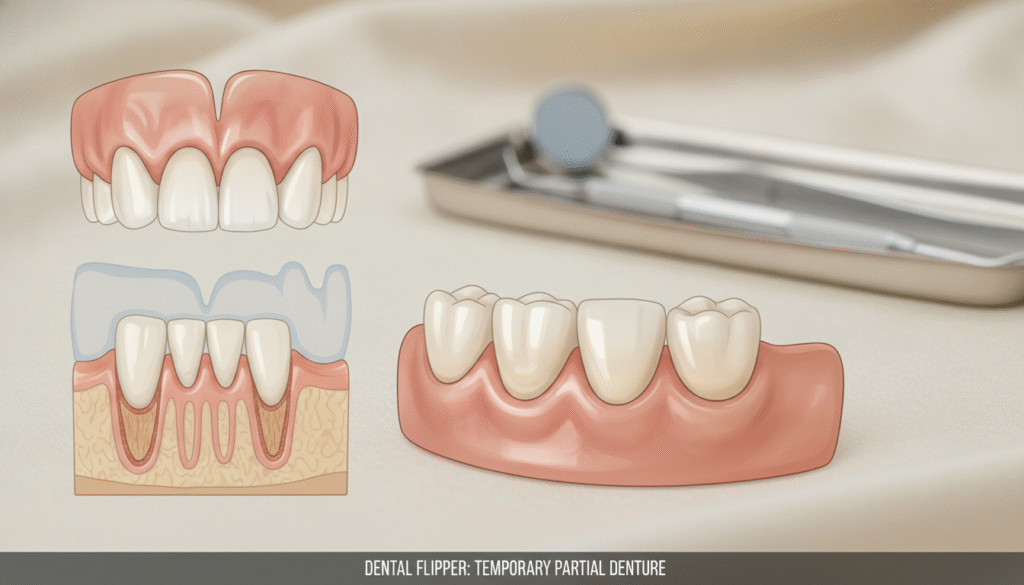
How does a flipper (temporary denture) work as a short-term solution? It’s a fake tooth on a thin pink plate that you clip in and take out yourself. The plate sits on your gums and hooks onto the teeth beside the gap. People wear one while they heal or wait for an implant or bridge, and it keeps the other teeth from moving.
Flippers are cheap, usually $300 to $500 for one tooth, and can be ready in a few days.
What is a flipper denture?
Its official name is an interim removable partial denture. One flipper can hold a single tooth or a few, and some go in the same day a tooth comes out.
Some flippers are mainly cosmetic and aren’t meant for chewing, so ask what yours is designed for.
What are the advantages?
A flipper is matched to the shade and shape of your teeth, so your smile looks complete right after you lose a tooth.
It’s also lightweight and easy to adjust as your gums heal. The table sums up the main benefits.
| Advantage | Description | Impact on Patients |
|---|---|---|
| Aesthetic Appeal | Custom shade-matching and contouring | Boosts confidence and self-esteem |
| Cost-Effectiveness | Affordable compared to other options | Accessible for a wider range of patients |
| Comfort | Lightweight and easily adjustable | Enhances daily wearability and ease of use |
What are the downsides?
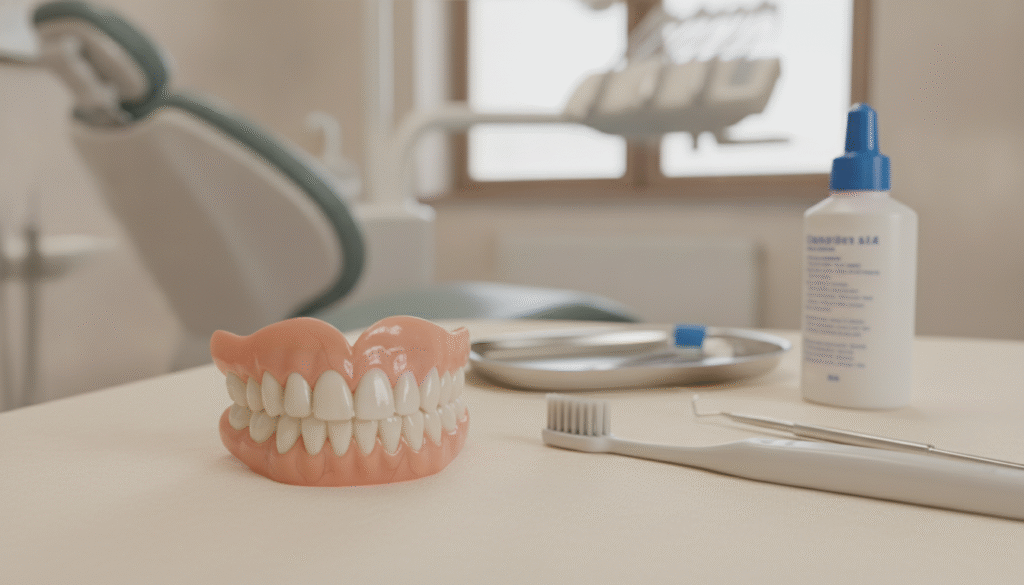
Acrylic has no metal frame, so a flipper can crack, especially if you chew hard food on it.
It covers part of your gums, which can trap plaque and limit saliva. As your gums and bone change, it may start to rub and cause sore spots.
Speech can feel a little off for a few days, and you’ll need to avoid hard or sticky foods.
How is a flipper made?
First your dentist looks at your gums and bite. Then they take an impression or a scan and match the tooth color. A lab builds the flipper, and you come back so the dentist can adjust the fit.
The table lists the usual materials.
| Material | Type | Characteristics |
|---|---|---|
| Polymethyl Methacrylate (PMMA) | Acrylic | Lightweight, durable, and easy to adjust |
| Composite Resin | Replacement Tooth | Natural appearance and good wear resistance |
| Stainless Steel | Clasps | Strong and corrosion-resistant |
How do you care for it?
Take it out before bed so your gums get a break. Rinse it after meals. Once a day, brush it with a soft brush and denture cleaner, since toothpaste scratches acrylic, and leave it soaking overnight. Use lukewarm water, never hot.
Your gums will keep changing as they heal, so the flipper may need a reline or even a new one. Regular checkups catch that.
When does a flipper make sense?
It’s common after a tooth is pulled, especially a front tooth, while the gums heal. That can take weeks or months, and up to a year after a bone graft.
It’s also a placeholder while you wait for an implant.
For teens born without a tooth, a flipper can hold the space until they’re old enough for an implant, sometimes alongside teeth straightening.
How does it affect your oral health?
If it isn’t cleaned well, the area under the base can get sore and inflamed, a condition called denture stomatitis. Cleaning it daily and leaving it out at night help prevent that.
The clasps can also trap plaque against nearby teeth, so brush around them carefully. The table shows the main effects.
| Aspect | Impact on Gum Health | Impact on Remaining Teeth |
|---|---|---|
| Covering of Gums | Can lead to increased risk of gum disease | Prevents adjacent teeth from shifting |
| Saliva Interaction | Impairs natural cleaning action | Helps maintain alignment |
| Hygiene Practices | Essential to prevent denture stomatitis | Requires careful cleaning to avoid caries |
How does it compare with other temporary options?
A partial denture with a metal frame is stronger and more stable, but it costs more. An immediate denture replaces a whole arch right after extractions. The table compares a flipper with a partial.
| Parameter | Flipper Dentures | Partial Dentures |
|---|---|---|
| Material | Lightweight acrylic | Reinforced metal framework |
| Tooth Replacement | 1-2 teeth | Multiple teeth |
| Durability | Short-term | Long-term |
| Cost | Lower | Higher |
| Aesthetics | Less visible | Metal framework may show |
How long can you wear one?
Usually from a few weeks to six to twelve months. It’s meant to bridge the gap until permanent treatment.
The bone under the gap keeps shrinking without a root, so the flipper gets looser over time.
Replace or adjust it if it cracks, feels loose, has sharp edges or makes chewing painful.
How do you get used to it?
Reading out loud for a few days helps your speech adjust. Some pressure and extra saliva are normal at first.
Start with soft foods like eggs, pasta, fish and yogurt, and chew on both sides. Skip nuts, hard bread and sticky candy for now.
The table lists foods to choose and avoid. See your dentist if it hurts or feels too loose.
| Food Type | Recommended | Avoid |
|---|---|---|
| Soft Foods | Pasta, Eggs, Fish | Hard Breads, Nuts |
| Fruits | Soft Fruits, Yogurt | Sticky Candy, Tough Meats |
| Vegetables | Cooked Vegetables | Crunchy Vegetables |
How much does a flipper cost?
One tooth usually costs $300 to $500, and a flipper with several teeth can go past $1,000. The number of teeth, the materials and where you live all affect the price.
Insurance often treats a flipper like a partial denture. Many plans cover about half of major work, but waiting periods and annual limits can apply.
What should you ask your dentist?
Ask how long you’ll need the flipper, when permanent treatment can start and whether you’re a candidate for an implant.