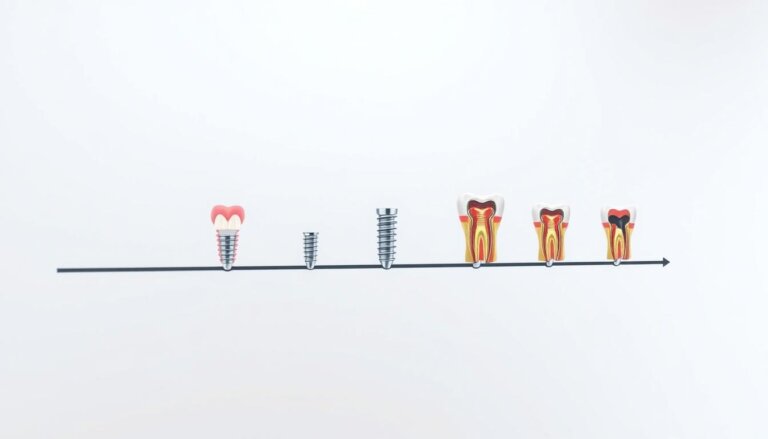
How long after extraction do I have to wait before getting an implant?
Did you know that nearly 70% of adults aged 35 to 44 have lost at least one permanent tooth? This shows a common dental problem many face. It raises a key question: when can one get dental implants?
The time to get an implant varies a lot among people. Sometimes, a dentist can put in an implant right after a tooth is removed. But, many need to wait two to three months. This wait lets the bone heal and integrate properly.
Also, some people might have to wait longer than three months. This depends on how fast they heal, the bone quality, and any health issues they have.
Knowing these timelines is key for those thinking about dental implants. The choice to go for immediate, early, or delayed placement is made with care. It’s to ensure the best results for dental health in the long run.
Key Takeaways
- The timeline for dental implants varies by patient.
- Immediate placement can occur right after tooth extraction.
- Early placement typically happens two to three months post-extraction.
- Delayed placement may be necessary for some patients.
- Individual healing and bone integrity are critical factors.
Understanding Dental Extractions
Dental extractions are a common dental procedure. They help keep our mouths healthy. Knowing about this process helps us understand why some people might need dental implants later. An extraction is when a dentist carefully removes a tooth from its socket.
What is a Dental Extraction?
A dental extraction is a surgery to remove a tooth from its jaw socket. It’s done for many reasons, like severe tooth decay or infection. The dentist uses local anesthesia to keep the patient comfortable during the procedure.
Common Reasons for Tooth Extraction
There are several reasons why a tooth might need to be extracted. Here are some common ones:
- Severe Tooth Decay: If a tooth is too decayed to fix, it might need to be pulled.
- Irreversible Pulpitis: This is a painful condition that requires the tooth to be removed.
- Periodontal Disease: Advanced gum disease can weaken teeth, making them need to be pulled.
- Trauma: Mouth injuries can cause teeth to break beyond repair.
- Orthodontic Requirements: Sometimes, teeth are removed to make space for alignment.
These reasons show why quick action is important. It helps avoid problems like jawbone loss, which can make implant placement after extraction harder.
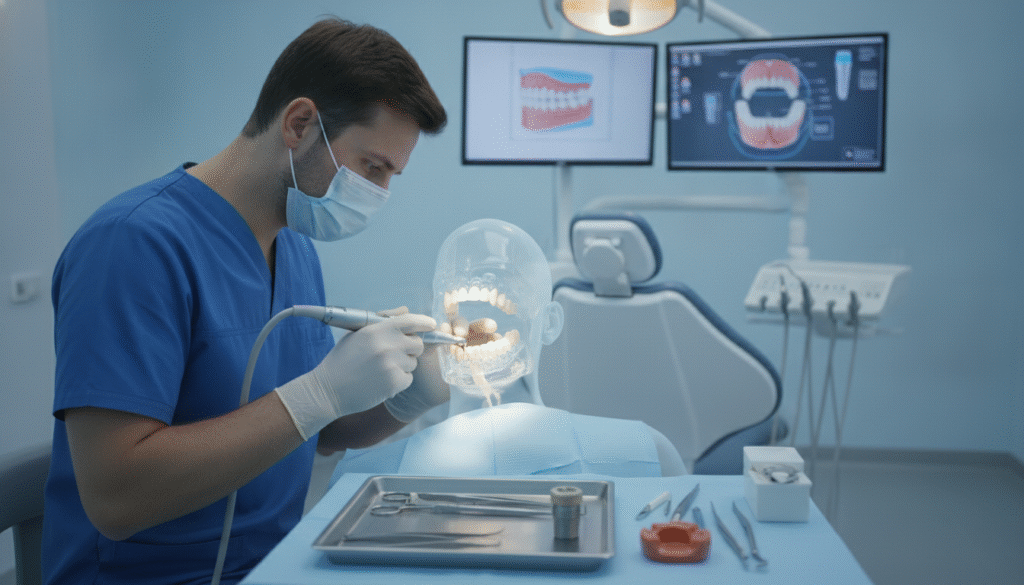
The Extraction Procedure Explained
The extraction process involves several steps:
- Preparation: The dentist checks the patient’s medical history and takes X-rays.
- Anesthesia: Local anesthesia is given to numb the area.
- Luxation: The dentist uses tools to loosen the tooth.
- Extraction: The tooth is then carefully pulled out.
- Socket Assessment: The dentist checks the socket for any leftover debris or infection.
Knowing about this process is key. The socket starts a healing process after extraction. This healing is important for dental implants to work well. If the socket heals right, it can support an implant, helping patients get their smiles back.
The Healing Process After Extraction
The healing process after a tooth extraction is very important. It affects how quickly you recover. Knowing the stages of healing helps manage your recovery better. These stages include hemostasis, inflammation, proliferation, and remodeling.
Duration of Healing Time
The first healing stage for soft tissue closure is 1 to 2 weeks. But, bone remodeling can take longer, up to 6 to 12 weeks for early implants. For delayed implants, it can take 3 to 6 months or more. This shows how important it is to assess each case individually.
Factors Affecting Healing
Many things can affect how well you heal after a tooth extraction:
- Oral Health Status: If you have oral health issues, it can slow down healing.
- Bone Density: Having enough bone is key for healing.
- Smoking Habits: Smoking can slow healing and increase risks.
- Overall Health Conditions: Health issues like diabetes can also slow healing.
- Location of Tooth: Where the tooth was can also affect how long it takes to heal.
Signs of Proper Healing
Knowing the signs of healing is important. Look for:
- Granulation tissue forming, which means healing is happening.
- No dry socket, which means no major complications.
- Less swelling and pain over time, which means healing is going well.
By watching for these signs, you can catch any problems early. Understanding tooth extraction recovery time and its factors can help you heal faster and move towards dental implants smoothly.

Types of Dental Implants
There are many types of dental implants, each for different needs and jaw shapes. Knowing about them is key if you’re thinking about getting a dental implant procedure. The main types are endosteal and subperiosteal implants.
Endosteal Implants
Endosteal implants are the most common. They are put directly into the jawbone, like small screws or blades. Made from materials like titanium or zirconia, they help the bone grow around them. This makes a strong base for fake teeth.
Subperiosteal Implants
Subperiosteal implants are for those who don’t have enough jawbone for endosteal implants. They have a metal frame that sits on the jawbone but under the gums. This option is good for people who can’t get bone grafts.
| Type of Implant | Placement | Material | Ideal Candidates |
|---|---|---|---|
| Endosteal | Directly into the jawbone | Titanium or Zirconia | Most patients with sufficient bone density |
| Subperiosteal | On top of the jawbone | Metal framework | Patients lacking healthy bone |
It’s important to know the differences between these implants. This affects the dental implant procedure and how long it takes. Most implants today are endosteal, which is what we usually talk about when discussing timing after tooth extraction.
Importance of Timing for Implants
The timing of dental implant placement is key for the best results. It’s not just about when it’s convenient. It affects how well the implant works. Knowing the difference between immediate and delayed placement helps both patients and dentists make better choices.
Risks of Immediate Implant Placement
Immediate implant placement might seem good, but it has risks. If the area is infected or the bone and gum aren’t healthy, the implant might fail. The body might not integrate the implant properly, leading to problems.
Also, immediate placement can lead to more failures because the implant doesn’t get enough support. This can cause serious issues that harm the implant’s long-term success. So, it’s important to check the area carefully before placing the implant.
Benefits of Delayed Implant Placement
Delayed implant placement has many benefits. It lets the area fully heal, making it more stable for the implant. This reduces the chance of problems and ensures the implant is in good bone.
Also, waiting allows for treating infections or bone loss. This makes the implant more likely to succeed. It also leads to better looks and a happier patient.
Recommended Waiting Period
Knowing when to get dental implants after tooth extraction is key for healing and success. The right time for implants varies for everyone. This section will give you general guidelines and when you might get an implant right away.
General Guidelines for Waiting
There are three main times for getting implants after tooth extraction:
- Immediate Implant Placement: This is when you get an implant the same day as the tooth is pulled. It’s best for those with no infection and enough bone. You also need a strong gum and a solid bone on the cheek side.
- Early Implant Placement: This is 1 to 3 months after the tooth is pulled. It’s good for minor infections or when the gum needs time to heal. It lets the bone recover a bit while using what’s left.
- Delayed Implant Placement: This is 3 to 6 months or more after the tooth is pulled. It’s best for serious infections or big bone loss. It gives the bone and gum time to fully heal and might need bone grafting.
Cases that Allow for Immediate Implants
Immediate implants are possible under certain conditions. These include:
- No acute infection in the tooth socket.
- Enough bone to hold the implant.
- Using socket preservation during the tooth pull to keep bone and allow for quicker implant placement.
Following these guidelines helps patients and dentists decide the best time for implants. Getting it right is important for healing and the implant’s long-term success.
Bone Grafting Considerations
Bone grafting is key in getting the jaw ready for dental implants. When a tooth is pulled, the jawbone might shrink. This can make it hard to place an implant. Knowing when a graft is needed is important for implant success.
Dental experts often use Cone Beam Computed Tomography (CBCT) imaging. This tool helps them see the jawbone’s size and strength. If the bone isn’t strong enough, a graft might be suggested.
When Bone Grafting is Necessary
Bone grafting is needed when:
- The jawbone is too thin or weak to support an implant.
- There is significant bone loss due to chronic infection or trauma.
- A tooth extraction has already occurred, leading to alveolar ridge resorption.
Types of Bone Grafts
There are different bone grafts for various needs:
| Type of Graft | Description | Source |
|---|---|---|
| Autograft | Bone taken from the patient’s own body, typically from the hip or chin. | Patient |
| Allograft | Bone sourced from a human donor, processed and sterilized. | Human Donor |
| Xenograft | Bone derived from an animal source, usually bovine. | Animal (Bovine) |
| Alloplast | Synthetic materials that serve as a scaffold for bone growth. | Synthetic |
The graft works as a base for the patient’s bone cells to grow. It takes about 3 to 6 months for the graft to bond with the jawbone. This time is important for building a strong base for the implant.
“Bone grafting is not just a procedure; it’s a vital step in ensuring the longevity and success of dental implants.”
Other Factors Influencing Implant Timing
Many factors can change how long it takes for dental implant surgery. It’s important to think about health conditions and medicines. These can affect how well you heal and if the implant works.
Underlying Health Conditions
Diabetes can slow down healing. It hurts blood flow and the immune system, which are key for the implant to bond with bone. People with diabetes might need more time to heal and must keep their blood sugar in check.
Heart problems can also slow healing. It’s smart to talk to your doctor about your health before getting implants.
Medications and Their Effects
What medicines you take can also change the timeline for implants. For example, drugs for osteoporosis can cause jaw problems. This might mean you need to stop taking them for a while before surgery.
Medicines that weaken the immune system can also slow healing. If you’re taking these, talk to your dentist about when to get implants.
Waiting too long for implants can cause problems. It can lead to bone loss, teeth shifting, and even changes in how your face looks. It’s important to think about these risks when planning your implant surgery.
Consultation with a Dental Professional
Getting a consultation with a dentist is a key step towards dental implants. This first meeting helps create a plan just for you. It’s all about your unique needs.
A thorough check-up is vital. It looks at your oral health, bone density, and overall health. This includes:
- A detailed medical and dental history review.
- A clinical examination of the oral cavity.
- Advanced 3D radiographic imaging (CBCT) to see bone anatomy, nerve pathways, and sinus locations.
This check-up is important. It finds hidden risks that a regular check-up might miss. Knowing these risks helps plan the best time for your dental implants.
When you go for your consultation, ask your dentist some questions:
- Based on my CBCT scan, what is my current bone density classification?
- Am I a candidate for immediate placement, and what are the specific risks in my case?
- How will my medical history influence the proposed dental implant timeline?
These questions turn the consultation into a dialogue. Your dentist is there to guide you. They want you to feel confident and informed at every step.
Preparing for Implant Surgery
Getting ready for dental implant surgery is key to success. It’s a critical step in the dental implant journey. It ensures the surgery goes smoothly and the patient recovers well. Following the right steps before surgery can greatly improve the outcome.
Before the surgery, patients need to follow certain guidelines. These steps help prepare them well. They include:
- Managing Health Conditions: Tell your dentist about any health issues. They might adjust your medications to avoid problems during surgery.
- Fasting Requirements: If you’ll have IV sedation, you might need to fast beforehand. This reduces risks from anesthesia.
- Pre-operative Antimicrobial Rinses: Using mouth rinses with antimicrobial properties can lower infection risks.
Also, imaging and tests are vital for planning the surgery. A cone-beam computed tomography (CBCT) scan is often used. It gives detailed, 3D views of the jaw. This helps place implants accurately and reduces trauma during surgery.
By following these steps and getting the right imaging, patients can improve their chances of a successful surgery. This careful preparation is vital for the best results in implant surgery.
Post-Implant Care
After getting an implant, it’s important to take good care of it. This helps it heal well. The healing time is usually three to six months. During this time, the implant gets stronger by bonding with the jawbone.
Right after the surgery, you need to take care of yourself. You should manage swelling and eat soft foods. Here are some tips:
- Use cold compresses to reduce swelling.
- Eat soft foods to avoid moving the implant too much.
- Keep the area clean to prevent infection.
There’s a difference in caring for healing abutments and submerged implants. For healing abutments, clean the area but don’t brush directly. For submerged implants, follow your dentist’s advice.
Long-term care for implants is important. It keeps the implant working well for a long time. Here’s what you need to do:
- Get regular check-ups and cleanings.
- Clean between your teeth every day with special brushes or water flossers.
- Use a guard to protect your teeth from grinding at night.
By following these tips, you can make sure your implant heals well and lasts a long time.
Potential Complications
It’s important to know about possible problems after getting dental implants. Dental implants are usually safe and work well. But knowing the risks can help patients deal with their recovery better.
There are common issues that can happen after getting implants. These problems can be mild or serious. Here are some of the most common ones:
- Infection: This can happen at the implant site, causing pain and possibly failing the implant.
- Lack of osseointegration: This means the implant doesn’t bond with the jawbone. It can make the implant move.
- Nerve damage: The implant might hurt nearby nerves, leading to pain or numbness.
Another problem is peri-implant mucositis. It’s a mild inflammation of the soft tissue around the implant. But peri-implantitis is more serious. It involves bone loss and needs quick action.
Patients should watch for signs of trouble and talk to their dentist if they see:
- Persistent pain or swelling that doesn’t go away.
- Signs of infection, like pus.
- Bone loss around the implant shown on X-rays.
- Neuropathic pain, which means the implant might be pressing on nerves.
- Any movement in the implant, which should be stable.
Spotting these signs early can help fix problems quickly. This keeps the dental implants working well.
Success Rate of Dental Implants
Dental implants have a high success rate, often over 95% in healthy patients. This makes them a top choice for replacing teeth. Several key factors contribute to this success.
It’s important for both patients and dentists to understand these factors. They include:
- Patient-related factors: Non-smokers with good oral hygiene and controlled diseases do better.
- Surgical factors: Careful site preparation and achieving primary stability are key.
- Prosthetic factors: A well-fitting restoration and managing bite forces are important.
Factors Contributing to Implant Success
Another key factor is the timing of implant placement. Waiting the right amount of time after tooth loss is critical. This allows for healing and better long-term results.
Long-Term Outcomes for Implants
Studies show dental implants can last decades with proper care. They don’t get cavities, but watching for gum disease is important. Regular dental visits and good oral hygiene help keep implants healthy.
| Factor | Impact on Success Rate | Recommended Practices |
|---|---|---|
| Patient Health | High | Maintain good oral hygiene; avoid smoking |
| Surgical Technique | High | Atraumatic site preparation; achieve primary stability |
| Prosthetic Fit | Moderate | Ensure passive fit; control occlusal forces |
Cost Considerations
Understanding the cost of dental implants is key for those thinking about getting them. The price can change a lot based on several things. This includes if you need extra steps like bone grafting and what kind of tooth replacement you choose. Knowing these costs helps you talk better with your dentist and insurance.
The cost of one dental implant includes a few parts:
- Surgical placement of the implant
- Abutment (the connector between the implant and the crown)
- Final crown (the visible part of the tooth)
Also, the total cost might go up if you need extra steps like bone grafting. These steps can make the implant work better but cost more.
Typical Cost of Dental Implants
On average, a dental implant can cost between $3,000 and $4,500. This price can change based on how complex the case is and where you live. Here’s a list of typical costs for dental implants:
| Component | Average Cost |
|---|---|
| Implant Placement | $1,000 – $3,000 |
| Abutment | $300 – $500 |
| Crown | $1,000 – $3,000 |
| Bone Grafting (if needed) | $300 – $3,000 |
Insurance Coverage for Implants
More insurance plans now cover dental implants. But, it’s important to know that not all costs are covered. In the past, implants were seen as cosmetic. Now, they’re often seen as a medical need to fix oral health issues.
Insurance policies might have limits, such as:
- Annual maximums on coverage
- Percentage of costs covered (often 50% to 80%)
- Specific exclusions for certain procedures
It’s a good idea to talk to your insurance about what they cover. This helps you plan for the costs of dental implants.
Seeing dental implants as a long-term investment in your health is smart. Talking with your dentist about costs and insurance can help you plan better.
Frequently Asked Questions
Dental implants can seem complex. Many people wonder about timing and procedures. Answering these questions can clear up confusion and ease worries.
Common Queries About Implant Timing
Can I get a dental implant the same day my tooth is pulled? Yes, if you have enough bone and no infection. Is it better to wait after an extraction before getting an implant? Waiting is good if there’s an infection or bone loss.
But, waiting too long can cause problems. This includes jawbone shrinkage and teeth shifting.
Myths vs. Facts About Implant Procedures
Many myths surround dental implants. One myth is that implants are painful. But, the procedure is done under local anesthesia, and pain after is usually mild.
Another myth is that implants are too expensive. But, implants can save money in the long run. They are cheaper than bridges or dealing with tooth loss issues.
By answering these questions and clearing up myths, patients can make better choices. Knowing the truth can lead to happier outcomes and satisfaction with implants.