
How Long Do Dental Bridges Last on Average?
Did you know dental restorations can last differently? Studies show a well-cared-for dental bridge can last 10 to 15 years. Some people even have their bridges for over 20 years. This highlights the need to know what affects these dental solutions’ lifespan.
The life span of a dental bridge isn’t just a number. It depends on the material, how the body reacts, and how well you care for it. For example, traditional bridges last 5 to 15 years. But, implant-supported ones can last more than 30 years with good care.
We’ll look into how the choice of materials, like zirconia versus porcelain-fused-to-metal, affects durability. We’ll also see how important the health of your gums is in keeping these restorations working well.
Key Takeaways
- The lifespan of dental restorations varies widely based on care and materials.
- Well-maintained bridges can last over 20 years.
- Traditional fixed bridges generally last 5 to 15 years.
- Implant-supported bridges can exceed 30 years.
- Material choice significantly influences longevity.
- Patient behavior and periodontal health are critical factors.
Understanding Dental Bridges and Their Purpose
Dental bridges are important prosthetic devices. They help restore function and look in people with missing teeth. They also keep the mouth healthy by stopping problems caused by tooth loss. Knowing how they work is key for those thinking about getting one.
What Are Dental Bridges?
A dental bridge is a fixed device that replaces missing teeth. It has two parts: the abutment teeth and the pontic. The abutment teeth are the real teeth or implants on either side of the gap. The pontic is the fake tooth that fills the gap.
This design spreads out chewing forces well. It makes sure the other teeth don’t get too much stress.
Benefits of Dental Bridges
Getting a dental bridge has many benefits:
- Restoration of Function: Bridges help you chew and speak better.
- Aesthetic Improvement: They make your smile look better by filling gaps.
- Prevention of Tooth Movement: They stop teeth from moving by filling gaps.
- Support for Facial Structure: They keep the face shape by supporting the jawbone.
Types of Dental Bridges
There are different types of dental bridges for different needs:
- Traditional Bridges: These are the most common. They use crowns on the abutment teeth.
- Cantilever Bridges: Used when there’s only one tooth next to the gap. They’re anchored on one side.
- Maryland Bridges: Also called resin-bonded bridges. They use a metal framework to support the pontic.
- Implant-Supported Bridges: These use dental implants for support. They’re very stable.
Average Lifespan of Dental Bridges
The lifespan of dental bridges depends on many factors. Knowing these can help patients take better care of their teeth and bridges.
Factors Impacting Longevity
Many things can affect how long a dental bridge lasts. These can be split into two groups: things the patient can control and things the dentist does.
- Patient-dependent factors: How well you brush your teeth, what you eat, and habits like grinding your teeth can all matter.
- Clinician-dependent factors: The dentist’s skill, how well the bridge fits, and the type of cement used are key. A well-made bridge with good materials will last longer.
Also, where in your mouth the bridge is can make a difference. Bridges in the back teeth face different forces than those in the front.
Typical Duration of Different Types
Different kinds of dental bridges last for different lengths of time:
| Type of Bridge | Average Lifespan |
|---|---|
| Porcelain-fused-to-metal | 10-15 years |
| All-ceramic | 10-15 years |
| Metal | 15-20+ years |
| Zirconia | 15-20+ years |
| Implant-supported | 20-30+ years |
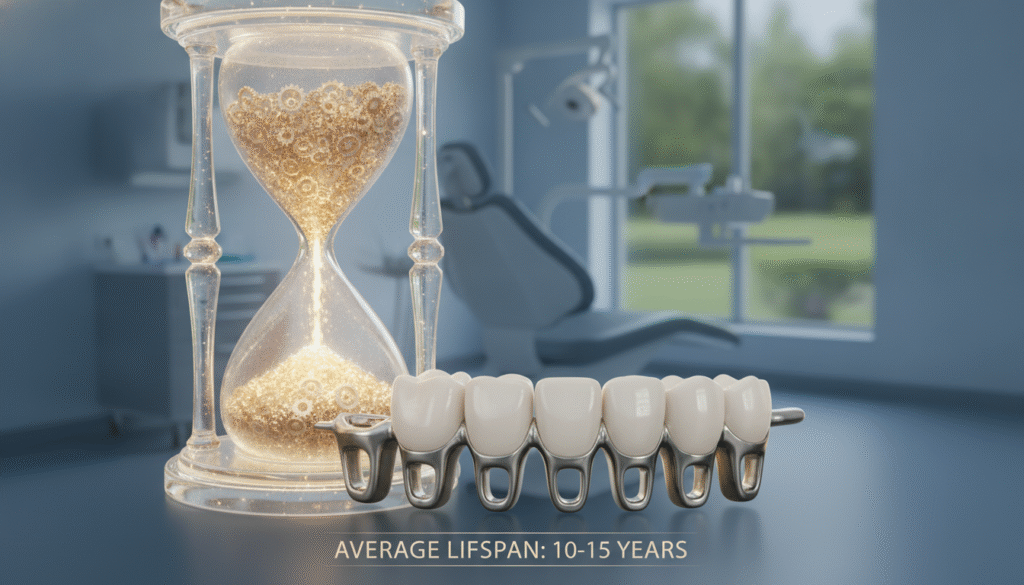
In summary, traditional bridges usually last 10 to 15 years. But newer materials like zirconia and bridges supported by implants can last much longer. The latter, not needing natural teeth, often lasts the longest.
Proper Care and Maintenance for Longevity
Keeping your dental bridge in good shape is key to its long life and function. It’s not just about cleaning; it’s about a consistent oral hygiene routine and regular dental visits. This part will cover the main steps of dental bridge maintenance, including daily habits and the need for dental check-ups.
Daily Oral Hygiene Practices
Good dental bridge care starts with a thorough daily oral hygiene routine. Here are some important steps:
- Brushing: Use a soft-bristle toothbrush at a 45-degree angle to the gums. This helps remove plaque without harming the gums.
- Flossing: Use a floss threader or superfloss to clean under the pontic. This area is where plaque tends to build up.
- Water Flossing: A water flosser can effectively clean below the gum line, making cleaning more efficient.
- Fluoride Toothpaste: Fluoride toothpaste can strengthen tooth enamel and prevent decay around the bridge.
- Dietary Choices: Stay away from hard and sticky foods that can harm the bridge or dislodge it.
Sticking to these habits not only protects your bridge but also boosts your overall oral health.
Routine Dental Check-Ups
Regular dental visits are also vital for your bridge’s health. These should happen at least twice a year. They serve several important roles:
- Assessment of Cement Seal Integrity: Dentists check if the bridge is securely attached to the teeth.
- Detection of Secondary Caries: Regular checks help spot decay at the bridge’s edges, allowing for quick treatment.
- Evaluation of Periodontal Health: Dentists check the health of the gums and periodontal ligament, which is critical for the bridge’s longevity.
These steps form a solid plan for keeping your dental bridge in top shape, ensuring it works well for a long time.
By combining careful home care with professional dental advice, you can greatly extend your dental bridge’s life. For more on dental exams and cleanings, check out this link.
Signs of Wear and Tear
It’s important to know when a dental bridge is failing. Spotting these signs early can stop bigger problems and keep your mouth healthy.
Common Issues with Dental Bridges
There are several common problems with dental bridges. These might mean you need a new one. Here are some signs:
- Loose or Shifting Bridge: If your bridge feels like it’s moving, it might not fit right.
- Pain or Discomfort: Pain when you bite or chew could mean there’s a bigger issue.
- Visible Cracks or Chips: Damage to your bridge can make it weak.
- Persistent Bad Breath: Bad breath that won’t go away might mean food is trapped under your bridge.
- Swollen or Bleeding Gums: If your gums are sore or bleeding, it could be a sign of gum disease.
Knowing these signs helps figure out when you need a new dental bridge. Regular dentist visits can catch problems early and fix them quickly.
When to Consult a Dentist
If you see any of these signs, see a dentist right away. Feeling like your bridge is moving or unstable could mean it’s not fixed right. Also, if you have bad breath that won’t go away, it might mean food is stuck under your bridge.
Seeing a dentist quickly is key. They can tell if you just need a small fix or if you need a whole new bridge. Getting help fast can keep your teeth healthy for longer.
Comparing Bridges with Other Options
Looking at dental bridges, implants, and partial dentures helps patients make better choices. Each option has its own pros and cons. Knowing these differences is key to picking the right tooth replacement for you.
Dental Implants vs. Dental Bridges
Dental implants are seen as the top choice for tooth replacement. They have many benefits over bridges:
- Longevity: Implants can last 20-30 years or more, while bridges last 10-15 years.
- Bone Preservation: Implants keep the bone healthy, unlike bridges.
- Surgical Requirement: Implants need surgery, which might scare some off. Bridges don’t require surgery.
- Cost Consideration: Bridges are cheaper upfront than implants.
Though implants are better for durability and bone health, the choice depends on many factors. This includes your health and what you can afford.
Partial Dentures and Their Lifespan
Partial dentures are a removable option for tooth replacement. Their lifespan depends on several things:
- Material Quality: Cast metal partial dentures can last many years.
- Maintenance: Keeping them clean is important to avoid problems with nearby teeth.
- Comfort and Fit: Changes in your mouth can affect how well they fit, needing adjustments or new ones.
Partial dentures are a good choice, but they’re not as durable as implants or bridges. Think about your oral health and lifestyle when deciding.
Choosing the Right Dentist for Dental Bridges
Choosing the right dentist is key for your dental bridge’s longevity. The dentist’s skill greatly affects how long your bridge will last. Quality craftsmanship is what makes a bridge last for years, not just months.
The dentist’s skill is often overlooked. It’s not just about placing the bridge. It’s about understanding your dental health fully. Things like the condition of your teeth, how they’re prepared, and the bridge’s fit all matter.
Importance of Professional Expertise
It’s important to pick a dentist with special training in restorative dentistry. They’ll check your teeth carefully and prepare them right. This helps your bridge bond better.
A dentist who knows what they’re doing will also make perfect impressions. This ensures your bridge fits just right.
A bad fit can lead to problems like bacteria buildup. This can cause the bridge to fail and your teeth to decay. So, ask about their experience and methods when you visit.
Questions to Ask Your Dentist
Here are some questions to ask your dentist:
- What is your experience with different bridge materials?
- How do you ensure a precise marginal fit for the bridge?
- What type of cement do you recommend, and why?
- What are your long-term maintenance policies and warranty options?
These questions help you understand the dentist’s expertise. They also help you know what to expect. Knowing why they make certain choices can give you peace of mind about your bridge’s durability.
Financial Considerations
It’s important to know the financial side of dental bridges before deciding. The cost can change based on several things. These include how many units are needed, the materials, and how complex the procedure is.
In the U.S., dental bridges usually cost between $1,500 and $5,000. The price can go up or down based on the type of bridge. For example, a traditional three-unit bridge might cost less than an implant-supported one. Also, where you live can affect the price, as dental fees vary by region.
| Type of Bridge | Average Cost | Durability |
|---|---|---|
| Traditional Bridge | $1,500 – $3,000 | 5 – 15 years |
| Maryland Bridge | $1,000 – $2,500 | 5 – 10 years |
| Implant-Supported Bridge | $3,000 – $5,000 | 10 – 20 years |
Getting a dental bridge takes both time and money. The upfront cost might seem high, but think about the long-term benefits. Spending more on a durable material or an implant-supported bridge might save money in the long run. This is because you might not need to replace or fix it as often.
Insurance Coverage for Dental Bridges
Insurance coverage for dental bridges can vary a lot. Many plans cover part of the cost, usually around 50% after you meet your deductible. But, it’s key to check your plan carefully. Many have yearly limits and waiting times for big procedures.
Knowing about the costs and what insurance covers can help you make a better choice. Even with insurance, you’ll have to pay some of the bill. So, understanding both the costs and what your insurance covers is important for choosing the right dental bridge.
Patient Testimonials and Experiences
Real-life stories from patients show how long dental bridges last. These stories highlight the importance of lifestyle choices. They show how our daily habits affect our dental health.
Real-Life Stories on Longevity
Sarah had a dental bridge for over 20 years. She credits her good oral hygiene and regular dental visits. She also uses a nightguard to protect her bridge from grinding her teeth at night.
John’s story is different. His bridge failed after just five years. He didn’t floss often and ate too much sugar. This led to cavities and the need for a new bridge.
Impact of Lifestyle on Longevity
Lifestyle choices greatly affect how long dental bridges last. Using teeth to open packages can damage bridges. Chewing ice can also cause harm.
But, wearing mouthguards during sports can help. They protect dental work from injury. This can make bridges last longer.
In summary, patient stories show that dental bridges depend on patient choices. By learning from these stories, we can take better care of our teeth. This helps our bridges last longer.
Conclusion: Maximizing the Lifespan of Your Dental Bridge
The life of dental bridges depends a lot on how well you take care of them. They can last from 5 to 15 years, but with good care, they can last over 20 years. Keeping your teeth clean and visiting the dentist regularly is key.
New technologies are making dental bridges even better. For example, special cements can make the bridge stick to your teeth better. Also, new materials will make bridges stronger. Digital dentistry and AI will help make sure bridges fit perfectly, making them last longer.
Dental bridges do more than just fill gaps in your teeth. They are important for your health and happiness. Getting quality dental care and making smart choices can improve your life. Taking care of your dental bridge also helps your overall health.
