How Many Ultherapy Treatments Are Needed for Results
How Many Ultherapy Treatments Are Needed for Results
How many Ultherapy treatments do you need? For most people, one. The skin keeps improving for three to six months as new collagen forms. People with more sagging sometimes benefit from a second treatment, and most come back for a touch-up every one to two years.

What is Ultherapy?
Ultherapy is an FDA-cleared, non-surgical treatment that uses focused ultrasound to lift and tighten skin on the brow, chin, and neck and to smooth lines on the chest. It works best for mild to moderate sagging.
The ultrasound heats tissue at the same deep layer a surgeon works on in a facelift, without cutting the skin. That kick-starts collagen production. Lift and firmness improve over two to three months, with full results at three to six months.
Nothing is cut, so there are no scars, and most people go back to work the same day. The change is slow and looks natural. A follow-up every year or two keeps it going.
What decides how many sessions you need?
Age and skin condition matter most. Younger people with mild sagging usually need one session. Older adults or people with looser skin may need a second one later.
It works best in adults over 30 whose skin still has some elasticity.
Your goals count too. A subtle lift may take one session, while a bigger change may take more, or a different treatment.
| Factor | Recommendation |
|---|---|
| Age | Typically 30 and above |
| Initial Treatment Frequency | 1 session, 2 if significant collagen loss |
| Maintenance | Annual treatment |
| Visible Results | 6 weeks to 3 months |
| Common Side Effects | Redness, swelling, tenderness |
Typical treatment plans
At the consultation, the provider checks your skin type, age, and how loose your skin is, then suggests a plan.
One session is usually enough. Some people with more laxity add a second treatment later. Most changes show up two to three months after the first one.
Your first treatment
Before the visit, your provider may ask you to stop aspirin, ibuprofen, and some supplements that raise the risk of bruising.
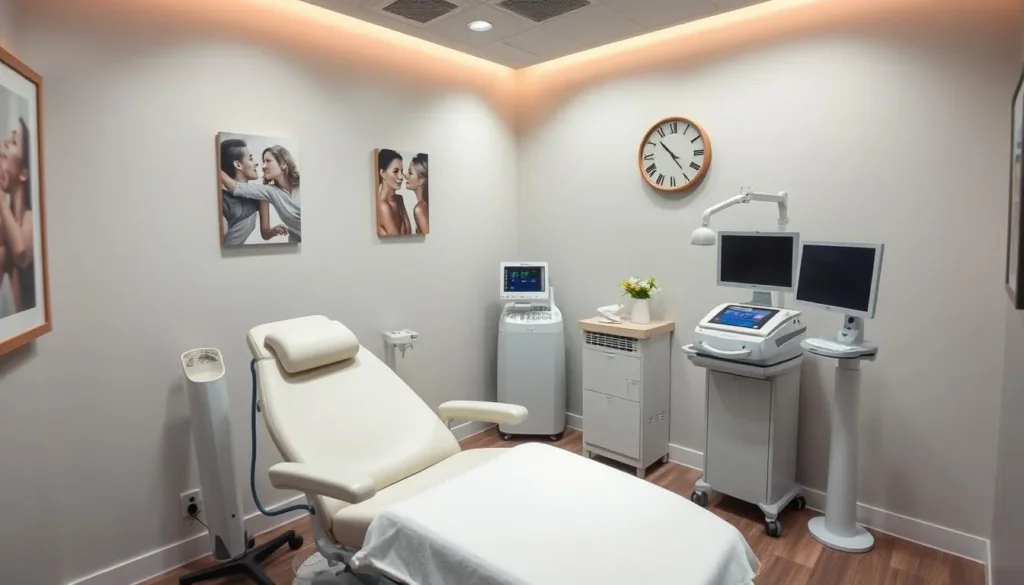
The treatment takes about 30 to 90 minutes depending on the area. You’ll feel heat and tingling as the energy is delivered.
| Procedure Aspect | Details |
|---|---|
| Pre-Treatment Recommendations | Avoid certain medications and supplements; hydrate well; maintain a good skincare routine |
| Procedure Duration | 30-90 minutes, depending on the area |
| Techniques Used | Micro-focused ultrasound energy |
| Immediate Effects | Minor redness, sensitivity, which subside quickly |
What is recovery like?
Usually easy. Your skin may be red, a little swollen, or tender for a few hours to a few days. Some people bruise, and that fades in about a week.
For the first day, skip the gym. Keep out of strong sun, and hold off on acids, retinoids, and scrubs for a week. A few days without alcohol helps keep swelling down. If you’re sore, an over-the-counter pain reliever is fine.
| Post-Treatment Care | Recommendations |
|---|---|
| Avoid Sun Exposure | Protect skin from direct sunlight to maintain results |
| Skincare Routine | Use gentle products, avoid those with strong acids or retinoids |
| Physical Activity | Limit strenuous activities for at least 24 hours |
| Alcohol Consumption | Avoid for a few days to reduce swelling |
| Facial Care | Do not massage or scrub treated areas |
How long do results last?
Results usually last a year or two. Age, sun exposure, smoking, and skin care all affect how long.

Most people schedule a touch-up every one to two years. Some keep their results longer, especially with good sun protection.
| Duration | Effects | Recommendations |
|---|---|---|
| Immediate to 6 months | Tightened skin, boosted collagen | Review results; consider touch-ups |
| 6 months to 1-2 years | Maintained skin firmness | Touch-up treatments for sustained results |
| 2 years or more | Gradual dissipation of initial effects | Periodic evaluations and treatments as needed |
Can you combine it with other treatments?
Yes. Botox, fillers, laser resurfacing, and Kybella are common add-ons, since each one fixes something Ultherapy doesn’t. When fillers are part of the plan, Ultherapy usually comes first.
| Procedure | Benefit | Optimal Combination |
|---|---|---|
| Dermal Fillers | Enhances collagen production | Ultherapy before fillers |
| BOTOX | Reduces dynamic wrinkles | Complementary with Ultherapy |
| Laser Resurfacing | Corrects skin texture and pigmentation | Sequential with Ultherapy |
| Thermage Eyelids | Tightens eyelid skin | Synergistic with Ultherapy |
| Nova Threads | Addresses skin laxity | Combined around jowls |
| Kybella | Removes submental fat | Precedes Ultherapy for jawline definition |
How much does Ultherapy cost?
In the U.S., a session usually costs $1,000 to $5,000 depending on the area treated and the city. A full face often runs $2,000 to $4,000, and in New York a face and neck treatment can cost $4,000 to $5,500.
Typical price ranges by city:
| City | Cost Range |
|---|---|
| New York, NY | $1,500 – $5,000 |
| Chicago, IL | $1,200 – $4,500 |
| Los Angeles, CA | $1,400 – $4,800 |
| Miami, FL | $1,300 – $4,700 |
| Austin, TX | $1,000 – $4,000 |
Insurance doesn’t cover Ultherapy because it’s cosmetic, but many clinics offer financing.
FAQ
How many Ultherapy treatments are needed for results?
One for most people. Those with more sagging may benefit from a second treatment later.
How long does the Ultherapy procedure last?
About 30 to 90 minutes, depending on the area. Most people go back to their day right after.
How long do Ultherapy results last?
Usually a year or two. Sun protection and good skin care help them last.
What is the average pricing for Ultherapy in the United States?
Usually $1,000 to $5,000 per session, depending on the area and city.
Are insurance and financing options available for Ultherapy?
Insurance doesn’t cover it because it’s cosmetic, but many clinics offer financing.