Is 60 too old for thread lift?
Is 60 Too Old for Thread Lift? Age and Skin Tightening
Is 60 too old for a thread lift? Not necessarily. The procedure takes about 45 minutes, and results can last up to three years, which is why it’s popular with people from their 30s through their 60s. Whether it suits you after 60 depends far more on your skin and your health than on the number.
Threads tighten skin and get it to make more collagen, and because there’s no general anesthesia involved, they’re an option for older adults who can’t or don’t want to go under. Most people go back to their normal routine right away.
The short version
Here’s the quick version: a thread lift takes 45 minutes to an hour, results can last up to three years, and most people are back to their day almost immediately. Side effects are usually limited to some swelling and bruising. It’s typically done for people aged 30 to 60, and older patients can be good candidates too if they’re healthy.
Understanding Thread Lifts: What Are They?
In short, it’s a way to lift sagging skin without surgery. Fine medical-grade threads go in just under the skin and pull it gently upward, with no incisions and no general anesthesia.
What happens during the procedure?
Using fine needles, your provider slides the threads under the skin. Depending on the type of thread, it takes 15 to 45 minutes, and a topical anesthetic keeps you comfortable.
The threads lift and tighten as soon as they’re in, and they also kick off collagen production, which helps the result last. NovaThreads, for example, dissolve in four to six months, but with collagen support the lift can hold for a year or more.
Applications of Thread Lifts
Threads can be used on the face, neck, cheeks and jawline, and even on the breasts. They’re also used for skin that loosened after weight loss or pregnancy. You’ll see some lift right away, with the best results at one to two months.
Who Is an Ideal Candidate?
Typical candidates are in their 30s to early 50s and want to avoid surgery. Plenty of people over 60 choose threads too, because the treatment is less invasive than a facelift and doesn’t require general anesthesia, which matters if you have other health issues.
| Aspect | Thread Lift | Facelift Surgery |
|---|---|---|
| Procedure Time | 15-45 minutes | 2-4 hours |
| Results Duration | 1-3 years | Up to a decade |
| Recovery Time | Immediate return to work | 2-4 weeks |
| Risk of Complications | Minimal | Moderate to High |
Benefits of Thread Lifts for Mature Skin
For mature skin in particular, the appeal is a visible lift without the risks that come with surgery at an older age.
Immediate Results
You’ll notice the difference as soon as you look in the mirror: skin looks lifted and firmer the same day. And while filler typically lasts months, a thread lift can last up to three years.
Your body absorbs the threads by about the sixth month, but the tightening they set in motion keeps working after that.
Collagen Production
Then there’s the collagen. The threads prompt your skin to make more of it, which slowly improves texture and firmness.
Keep stimulating collagen and your skin stays in better shape for longer.
Why skip surgery?
A thread lift takes 30 to 60 minutes, much less time than a facelift, and recovery is quick. For older adults who are nervous about surgery, that’s a big part of the appeal.
Threads also pair well with treatments like chemical peels and Botox, often for less than surgery would cost. The usual side effects are mild swelling or bruising that clears up quickly.
Common Areas Treated with Thread Lifts
Sagging skin is the main reason people ask about threads. Here’s where they’re used most.
Face and Neck
The face and neck are the most common areas, usually for people from their late 30s into their 60s. Threads can lift sagging cheeks, tighten jowls and help with droopy eyelids and forehead lines.
What about the rest of the body?
Threads aren’t limited to the face. After weight loss or pregnancy, loose skin on the upper arms, thighs and belly is common, and a thread lift can tighten it up.
So threads offer a way to tighten sagging skin without surgery, whether it’s on the face, the neck or elsewhere. People like the fast results and the longer-term collagen boost.
How thread lifts work
The idea is to lift loose skin and then let your body do the rest. The threads trigger a healing response, and that response produces new collagen.
How the threads go in
Most thread lifts use PDO (polydioxanone) threads, placed under the skin with a fine needle. PDO is a well-established medical material, and the threads come in different textures and lengths for different areas. Once they’re in place, they lift the skin right away.
The whole thing takes 30 to 60 minutes. Some swelling and bruising is normal and fades within a few days. Results typically last six to twelve months, and the threads dissolve within two to six months.

Collagen Stimulation
The threads create tiny areas of injury as they settle in, and fibroblasts respond by producing new collagen. It takes four to eight weeks to see that effect as the skin becomes tighter and smoother.
Some newer threads, such as Excellence Visage and Definisse, break down more slowly, over nine to twelve months, so they keep stimulating collagen, hyaluronic acid and elastin for longer.
Let’s look at some key points about this procedure:
| Aspect | Details |
|---|---|
| Material | PDO, PLLA, PLCL |
| Procedure Duration | 30-60 minutes |
| Recovery Time | 2-3 weeks for full recovery |
| Effective Duration | 6-12 months |
| Complications | Minimal when performed by qualified professionals |
| Cost | Varies, approx. $4,000 in some cases |
Is 60 too old for thread lift?
Many experts say age shouldn’t stop older patients from getting thread lifts. Dr. Vincent Wong believes age doesn’t automatically mean a thread lift won’t work. If the skin is healthy and making enough collagen, the results can be good.
People over 60 who take good care of their skin can see big improvements. Thread lifts work best for those in their mid-30s to mid-60s. But, it’s the skin’s health, not just age, that matters. Combining age and skin tightening with medical checks leads to the best results.
Success rates and safety are key. The American Society of Plastic Surgeons says thread lifts are safe and you recover in a few days. Traditional facelifts take three months to recover from. The NIH reports a 90% success rate for thread lifts, and they’re quick, taking less than an hour.
A detailed analysis reveals:
| Treatment Option | Cost Range | Duration | Recovery Time | Success Rate |
|---|---|---|---|---|
| Facelift | Higher than Thread Lift | Up to 10 Years | 3 Months | High |
Not all women over 60 are good candidates for thread lifts, especially if their skin is very saggy or doesn’t make enough collagen. But, some may find it helpful. It’s important to talk to a trusted doctor to see if it’s right for you.
Safety Considerations for Older Adults
For older adults thinking about thread lifts, knowing the safety steps is key. With more people over 55 getting beauty treatments, it’s vital to look at each person’s health needs.
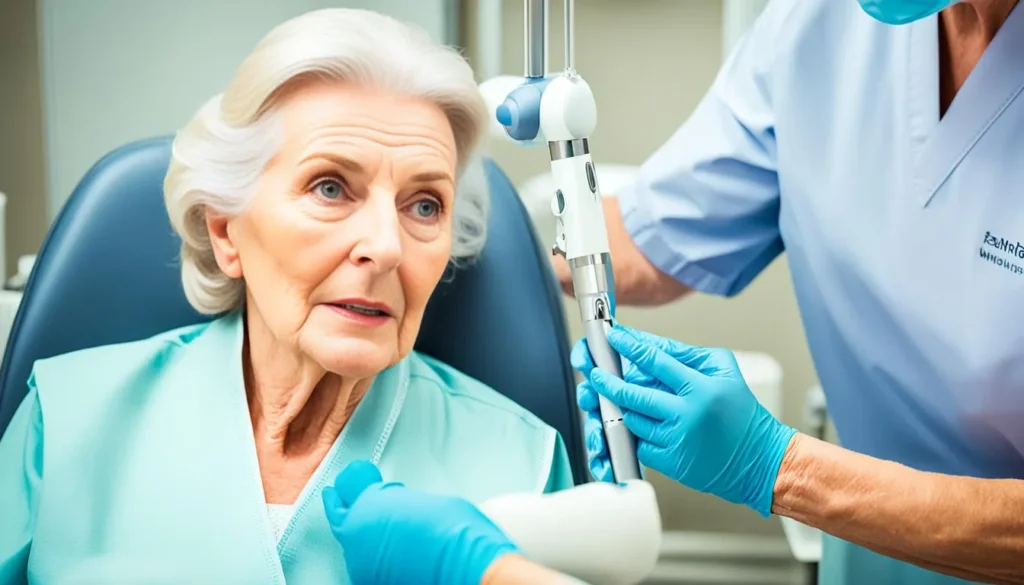
Medical Assessments
Getting a medical check-up is a must for thread lift safety for older adults. Doctors look at things like how frail someone is, their heart health, and their overall health. Older people often take better care of themselves, which can lower risks. But, these checks are key to spotting health issues like diabetes, high blood pressure, and asthma that could affect recovery.
Potential Risks and Complications
Using medical-grade thread raises the care level, but we must talk about possible risks and problems. The American Society of Plastic Surgeons says the chance of complications after surgery is similar for all ages. But, some health issues can make risks higher. These issues include:
- Dimpling
- Bleeding
- Movement of the thread
- Infection
With the right care after the procedure, like avoiding blood thinners and sleeping right, many risks can be lowered. Knowing these safety tips helps older adults have a better experience with thread lifts.
Thread Lift vs. Other Anti-Aging Treatments
When looking at anti-aging treatments, it’s key to see how they stack up. For those over 50, the choice often comes down to what works best, how long it takes to recover, and the cost.
Comparing with Dermal Fillers
Dermal fillers are a good choice for those wanting a minimally invasive option. They help with volume loss and can last from 4 to 9 months. This makes them great for a quick fix.
Thread lifts, however, are for those with mild to moderate sagging skin. They can last about 1-3 years. Though they take longer and are more uncomfortable, they give fast results with little downtime.
Yet, dermal fillers are safer, with fewer risks of pain, bruising, or swelling after. This makes them a safer bet for avoiding surgery.
Comparing with Facelifts
Choosing between a thread lift and a facelift is big for those weighing non-surgical vs. surgical anti-aging techniques. Facelifts can make you look 10 years younger and last a long time. But, they come with a lot of downtime and risks.
Thread lifts are a good middle ground. They use PDO sutures to lift and tighten skin. They’re perfect for those wanting a subtle change. The process takes an hour and results can last up to three years, with options for touch-ups.
So, the choice between a facelift and a thread lift depends on what you want, how bad your skin issues are, and what you can handle in terms of downtime and budget.
| Treatment | Duration of Results | Procedure Time | Recovery Time | Common Risks |
|---|---|---|---|---|
| Dermal Fillers | 4-9 months | Less than 15 minutes | Minimal | Swelling, Bruising |
| Thread Lifts | 1-3 years | 60 minutes | Minimal | Pain, Bruising, Swelling |
| Facelifts | Many years | Several hours | Several weeks | Scarring, Infection |
Longevity of Thread Lift Results in Older Patients
For older patients, the thread lift is a great non-surgical option. Results can last from 18 months to over two years. This is thanks to the initial lift and the ongoing collagen production from the threads.
Typical Duration
The effects of a thread lift make skin look firmer and younger for about 18 months or more. Patients are very happy with the results at one month, giving it a high rating of 4.7 out of 5. But, satisfaction drops to around 2.8 out of 5 after a year, showing the effects fade over time.
Objective measures also show a decline in scores from 4.5 out of 5 to 3.1 over a year. Still, the thread lift’s long-lasting results make it a good, cheaper option compared to traditional facelifts.
Maintaining and Enhancing Results
Maintenance treatments help results last. So do daily moisturizer and sunscreen, plenty of water, a good diet and staying out of strong sun.
Not smoking and keeping your weight steady also help the lift last and lower your risks. Choose an experienced provider and a clinic that takes hygiene seriously; with both, the complication rate is under 3%.
FAQ
Is 60 too old for a thread lift?
Being 60 doesn’t mean you can’t get a thread lift. If your skin is in good condition and you produce enough collagen, you can benefit from it. A doctor will check if you’re a good candidate and help lower the risks.
What is a thread lift and how does it work?
A thread lift is a quick procedure that uses special threads to lift sagging skin. These threads are put under the skin to lift it and make more collagen. This makes the skin tighter. It only takes about an hour and you can go back to your day right after.
What areas of the body can benefit from a thread lift?
Thread lifts can help with sagging skin on the cheeks, neck, jawline, and eyelids. They can also work on loose skin on the upper arms, thighs, and belly. This is great after losing weight or having a baby.
Who is an ideal candidate for a thread lift?
The best candidates are people between 30 and 60 who want a safe, less invasive, and cheaper way to tighten skin. If you can’t have general anesthesia because of health issues or medicine, it’s also a good option for you.
What are the immediate benefits of a thread lift?
Right after the procedure, you’ll see your skin tightening. The threads under the skin lift it immediately.
How does a thread lift stimulate collagen production?
The threads in the procedure start a healing process that makes more collagen. As they break down, they leave behind new collagen that makes the skin firmer.
What are the common risks and complications associated with thread lifts?
Swelling and bruising are common, but serious problems are rare. Possible complications include uneven skin, bleeding, threads shifting and infection, and a consultation beforehand helps reduce those risks.
How do thread lifts compare to other anti-aging treatments like dermal fillers and facelifts?
Threads fall between fillers and a facelift. They give some lift and a collagen boost, while fillers restore volume and a facelift gives the longest-lasting result.
How long do the results of a thread lift last in older patients?
Results can last up to 18 months or more. The initial lift and ongoing collagen production keep the skin firm. Keeping up with treatments, good skin care, and a healthy life can make the results last longer.