
What Happens If I Don’t Wear My Retainer After Invisalign?
Did you know that about 70% of people who finish orthodontic treatment see their teeth move within a year? This fact shows how important retainers are for keeping your smile straight. Finishing Invisalign is a big win, but it’s just the start.
Retainers are key to keeping your teeth in line. They make sure all the effort you put into your treatment is worth it. Skipping them sometimes might seem okay, but it can cause your teeth to move back. This is called orthodontic relapse.
Knowing the risks of not wearing retainers is key to keeping your smile. This article will look at what happens if you skip this step. It will also stress how important it is to keep wearing retainers for lasting results.
Key Takeaways
- Orthodontic relapse can occur if retainers are not worn consistently.
- Minor tooth shifts can quickly become noticeable changes.
- Retainers are essential for stabilizing teeth after treatment.
- Commitment to wearing retainers ensures long-term results.
- Understanding the importance of retention can help maintain your smile.
Understanding the Role of Retainers
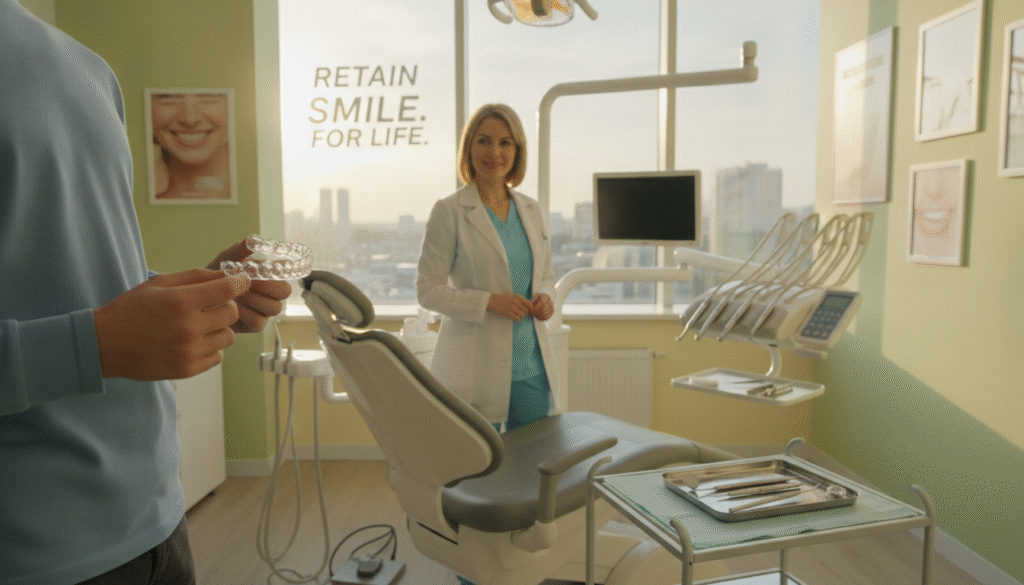
Wearing a retainer after Invisalign is not just a suggestion; it’s essential for keeping your teeth stable. Retainers are key in orthodontic care, making sure the changes from treatment stay the same. This part will look at why retainers are important, how teeth move, and how they’re different from aligners.
Why Are Retainers Needed After Invisalign?
Invisalign moves teeth to their new spots, but it doesn’t keep them there forever. After treatment, the bone and ligaments around your teeth stay flexible for a while. Retainers help support your teeth during this time, letting your body adjust to the changes. Without them, your teeth can start moving back almost right away, often in just a few days.
- Retainers help keep your teeth in their new place.
- They stop your teeth from going back to where they were before.
- Retainers give your bone time to adjust to the new tooth alignment.
The Science Behind Teeth Movement
Teeth move because of the periodontal ligaments and soft tissue, which remember their original positions. When teeth are moved, these structures try to pull them back. It’s like a rubber band stretching and then snapping back to its original shape. This shows why retainers are so important for keeping your smile.
Differences Between Retainers and Aligners
Retainers and aligners are both used in orthodontics, but they do different things:
- Aligners: Move teeth by applying force.
- Retainers: Hold teeth in place without applying force.
Knowing these differences helps patients understand why they need retainers after Invisalign.
Short-Term Effects of Not Wearing a Retainer
Not wearing a retainer can cause teeth to shift quickly. The first days without a retainer are key, as teeth start moving right away. At first, these changes might be small, but they can lead to bigger issues.
Immediate Shifting of Teeth
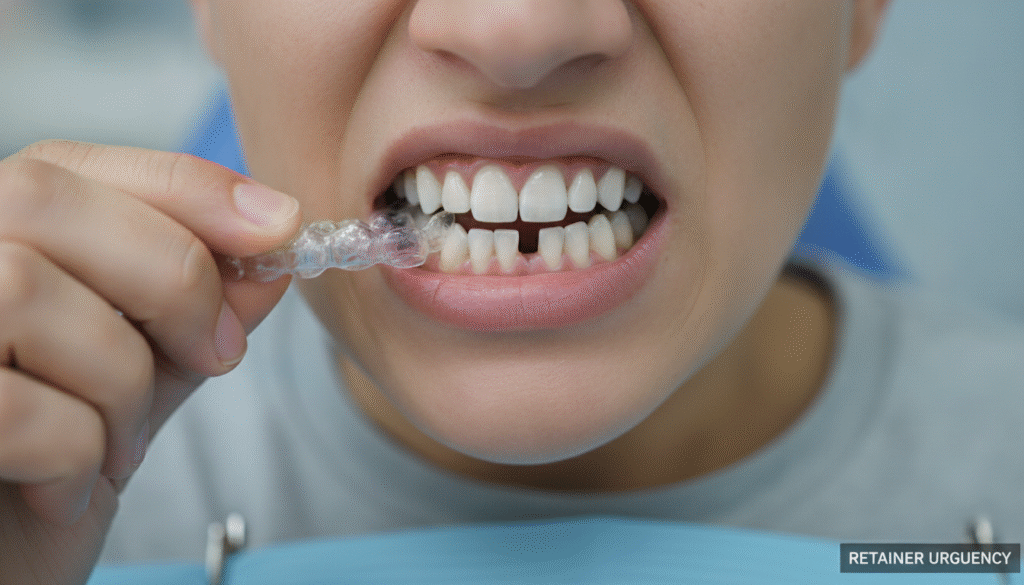
Just a few days without a retainer, and you might feel your teeth moving. This feeling means your teeth are already shifting. By the end of the first week, you might see gaps or notice your front teeth rotating.
As time goes on, wearing a retainer can become uncomfortable. In one to two weeks, the retainer will feel too tight. This discomfort is because your teeth are no longer aligned right, causing an uneven bite. The longer you don’t wear a retainer, the more your teeth will shift.
Discomfort from Unaligned Teeth
Not wearing a retainer can cause discomfort in your bite. Even small movements can lead to an “off” bite. This can make everyday tasks like eating and talking harder.
The timeline of tooth movement can be summarized as follows:
| Time Frame | Changes Observed | Patient Experience |
|---|---|---|
| First Few Days | Microscopic shifts begin | Retainer feels tight upon reinsertion |
| 1-2 Weeks | Visible gaps or rotations | Noticeable discomfort and tightness |
| 2-4 Weeks | Significant shifting occurs | Increased discomfort and possible misalignment |
In conclusion, not wearing a retainer can cause teeth to shift quickly and uncomfortably. Knowing these effects is key to keeping your teeth straight after Invisalign.
Long-Term Consequences of Skipping Your Retainer
Not wearing your retainer after Invisalign can have big effects. Many people don’t see how important it is to keep wearing it. But, skipping your retainer can harm your smile and oral health.
One big worry is increased risk of relapse. Teeth can move back to their old spots in just a few months without a retainer. This can be frustrating and might need new aligners or even braces to fix.
Increased Risk of Relapse
After a month without a retainer, teeth can move a lot. The retainer might not fit anymore and could even break if you try to put it in. You’ll need to see a professional to see how much your teeth have moved.
After several months to a year, teeth can move a lot more. You might need to go through orthodontic treatment all over again. This means more time and money for your teeth.
Potential Need for Additional Treatment
Orthodontic treatment again can be a big deal. It takes a lot of time and costs a lot of money. Many people face this because they don’t wear their retainer.
Impact on Oral Health
Teeth moving can also hurt your oral health. It makes it hard to clean your teeth, leading to plaque and cavities. This can also cause gum disease.
Also, teeth that don’t fit right can cause jaw pain and uneven wear on teeth. This can hurt your TMJ, making everyday life harder.
| Time Without Retainer | Potential Consequences | Intervention Needed |
|---|---|---|
| 1 Month | Significant tooth movement | Professional assessment |
| Several Months | Major relapse | Orthodontic retreatment |
| 1 Year | Severe misalignment | Braces or new aligners |
The Importance of Consistency
Wearing your retainer consistently is key to keeping your Invisalign results. A good retainer wear plan is vital for long-term success. It helps keep your teeth in their new spots, giving you the smile you want.
Here’s a recommended retainer wear schedule:
- Phase 1: Full-Time Wear (First 3-6 Months) – Wear your retainer for 20-22 hours a day. This phase is essential for allowing your teeth to stabilize in their new positions.
- Phase 2: Nighttime Wear (6 Months to 2 Years) – Transition to wearing your retainer every night. This step helps maintain the alignment achieved during the initial phase.
- Phase 3: Maintenance Wear (2+ Years and Beyond) – Continue wearing your retainer 3-5 nights per week, though nightly wear is best for results.
Each phase is designed to match the body’s healing timeline. Sticking to this schedule is critical for retainer compliance after Invisalign.
Getting used to a retainer can be tough. You might feel discomfort at first as your mouth gets used to it. Common issues include:
- Increased salivation
- Minor speech changes
- Initial discomfort or tightness
To beat these challenges, try these tips:
- Practice speaking to get used to the retainer.
- Drink plenty of water to manage saliva.
- Use over-the-counter pain relief if needed.
By getting used to these feelings and sticking to a retainer plan, you can improve your compliance. This protects your investment in orthodontic care.
Types of Retainers Available
Knowing about the different retainers is key to keeping your Invisalign results. Retainers help keep your teeth in place after treatment. They come in two main types: fixed and removable.
Fixed vs. Removable Retainers
Fixed retainers are a wire bonded to the back of your teeth. They stay in place all the time, giving constant support. They’re great for those who might forget to wear a removable retainer or are at risk of teeth moving back.
Removable retainers, like clear plastic ones, look like your Invisalign trays. They can be taken out for eating or brushing, making them easy to clean. Adults often choose them because they’re comfortable and look good.
There are two main types of removable retainers:
- Clear Plastic Retainers (Essix Retainers): These are almost invisible and comfy. But, they usually need to be replaced every 6 to 12 months.
- Hawley Retainers: These are made to last, adjustable, and can last for years with the right care.
How to Choose the Right Retainer
Choosing the right retainer depends on several things. Like your original teeth problem, your lifestyle, and how you take care of your teeth. For example, if you’re always on the go and might forget to wear a retainer, a fixed one might be better. But, if you like the freedom of taking your retainer out, a removable one could be perfect.
Talking to your orthodontist can help you decide. They can give you advice based on your needs. This way, you can keep your Invisalign results looking great.
Signs You May Need a New Retainer
It’s important to know when you might need a new retainer. Your retainer might not fit as well over time. This could lead to problems with your teeth alignment. Here are some signs to look out for:
Changes in Fit and Comfort
A good retainer should feel comfortable and not put pressure on your teeth. If you notice:
- Tightness or Pain: If your retainer feels tight or hurts, it might mean your teeth have moved. You should check how often you wear it.
- Ill Fit: If your retainer doesn’t fit right anymore, don’t try to force it. Forcing it can harm your teeth and the retainer.
If your retainer feels tight but fits, wear it more often. The tightness should go away in a few days. But if it doesn’t, see your orthodontist right away.
Visual Signs of Tooth Movement
There are also visual signs that your teeth might be moving:
- Small Spaces: If you see gaps between your teeth that weren’t there before, it means they’re moving.
- Crowding or Overlapping: If your teeth start to overlap or feel too close, your retainer might not be working anymore.
- Changes in Bite: If your bite feels different or hurts when you chew, it could mean your teeth are shifting.
Watching for these signs is key to keeping your teeth straight. If you see any of these, talk to your orthodontist about getting a new retainer.
Maintaining Oral Hygiene with Retainers
Keeping your mouth clean is key when you’re using retainers. It helps your orthodontic work last longer. Cleaning your retainer right keeps it in shape and guards your teeth and gums. A clean retainer stops bad breath and keeps harmful germs away.
To clean your retainer well, do these things:
- Rinse after each use: Cool water helps wash away saliva and dirt. Hot water can bend plastic retainers.
- Brush gently daily: Use a soft toothbrush and mild soap or toothpaste to clean your retainer.
- Deep clean weekly: Soak your retainer in a cleaning solution, denture cleaner, or water and vinegar mix for 15-20 minutes.
- Store properly: Always put your retainer in its case when not wearing it to avoid damage.
Regular cleaning stops bad breath, discoloration, and germ buildup. This is very important. A dirty retainer can hold harmful bacteria and fungi like Candida. These can cause bad breath, tooth decay, and gum problems.
In short, cleaning your retainer well is vital for your teeth’s health. By sticking to these cleaning tips, your retainer will keep your teeth straight and healthy.
Tips for Remembering to Wear Your Retainer
Remembering to wear your retainer after Invisalign can be tough. But, with the right strategies, it can become second nature. Here are some tips to help you make wearing your retainer a daily habit.
Setting Reminders
Setting reminders is a great way to stay on track with your retainer. Use your phone to set alarms every night to remind you. This way, wearing your retainer will soon become a part of your bedtime routine.
Also, link wearing your retainer to another daily habit, like brushing your teeth. Place your retainer case next to your toothbrush. This visual reminder will help you remember to put it on.
Creating a Routine
Having a consistent routine is key to remembering your retainer. Use habit stacking to make it easier. For example, brush your teeth and then put in your retainer. This connection will help you remember.
Tracking your retainer use can also motivate you. Use apps or calendars to mark each night you wear it. Seeing your progress can be very rewarding.
The Psychological Impact of Loosening Your Retainer Habits
Not wearing your retainer can have big effects on your mind and body. It can change how your teeth look and how you feel about yourself. This can really hurt your confidence and how you see yourself.
Your smile is closely linked to how you feel about yourself. A straight smile makes you feel good, but a crooked one can make you feel bad. The risks of skipping retainer after Invisalign go beyond just your teeth. They can make you feel nervous around people and make you not want to smile.
Thinking about needing more orthodontic work can be really upsetting. It feels like a big setback, both in time and money. This can make you feel down and stuck in a bad cycle of negative thoughts.
Wearing your retainer is more than just taking care of your teeth. It’s about taking care of your mental health too. By keeping up with your retainer, you protect your smile and your self-esteem.
What to Do If You Lose Your Retainer
Don’t worry if you lose your retainer. Here’s what to do to fix it fast. First, don’t panic. It’s important to act fast to stop your teeth from moving.
Call your orthodontist right away to get a new retainer. The sooner you do this, the better. Waiting too long can make your teeth move back, which can mess up your treatment.
If you have old Invisalign aligners, you can wear them until you get your new retainer. They can keep your teeth in place until then. This is important to avoid problems without wearing retainer post-Invisalign.
Steps to Take Immediately
- Contact your orthodontist for a replacement fitting.
- Wear your last set of aligners if available.
- Keep your retainer safe from pets and avoid wrapping it in napkins.
Retainers often get lost when wrapped in napkins at restaurants or left where pets can get them. To avoid this, always keep your retainer in a protective case.
Consulting Your Orthodontist
Your orthodontist is the best person to talk to about a lost retainer. They can guide you on what to do next and explain why wearing your retainer is important. Acting fast is key to keeping your smile looking great.
Cost of Re-treatment Due to Retainer Neglect
Not wearing a retainer after Invisalign can cost a lot. It’s key to know the costs of re-treatment. Wearing your retainer every night can save you a lot of money later.
Looking at the financial implications of orthodontic corrections is important. Replacing retainers costs between $200 to $500. But, full re-treatment with Invisalign can cost thousands. This shows that prevention is cheaper than fixing problems later.
| Type of Treatment | Estimated Cost |
|---|---|
| Replacement Retainers | $200 – $500 |
| Invisalign Re-treatment | $3,000 – $8,000 |
| Initial Invisalign Treatment | $3,000 – $7,000 |
Seeing retainer wear as a form of insurance helps. It protects your investment in Invisalign. The small effort and cost of wearing a retainer are worth it to avoid expensive re-treatment.
It’s also important to understand insurance considerations for retainers. Initial retainers are often covered, but replacements might not be. Check with your insurance to know what’s covered. This highlights the need for careful retainer use to avoid extra costs.
Exploring Alternatives if You Can’t Wear Your Retainer
If your teeth are shifting after Invisalign without a retainer, you have options. Many people face this issue. Quick action can help fix your smile.
For small shifts, wearing your retainer all day might work. This is called “re-alignment.” If your retainer fits well, try wearing it more often.
If your retainer is too loose or hurts, see your orthodontist. They’ll check your teeth and decide what to do next. You might need new retainers to fix the problem.
For bigger shifts, you might need clear aligners again. This is called Invisalign Lite or Express. Or, you might need traditional braces for serious cases.
Your orthodontist will figure out the best treatment. They aim to fix your smile with the least effort. This way, you’ll feel good and confident again.
Why Communication with Your Orthodontist is Key
Talking openly with your orthodontist can make your post-treatment journey better. It builds a strong partnership that keeps your smile healthy after Invisalign.
Regular visits are a must. These check-ups help your orthodontist:
- Catch small changes in tooth alignment early.
- Check if your retainer is working right.
- Look at the fixed retainers to make sure they’re holding.
It’s important to share any worries you have. Talk about:
- Any discomfort when wearing the retainer.
- Speech problems that might come up.
- Feeling stressed about using the retainer as directed.
By sharing these concerns, your orthodontist can offer specific advice that fits your situation.
If it’s been a while, try your retainer. If it fits, start wearing it again. If it’s too tight, wear it for a bit until it’s comfy. If it doesn’t fit, don’t push it. Book a visit. Your orthodontist can guide you next. The House of Orthodontia in Brooklyn and Manhattan offers clear and fixed retainers. We also check in to see how you’re doing.
Encouraging Others to Wear Their Retainers
Helping others stick to their retainers builds a supportive community. Sharing your own journey can really motivate friends and family. Talking openly about the ups and downs of retainer use can inspire others.
Many find that hearing about others’ success is more convincing than advice. Stories of overcoming challenges or making retainer use a habit can be very relatable. These stories show that you’re not alone in your journey.
Sharing Personal Experiences
Sharing your story can make a big difference. For example, talking about how consistent retainer use kept your smile perfect can inspire others. These stories can make the process seem less daunting and encourage others to follow suit.
Support Groups and Forums
Online groups for orthodontic care are full of helpful advice and encouragement. They offer a space to share tips and experiences. This can make you feel less alone in your struggles with retainers.
Look for social media groups or local clubs focused on orthodontic care. These places are great for meeting others who care about their smiles. By connecting with these people, you can stay motivated and help others do the same.
| Type of Support | Description | Benefits |
|---|---|---|
| Personal Stories | Sharing experiences with retainer use | Inspires and motivates others |
| Online Forums | Community discussions about orthodontic care | Provides tips and emotional support |
| Social Media Groups | Connecting with peers on platforms | Encourages accountability and sharing |
If you’ve skipped wearing your retainers, don’t worry. It’s never too late to protect your smile. Book Your Appointment Today at House of Orthodontia in Brooklyn or Manhattan. We can help you keep your Invisalign results. You can also join online groups for support and motivation.
Conclusion: The Importance of Commitment to Retainers
Keeping your Invisalign results with a retainer is key to keeping your smile perfect. Skipping your retainer can cause your teeth to shift right away. This can harm your smile. A retainer is vital for keeping your teeth in their new, correct spots.
Wearing your retainer every night might seem easy, but it’s very important. It keeps your smile healthy and boosts your confidence. If you’ve missed wearing your retainer, don’t worry. Your orthodontist can help you get back on track.
Seeing your retainer as a must-do part of your day is important. This small step can bring big benefits, like a stable, healthy, and beautiful smile. Make this habit a part of your life and enjoy your Invisalign results for years.
