
What if I Don’t Have Enough Bone for an Implant?
Did you know that nearly 30% of adults might face challenges with dental implants because of not enough jawbone? This fact is a big worry for many who want to fix their teeth. If you don’t have enough bone for implants, it can seem scary. But, knowing what to do and what options you have can help.
Understanding bone density is key to starting your dental restoration journey. Many people find themselves in a tough spot where usual methods don’t work. This article is for those who have been told they don’t have enough bone. We’ll look at why this happens and how to check your bone health.
We’ll also talk about new ways to fix tooth problems. From special bone grafting to other types of implants, there are solutions. By explaining these complex ideas, we want to help you feel more in control of your choices.
Key Takeaways
- Approximately 30% of adults may struggle with bone density issues affecting dental implants.
- Understanding bone health is essential for successful dental restoration.
- Advanced diagnostic methods can assess jawbone condition effectively.
- Innovative solutions exist, including bone grafting and alternative implant types.
- Patients can navigate their options with confidence through informed decision-making.
Understanding Bone Density and Its Importance
Bone density is key for dental implants to work well. It’s about how much mineral, like calcium and phosphate, is in the jawbone. This density shows how strong the bone is and if it can handle chewing forces.
For dental implants to succeed, they need to bond with the jawbone. This bonding, called osseointegration, lets bone cells attach to the implant. But, if the jawbone isn’t dense enough, it’s hard to get the implant to bond well.
What is Bone Density?
Bone density is about how much mineral is in the bone. A healthy bone density means the jaw can handle chewing forces well. Here are some important points about bone density:
- Measurement: Doctors use imaging like DEXA to check bone density.
- Importance: Stronger bones, with higher density, are less likely to break and support implants better.
- Age Factor: Bone density goes down with age, so older adults need regular checks.
How Bone Density Affects Dental Implants
The success of dental implants depends a lot on the bone around them. If the bone isn’t dense enough, problems can happen, like:
- Micromotion: The implant might move too much, which can lead to failure.
- Delayed Healing: Bad bone quality can make healing slower, which means longer recovery times.
- Implant Failure: Not enough bone density can mean the implant won’t bond right, and it might need to be removed.
Knowing about bone density is important for both patients and dentists. A healthy, strong jawbone means dental implants are more likely to succeed.

Causes of Insufficient Bone for Implants
Knowing why there’s not enough bone for dental implants is key. Several things can cause this problem. Gum disease, tooth loss, and health issues are the main culprits.
Gum Disease and Bone Loss
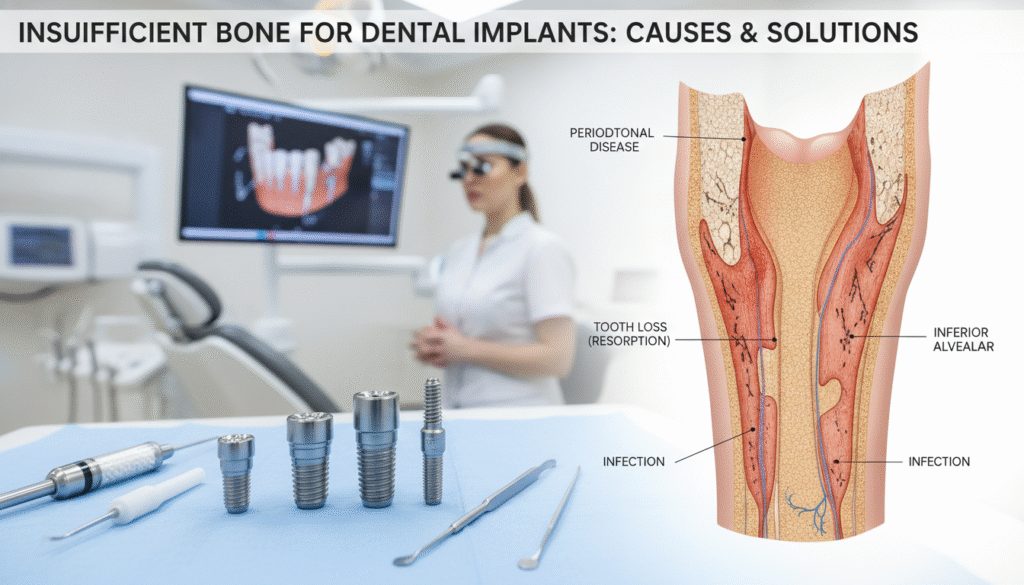
Gum disease, like periodontitis, is a big reason for bone loss. It’s caused by bacteria that harm the teeth’s support structures, including bone. As it gets worse, the bone around the teeth shrinks, making it hard to place implants.
Studies show that without treatment, gum disease can cause up to 25% bone loss in a year after tooth loss. Without the tooth’s root, the bone weakens fast. So, fixing gum health is key before implants.
Tooth Loss and Its Impact
Tooth loss weakens the jawbone. Without the tooth’s root, the jawbone gets weaker over time. The body then breaks down the bone, making implants harder to place. “Tooth loss is not just a cosmetic issue; it’s a structural one that can lead to significant bone loss,” say dental experts.
Even with some teeth left, infections or gum disease can harm bone health. Keeping teeth clean and fixing dental problems quickly helps keep bone strong.
Systemic Conditions Affecting Bone Density
Systemic health issues also affect bone density. Diseases like osteoporosis weaken the jawbone. This disease makes bones less dense and more likely to break.
Some medicines, like bisphosphonates, can also harm bone health. Age, genetics, smoking, too much alcohol, and not enough calcium or vitamin D also weaken bones. A full medical and dental history is needed for good treatment planning.
Symptoms Indicating Bone Loss
It’s important to know the signs of bone loss for dental implant care. Many symptoms are not painful but show serious problems. It’s key for patients to notice these signs early to get dental help.
One sign is if your dentures don’t fit as well as they used to. If they keep getting looser, it might mean your bone is shrinking. Also, if your face looks sunken, it could be because of bone loss in your jaw.
Having trouble chewing hard foods or a changing bite can also mean bone loss. These problems can hurt your health and daily life. So, it’s important to fix them quickly.
A dentist’s check-up is needed to find bone health issues. They might see:
- Teeth that move easily, showing bone loss.
- Gums that pull back, showing more of the tooth root.
- A smaller jaw ridge in areas without teeth.
These checks are the first steps. They often lead to more detailed tests to see how much bone is missing. This helps plan the surgery to fix bone loss for implants.
Diagnosis: Assessing Bone Density
Checking bone density is key for dental implants to work well. Dentists use advanced imaging to see the bone’s details. This helps place implants just right.
Dentistry has grown a lot, moving past old X-rays. Now, Cone Beam Computed Tomography (CBCT) is the top choice. It gives a clear, 3D view of the face bones. Here’s why CBCT is great:
- Precise Measurement: It lets doctors measure bone size and strength in detail.
- Anatomical Assessment: CBCT shows where important structures like nerves and sinuses are.
- Virtual Planning: Dentists can plan implant spots with very high accuracy.
A full dental check is very important. It uses CBCT data with a deep look at gums and overall health. It also talks about what the patient wants to look and feel like.
This all-around method makes sure the treatment fits the patient perfectly. It lowers risks and makes the plan more reliable. Patients feel more sure about their treatment.
Options for Patients with Insufficient Bone
For those with not enough bone for dental implants, new solutions are available. These options can greatly improve the chances of successful dental restoration. It’s important to understand these procedures to make informed decisions about dental health.
Bone grafting and sinus lift surgery are among the most effective solutions. Each method addresses specific needs related to bone density.
Bone Grafting Procedures
Bone grafting is a technique to rebuild bone in areas where it’s been lost. It involves transplanting bone tissue to support dental implants. The bone graft can come from the patient, a tissue bank, or another species.
- Autografts (bone taken from the patient’s own body)
- Allografts (donor bone from a tissue bank)
- Xenografts (bone from another species, typically bovine)
This method not only rebuilds bone but also encourages natural growth. It’s very helpful for patients with a lot of bone loss, making them eligible for dental implants.
Sinus Lift Surgery
Sinus lift surgery, or sinus elevation, increases bone in the upper jaw. It’s needed when the maxillary sinus has grown into the area of missing teeth. The process involves:
- Creating an incision in the gum tissue to expose the bone.
- Gently lifting the sinus membrane to create space.
- Placing a bone graft into the newly created space.
This surgery makes it possible to place implants in areas with not enough bone. It greatly improves the success of dental implants in the upper jaw.
New graft-free solutions have also been developed. The All-on-4 concept uses implants at strategic angles to maximize bone contact. Zygomatic implants anchor into the zygomatic arch, bypassing the maxilla with severe resorption.
These advancements have changed dental implantology, providing options for almost every patient. The range of solutions for insufficient bone in dental implants is now wider than ever.
| Procedure | Indication | Benefits |
|---|---|---|
| Bone Grafting | Significant bone loss | Rebuilds bone structure, supports implants |
| Sinus Lift Surgery | Upper jaw with expanded sinus | Increases bone volume for posterior implants |
| All-on-4 | Minimal bone in lower jaw | Immediate fixed prosthesis, less invasive |
| Zygomatic Implants | Severe upper jaw resorption | Anchors into zygomatic bone, immediate stability |
Choosing the right procedure depends on individual circumstances and bone loss. A dental professional can provide personalized advice for the best outcomes.
The Bone Grafting Process Explained
Bone grafting is key in dental implants to rebuild lost bone. It’s a complex surgery that helps grow new bone tissue. This creates a strong base where bone was missing. Knowing about the different bone grafts is important for those thinking about this treatment.
Types of Bone Grafts Available
There are four main types of bone grafts used in dental care:
- Autogenous Grafts: Taken from the patient’s own body, usually from the chin or other areas. This type is the best because it has great bone-growing properties.
- Allografts: These are processed human bone from a tissue bank. They are safe and work well without needing another donor site.
- Xenografts: Made from cow sources, these grafts are biocompatible. They are gradually replaced by the patient’s own bone.
- Alloplasts: These are synthetic materials, like calcium phosphates. They are only good for growing bone and don’t have bone-growing properties themselves.
Recovery Timeline After Bone Grafting
The recovery from bone grafting happens in stages. The first stage, healing of soft tissues, takes about one to two weeks. But the real work, making the graft strong enough for implants, takes four to nine months. This is when the graft gets the strength it needs to hold implants and grow with the bone.
Alternatives to Bone Grafting
For those with bone density issues, looking into alternatives to bone grafting is key. There are dental implant alternatives for deficient bone that can help. These methods are quicker and don’t require a lot of grafting.
Mini dental implants are a great option. They are smaller, making them perfect for areas with little bone. They help keep dentures in place with a simple procedure.
Immediate load implants are another choice. They’re used in cases like All-on-4. These implants use the bone at the jaw’s front. They allow for a temporary tooth on the same day.
Zygomatic and pterygoid implants are for those with very little bone. Zygomatic implants go into the zygomatic bone, avoiding other areas. They provide a strong base for teeth.
Pterygoid implants use the pterygoid plate for support. This method doesn’t need a sinus lift. It’s faster and less invasive.
| Type of Implant | Description | Benefits |
|---|---|---|
| Mini Dental Implants | Smaller diameter implants for narrow ridges | Minimally invasive, stabilizes dentures |
| Immediate Load Implants | Implants that allow for same-day prosthesis attachment | Quick restoration, avoids multiple surgeries |
| Zygomatic Implants | Long implants anchoring into the zygomatic bone | Bypasses resorbed areas, stable foundation |
| Pterygoid Implants | Implants engaging the pterygoid plate | Solid anchorage without sinus lift |
In conclusion, for those with not enough bone, these dental implant alternatives for deficient bone are good options. They offer solutions without grafting. Knowing these alternatives helps make better dental health choices.
The Role of a Periodontist
Periodontists play a key role in managing bone issues for dental implants. They are experts in dental implant procedures, even when there’s a lot of bone loss. Their training and experience help them meet each patient’s unique needs.
It’s wise to see a periodontist under certain conditions. For example, if you’ve had periodontal disease or a lot of bone loss. Also, if your body’s healing is slowed by other health issues, a periodontist’s advice is vital.
When to Consult a Specialist
Here are times when you should see a periodontist:
- You’ve lost teeth and are thinking about implants.
- You’ve had periodontal disease in the past.
- Scans show a lot of bone loss that might affect where the implant goes.
Benefits of Working with a Periodontist
There are many benefits to working with a periodontist:
- Advanced Training: They have three more years of education after dental school, focusing on tooth support.
- Expertise in Complex Procedures: They’re great at doing detailed work like bone grafts and sinus lifts.
- Enhanced Outcomes: Their knowledge of how implants work with the periodontium leads to better results over time.
Dental experts say, “The health of the implant site is key for success.” This shows why seeing a periodontist is important, even more so in tough cases. Their skill can turn a difficult situation into a success, giving patients both function and beauty.
Lifestyle Changes to Support Bone Health
Making lifestyle changes can greatly help with bone regeneration for dental implants. These changes are key to creating a good environment for healing. While surgery is important, lifestyle choices also play a big role.
Eating right is essential for bone health. A diet full of important nutrients helps bones grow strong. Here are some key foods to eat:
Diet and Nutrition Tips
- Calcium: Eat foods high in calcium. Dairy, leafy greens, and fortified foods are good choices.
- Vitamin D: Vitamin D helps your body use calcium. Get it from the sun and fatty fish.
- Supplementation: Adding vitamin K2, magnesium, and phosphorus can help with bone formation.
But, some lifestyle choices can harm bone health. It’s important to avoid these:
- Smoking: Smoking cuts off blood flow to healing areas, raising the risk of implant failure.
- Alcohol Consumption: Too much alcohol hurts the cells that make bones.
Importance of Regular Dental Checkups
Going to the dentist regularly is key for bone health. These visits help catch problems early. This keeps your oral health strong and supports long-term success.
| Aspect | Positive Impact | Negative Impact |
|---|---|---|
| Calcium Intake | Supports bone density | Low intake leads to weakness |
| Vitamin D Levels | Enhances calcium absorption | Deficiency impairs bone health |
| Smoking | None | Increases risk of graft failure |
| Alcohol Consumption | None | Toxic to bone-forming cells |
The Cost of Bone Augmentation Procedures
The cost of bone augmentation for implants can vary a lot. It’s important for patients to understand these costs before deciding. The price depends on the type of graft, how complex the case is, and where the dental practice is located.
A simple socket preservation graft is usually cheaper than a major autogenous block graft. The latter needs bone from the hip and a longer recovery. So, patients should expect different prices for bone augmentation for implants.
Financial Considerations for Patients
When looking at the cost of bone augmentation, patients should think about a few things:
- Surgeon’s Fees: This is the cost of the dentist doing the procedure.
- Anesthesia Costs: If the procedure is complex, anesthesia might be needed, adding to the cost.
- Grafting Material: The type of graft material affects the price.
- Facility Fees: There may be charges for the surgical facility.
Insurance Coverage for Bone Grafting
Getting insurance to cover bone grafting can be tough. Many plans see dental implants as cosmetic or elective. But, if the graft is needed to fix a medical issue or stop bone loss, it might be covered. Patients should talk to their treatment coordinator for a detailed estimate before starting treatment.
It’s also good to talk to insurance providers to know what’s covered and what’s not. Looking into medical insurance crossover can help if the procedure fixes a functional problem. Being informed and proactive can help manage the financial side of treatment.
Success Rates of Dental Implants with Bone Loss
Dental implants have a high success rate in patients with bone loss. Studies show success rates of 90-95% when done by experienced doctors. This is good news for those with bone loss, as there are effective treatments available.
But, several factors can affect these success rates. Knowing these factors helps patients make better choices for their dental health.
Factors Affecting Success Rates
Several elements play a big role in dental implant success in patients with bone loss:
- Patient’s Systemic Health: Conditions like uncontrolled diabetes or weakened immune systems can raise the risk of implant failure.
- Surgical Technique: The precision of the surgery is key to the implant’s success in the bone.
- Post-Operative Complications: Problems like infection or wound opening can threaten the implant’s success.
- Quality of the Vascular Bed: Good blood flow is vital for healing and integration.
While rare, bone graft rejection can happen. Patients should know about possible complications like ongoing inflammation, which might need extra care.
Long-Term Outcomes to Expect
Long-term results for dental implants in patients with bone loss are mostly positive. Patients can expect:
- Stable Restoration: With proper care, implants can last for many years.
- Aesthetic Improvement: Implants look natural, improving the smile.
- Maintenance Protocol: Good dental hygiene and regular dental visits are key to keeping the implant healthy.
The main long-term risk is peri-implantitis, a disease that can cause bone loss around the implant. So, lifelong dental care and professional maintenance are vital for success.
| Factor | Impact on Success Rate | Management Strategies |
|---|---|---|
| Systemic Health | High risk if uncontrolled | Regular health check-ups |
| Surgical Technique | Critical for integration | Choose an experienced clinician |
| Post-Operative Care | Prevents complications | Follow care instructions |
Emotional Considerations of Dental Implants
Dental implants do more than fix teeth; they touch on deep fears and anxieties. Patients with bone loss often feel scared about surgery. The worry of using unstable dentures can make them feel hopeless.
It’s key to talk openly about these feelings during treatment. When doctors explain things clearly, using tools like CBCT scans, patients feel more in control. Options like sedation dentistry make the surgery comfortable and stress-free.
Addressing Fear and Anxiety
Fear and anxiety can stop people from getting dental care. Understanding these feelings is the first step to managing them. Here are some ways to help:
- Education: Learning about the procedure can ease fears.
- Support: Having a trusted friend or family member present can offer comfort.
- Relaxation Techniques: Practices such as deep breathing can help calm nerves.
Support Systems for Patients
Support systems are very important during dental restoration. A caring dental team that focuses on emotional well-being is key. Family and friends can also help a lot during recovery.
Talking to others who have had dental work can be very helpful. Sharing stories with others who have gone through the same thing can give reassurance. It helps patients feel more confident and self-assured.
| Support System | Benefits | Examples |
|---|---|---|
| Dental Team | Professional guidance and reassurance | Consultations, follow-ups |
| Family and Friends | Emotional and practical support | Transportation, companionship |
| Support Groups | Shared experiences and encouragement | Online forums, local meetups |
“The journey to restoring a smile is not just about the teeth; it’s about healing the heart.”
Conclusion: Taking the Next Steps
Dealing with bone insufficiency for dental implants is a big step. It starts with finding a qualified dentist. Look for one who is board-certified and has credentials from groups like the American Academy of Implant Dentistry (AAID). This ensures you get the best care for your needs.
Getting ready for your dentist visit is key. Make a list of your medicines and medical history. This helps your dentist understand your situation better. Ask questions about the treatment, recovery, and how to keep your implants healthy. A good visit includes a check-up and 3D scans for a custom plan.
Knowing how to tackle bone insufficiency for dental implants is vital for success. With the right help and preparation, you can improve your dental health and smile. Be involved in your care and share your thoughts and wishes with your dentist.
