
What is “Cracked Tooth Syndrome”?
Did you know nearly 20% of adults face dental pain from incomplete fractures? This fact shows how common cracked tooth syndrome is. It’s different from a chipped tooth or a split tooth because the fracture hasn’t fully split the tooth.
The crack usually starts at the top and goes down. This makes it hard to spot. A key sign is sharp pain when biting down and then letting go. This is called rebound pain and can confuse both patients and dentists.
It’s important to understand this condition. It acts differently than other dental problems like cavities or gum disease. These usually cause steady pain. As we explore this topic, we aim to shed light on a condition often missed but greatly affects dental health.
Key Takeaways
- Cracked tooth syndrome involves incomplete fractures that can cause intermittent pain.
- Symptoms include sharp pain during biting and release of pressure.
- Diagnosis can be challenging due to the nature of the symptoms.
- Understanding this condition is vital for effective dental care.
- It differs significantly from other dental issues like cavities or chipped teeth.
Understanding Cracked Tooth Syndrome
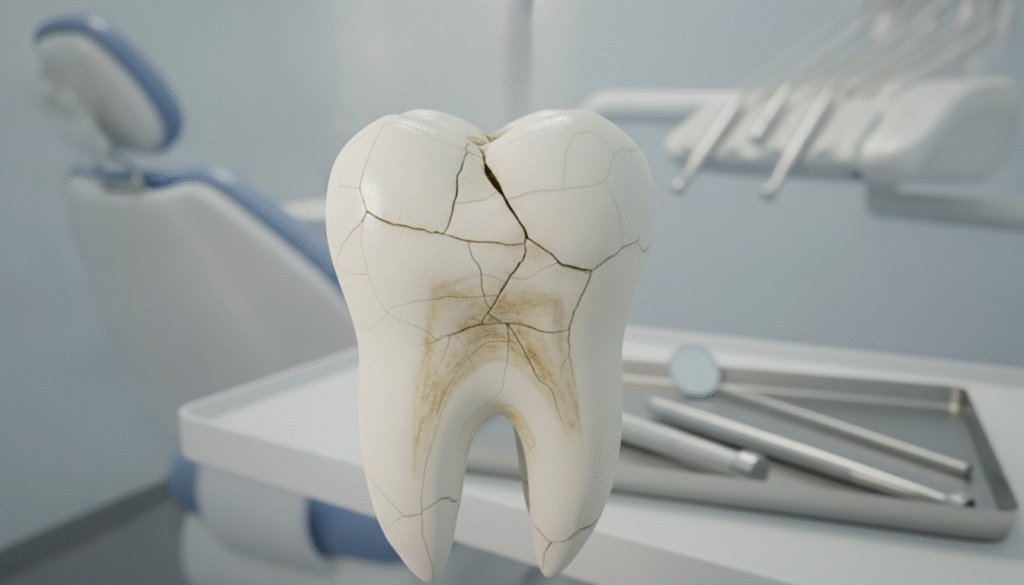
Cracked Tooth Syndrome (CTS) is a dental issue that often goes unnoticed until it’s severe. It happens when a tooth develops a crack. These cracks can be hard to spot because they might not show up on X-rays or be invisible to the eye.
The crack can go through different parts of the tooth. It might just scratch the outer layer, or it could go deeper to the nerves and blood vessels inside. Knowing how deep the crack is helps understand the symptoms and treatment needed.
Definition of Cracked Tooth Syndrome
Cracked Tooth Syndrome is a dental problem caused by tooth fractures. These fractures can come from trauma, too much chewing, or just getting older. The cracks can be small or very serious, causing a lot of pain.
Early detection is key for CTS. Catching it early can greatly improve treatment results.
Significance of Early Diagnosis
Getting a diagnosis for Cracked Tooth Syndrome early is important. It can stop the crack from getting worse. A small crack can turn into a big problem if not treated.
Early treatment, like a simple filling or crown, can fix the issue. This stops bacteria from getting into the tooth and causing more serious problems. It can even prevent the need for root canals or tooth removal.
In short, knowing about Cracked Tooth Syndrome and getting it treated early is key for good oral health. It helps people get the right care on time, leading to better dental health.
Signs and Symptoms to Recognize
It’s important to know the signs of Cracked Tooth Syndrome early. This condition has unique symptoms that can be hard to spot. Knowing these signs helps you get the right treatment fast.
Common Symptoms
The main sign of Cracked Tooth Syndrome is rebound pain. This pain happens when you bite down and then release. It’s a sharp, sudden pain that comes and goes.
- Pain that occurs when biting down and then releasing pressure.
- Intermittent pain that comes and goes.
- Difficulties in localizing the pain to a specific tooth.
- Increased sensitivity to certain foods, like hard or crunchy items.
This pain is caused by the crack in the tooth. When you bite, the crack gets wider, irritating the pulp. When you release pressure, the crack closes, causing sharp pain. You might also feel:
- Temperature sensitivity, like cold.
- Discomfort while chewing.
Knowing these cracked tooth symptoms is key to catching it early.
When to Seek Dental Help
If you feel any pain while chewing, even if it’s mild, see a dentist. Waiting too long can make the problem worse. So, if you notice:
- Recurring pain during chewing.
- Increased sensitivity that lasts more than a few days.
- Any other unusual sensations in your teeth.
Seeing a dentist quickly is best. Early treatment can save your teeth and prevent bigger problems.
Causes of Cracked Tooth Syndrome
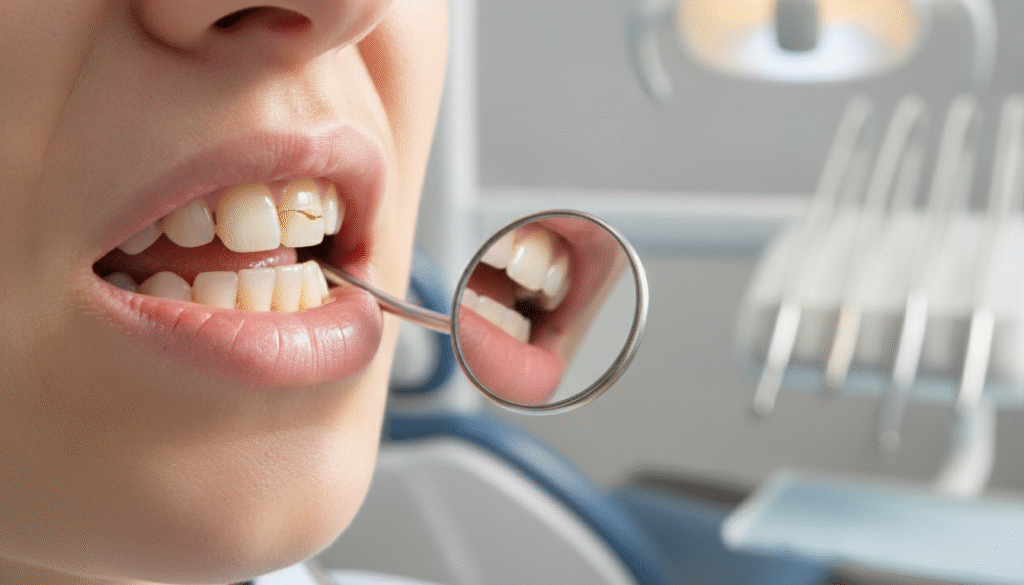
Several key factors contribute to the development of Cracked Tooth Syndrome. Understanding these causes is essential for both prevention and effective treatment. The multifactorial nature of this condition includes iatrogenic, functional, and habitual factors that can lead to tooth fractures.
Main Contributing Factors
Cracked Tooth Syndrome can arise from various sources. Below are some of the main contributing factors:
- Chewing Hard Objects: Regularly chewing on hard substances, such as ice, hard candy, or popcorn kernels, can put excessive stress on teeth.
- Large Fillings or Previous Dental Work: Teeth that have undergone significant dental work may lose structural integrity, making them more susceptible to cracks.
- Sudden Temperature Changes: Rapid shifts in temperature, such as consuming hot and cold foods in quick succession, can cause thermal stress on teeth.
- Age-Related Factors: As individuals age, their teeth may become more brittle, increasing the risk of cracks.
- Dental Trauma: Any injury to the mouth can lead to cracks or fractures in teeth.
Role of Teeth Grinding
Teeth grinding, also known as bruxism, plays a significant role in the development of Cracked Tooth Syndrome. The parafunctional forces generated during sleep bruxism can exceed normal masticatory loads by several magnitudes. This excessive pressure can induce stress fractures in enamel and dentin over time.
Repetitive sub-failure loads from grinding lead to crack initiation and propagation, a concept akin to material fatigue in engineering. Understanding this biomechanical aspect helps both clinicians and patients recognize the importance of addressing bruxism to prevent further damage.
| Contributing Factor | Description | Preventive Measures |
|---|---|---|
| Chewing Hard Objects | Stress from hard substances can fracture teeth. | Avoid chewing on hard items. |
| Large Fillings | Weakened teeth from extensive dental work. | Regular dental check-ups to monitor integrity. |
| Temperature Changes | Rapid temperature shifts can cause stress. | Allow foods to cool before consuming. |
| Age | Increased brittleness in older adults. | Maintain good oral hygiene and regular visits. |
| Dental Trauma | Injuries can lead to cracks. | Use mouthguards during contact sports. |
Types of Tooth Cracks
It’s important to know about the different types of tooth cracks. Dental experts group these fractures into categories. Each type has its own signs and effects on our teeth.
This knowledge helps doctors find the best ways to treat cracked teeth. It’s key for keeping our teeth healthy.
Craze Lines
Craze lines are the mildest kind of tooth crack. They are small and on the surface. You might not even see them.
They don’t usually hurt and don’t need treatment. But, it’s good to watch them. They might show a bigger problem.
Fractured Cusp
A fractured cusp starts near a filling and breaks off a part of the tooth. It’s not as bad because it doesn’t hurt the pulp inside.
Doctors might fix it with a filling or a crown. This makes the tooth work and look right again.
Split Tooth
A split tooth is a serious case of cracked tooth syndrome. It happens when a tooth breaks all the way through, splitting into pieces. Sadly, a split tooth can’t be fixed and often needs to be pulled.
Spotting this early can help avoid worse problems. It’s important to catch it fast.
Knowing about tooth cracks is vital for everyone. By figuring out the type of crack, doctors can plan the best treatment. This helps keep our teeth in good shape.
Risk Factors for Developing Cracked Tooth Syndrome
Cracked Tooth Syndrome can be influenced by several risk factors. These factors change with age and dental habits. Knowing these factors is key for prevention and early treatment.
Age is a big factor in getting Cracked Tooth Syndrome. Studies show that about 80% of patients over 40 get cracked teeth. As people get older, their teeth get more brittle. This is because of natural changes in the body.
People over 50 are at even higher risk. This is because of years of wear and tear. Teeth with big fillings or root canal treatments without crowns are also more likely to crack.
The following table summarizes the key age-related risk factors:
| Age Group | Risk Percentage | Key Factors |
|---|---|---|
| Under 30 | 10% | Minimal wear, lower risk |
| 30-39 | 30% | Early signs of wear |
| 40-49 | 60% | Increased wear, dental history |
| 50+ | 80% | Significant wear, brittle teeth |
A patient’s dental history is also a big risk factor. Teeth with big fillings or root canals lose strength. This makes them more likely to crack. Teeth without crowns after root canals are at even higher risk.
What you eat can also affect your teeth. Eating hard or brittle foods can wear down your teeth. This can lead to cracks, even in teeth that are already weak.
In summary, knowing the risks of Cracked Tooth Syndrome is important. This includes age, dental history, and diet. Being aware helps in preventing and catching problems early. It lets people make better choices for their teeth.
Impact on Oral Health
A cracked tooth can have a big impact on your oral health. If not treated, it can cause problems not just for the tooth but also for your overall health. This includes the teeth around it and your body’s health.
At first, a crack might let bacteria into the tooth, causing reversible pulpitis. But if it gets worse, it can lead to irreversible pulpitis and even pulpal necrosis. This can result in a serious infection at the root tip, known as a periapical lesion.
“If a cracked tooth is left untreated, an infection may spread from the mouth to other locations in the body.” This can cause swollen lymph nodes and needs quick treatment to avoid more health problems.
Potential Complications
Cracks that are not treated can make your tooth move and increase the chance of more breaks. What starts as a small crack can turn into a tooth that splits completely. This might mean you’ll need to have the tooth pulled.
But, if caught early, a cracked tooth can be fixed with a crown about 80-85% of the time. If the crack goes into the root, the success rate drops to 50-60%.
Long-term Effects if Untreated
Untreated cracks can lead to chronic apical periodontitis, which is a low-grade inflammation. This can affect your overall health and quality of life. So, it’s very important to get a cracked tooth treated quickly.
Diagnosis of Cracked Tooth Syndrome
Diagnosing Cracked Tooth Syndrome (CTS) is tricky because the cracks are often hard to see. Doctors use a mix of clinical checks and advanced imaging to figure it out.
First, the dentist will ask about your dental history. Then, they’ll look closely at your teeth under bright light and magnification. They might also use a sharp tool to feel for any unusual spots on your teeth.
The bite test, or “Tooth Slooth” test, is a key tool. It uses a special device to press on your teeth and check for pain. They also do a percussion test to see if your tooth is sensitive.
Transillumination is another helpful method. It shines a light through your teeth to show cracks. Solid parts of the tooth let the light through, but cracks block it, making them stand out.
Traditional X-rays might not show cracks well, but CBCT scans are better. They give detailed 3D images of your teeth and any bone loss.
New tools like Optical Coherence Tomography (OCT) and AI-based systems are coming. They promise to make diagnosing CTS even easier and more accurate.
Treatment Options Available
The treatment for cracked tooth syndrome varies based on the crack’s location and severity. Each option is chosen to fit the individual’s needs. Knowing these options helps patients make better choices for their dental health.
For small, surface cracks, composite resin bonding is often used first. This method fills the crack with a tooth-colored resin. It quickly fixes the tooth and makes it look good again.
For bigger cracks, a dental crown is usually needed. Crowns keep the cracked parts together and stop further damage. They work by covering the tooth, spreading out the forces of biting.
If the crack reaches the pulp, root canal therapy is needed. This involves removing the infected pulp, sealing the tooth, and then placing a crown. Teeth treated this way can often be saved, if treated quickly.
But, some cracks are too severe. If a crack goes all the way to the root or splits the tooth, removing the tooth might be the only choice. Luckily, options like dental implants or bridges can replace the tooth and look natural.
| Treatment Option | Indication | Outcome |
|---|---|---|
| Composite Resin Bonding | Minor, stable cracks | Restores integrity |
| Dental Crown | Extensive cracks | Prevents further damage |
| Root Canal Therapy | Cracks into pulp | Preserves tooth |
| Extraction | Severe cracks | Replacement with implants |
“The key to effective treatment for cracked tooth syndrome lies in early diagnosis and appropriate intervention.”
Role of Dental Care in Prevention
Dental care is key in stopping cracked tooth syndrome. Going to the dentist regularly is a must for good oral health. These visits help catch early signs of problems, like small cracks or wear from grinding teeth.
Spotting these issues early means we can fix them before they get worse.
Regular Dental Check-Ups
Getting regular dental exams is important to find small cracks before they become big problems. Dentists can:
- Spot craze lines and other minor enamel defects.
- Check how well current fillings are working and suggest new ones if needed.
- Make mouth guards for teeth grinders to lower fracture risk.
By making dental visits a priority, you can avoid costly treatments later.
Importance of Oral Hygiene
Good oral hygiene is also vital in stopping cracked tooth syndrome. Brushing and flossing keep teeth strong and less likely to decay. The American Dental Association suggests:
- Brushing twice a day with fluoride toothpaste to strengthen teeth.
- Flossing every day to remove plaque and food bits from between teeth.
- Using mouthwash to fight off bacteria.
Keeping teeth free of cavities and strong makes them less likely to crack. So, good oral hygiene not only fights cavities but also keeps teeth strong.
Lifestyle Changes to Consider
Lifestyle choices play a big role in preventing Cracked Tooth Syndrome. Making smart choices about diet and managing stress can help a lot. These actions can lower the chance of tooth damage.
First, think about what you eat. Try to avoid hard foods that can hurt your teeth. Things like olive pits or fruit stones can cause sudden, hard impacts on your teeth. This can lead to cracks.
Dietary Modifications
- Avoid biting hard objects like ice, unpopped popcorn kernels, or pens.
- Be cautious with foods that may contain hard elements, such as olive pits or fruit stones.
- Consider softer food alternatives that are less likely to cause damage.
Stress management is also key. Stress can make you grind your teeth, which wears them down. This happens because stress activates the nervous system, causing jaw muscle tension.
Stress Management Techniques
- Practice relaxation techniques such as deep breathing or meditation.
- Engage in regular physical activity to alleviate stress.
- Consider using a custom-fitted nightguard to protect your teeth while you sleep.
By making these lifestyle changes, you can prevent cracked teeth. These steps not only protect your teeth but also improve your overall health.
Impact of Cracked Tooth Syndrome on Daily Life
Cracked Tooth Syndrome affects more than just your teeth. It can change your daily life in big ways. It impacts your health, mood, and how you feel about yourself. It’s important for both patients and their families to understand this.
Effects on Eating and Speaking
People with Cracked Tooth Syndrome often find eating painful. The pain can happen when you chew, mainly with:
- Hard foods, such as nuts or raw vegetables
- Sweet items that trigger sensitivity
- Hot or cold beverages that exacerbate pain
This pain might make you avoid certain foods. You might only chew on one side of your mouth. This can lead to more dental problems later.
Talking can also be hard, if the cracks are in front teeth. The pain from cold air can be sharp. This makes people hesitant to speak or laugh, causing them to feel anxious in social situations.
Emotional and Psychological Effects
Cracked Tooth Syndrome can really get to you emotionally. Patients often feel:
- Frustration: The pain comes and goes, making it hard to know how bad it is.
- Anxiety: Always worrying about when the pain will come back can make you dread eating and being around people.
- Social Withdrawal: The unpredictable nature of the pain can make you want to stay away from others, leading to feeling isolated.
This feeling of always being on guard is called “dental vigilance.” It makes you super sensitive to anything in your mouth. The mix of physical pain and emotional stress shows just how much Cracked Tooth Syndrome can affect your life.
Finding the Right Dentist
Finding the right dentist is the first step in managing a cracked tooth. The dentist you choose can greatly affect your treatment and oral health. A skilled dentist will use a detailed approach to diagnose and treat cracked tooth syndrome (CTS), giving you the best care.
When looking for a dentist, consider these important qualities:
Qualities to Look For
- Experience and Specialization: Find a dentist with experience in treating cracked teeth. A dentist who specializes in endodontics can be very helpful.
- Diagnostic Techniques: Make sure the dentist uses modern tools like high-level magnification and the Tooth Slooth. These tools give a clearer view than old X-rays.
- Philosophy of Care: Choose a dentist who believes in diagnosing before treating. This is key for managing CTS well.
Finding a dentist who fits these criteria is important for your treatment. The right dentist will accurately find the problem and create a treatment plan just for you.
Importance of Specialist Consultation
If a crack might involve the pulp or if pain is hard to pinpoint, seeing a specialist is a must. Specialists, like endodontists, have advanced tools like Cone Beam Computed Tomography (CBCT) for better diagnosis. Their knowledge can save a tooth.
If you think you have a cracked tooth, don’t wait to get help. Early treatment is key to saving your tooth and avoiding more serious problems later. By picking the right dentist, you take charge of your oral health and ensure effective cracked tooth management.
Current Research and Advances
New dental technology is changing how we diagnose and treat cracked tooth syndrome. Research keeps growing, bringing new ways to understand and manage this condition.
Cone-beam micro-computerized tomography is a big help in spotting cracked teeth. It shows tooth structures in 3D. Optical coherence tomography (OCT) is also useful. It lets dentists see inside teeth without hurting them.
Magnetic resonance imaging (MRI) with the SWIFT technique can find tiny cracks. This is key for early treatment and better results for patients.
Artificial intelligence (AI) is making a big difference in dental care. AI uses images from scans to find cracks. This makes diagnosis more accurate and early.
Sweep-Source Optical Coherence Tomography (SS-OCT) is very promising. It gives detailed images of cracks in real time. This could change how dentists treat cracked teeth.
Researchers are also looking into biomimetic materials and new adhesives. These might let dentists fix cracks naturally, not just cover them up. This could make teeth healthier and last longer.
| Technology | Type | Key Benefit |
|---|---|---|
| Cone-beam CT | Imaging | 3D visualization for accurate diagnosis |
| Optical Coherence Tomography | Imaging | Non-invasive and detailed imaging |
| MRI with SWIFT | Imaging | Detection of micro-cracks |
| AI Algorithms | Diagnostic Tool | Eliminates subjectivity in diagnosis |
| Sweep-Source OCT | Imaging | Real-time, high-resolution images |
The future of treating cracked teeth looks bright. New research and technology will help dentists do better work. This means better care and results for patients.
Conclusion: Managing Cracked Tooth Syndrome
Being aware is key to managing cracked tooth syndrome. Even small pains can mean big problems. Don’t ignore that occasional twinge.
Getting help fast is vital for your teeth. Early treatments like crowns work well, with an 80-85% success rate. But, ignoring cracks can lead to serious damage.
Both patients and dentists must work together. Knowing the risks and symptoms helps you act fast. This way, you can avoid bigger issues.
Looking after your teeth is important. Being proactive and quick can help you deal with cracked tooth syndrome. Together, we can keep our teeth healthy and strong.
