What not to do after exosome facial?
What Not to Do After Exosome Facial?
Not taking care of your skin after an exosome facial can undo a good part of what the treatment does, and one claim you’ll see is that poor aftercare can cut the benefits in half. So here’s what not to do after an exosome facial, and what to do instead, to keep your skin calm and the results lasting.

Exosome facials are known for helping skin repair itself, but the first few days afterward matter. Avoid a handful of common mistakes and the treatment can do its job.
The short version
In short: follow your post-treatment instructions, stay out of the sun, skip harsh products for a while, cleanse gently, keep your skin hydrated and moisturized, and wear sunscreen every day while your skin is sensitive.
Understanding Exosome Facials and Their Benefits
Exosome facials are fairly new. The idea is to help skin repair itself using exosomes, microscopic particles that stem cells release to pass messages to other cells.
What Are Exosome Facials?
During the facial, a serum containing exosomes is applied to your skin. The exosomes carry signals that encourage skin cells to heal and renew, which can improve texture and calm inflammation.
How Do Exosome Facials Work?
As the serum is absorbed, the exosomes reach deeper into the skin, where they prompt cells to make more collagen. How well that works depends partly on how you treat your skin afterward.
What are the benefits?
The main benefits people look for: faster repair of damaged skin, softer fine lines and wrinkles thanks to more collagen, better elasticity for a younger look, and less redness and irritation.
To actually get those benefits, you need a good aftercare routine and a few things to steer clear of for a while.
Importance of Post-Facial Care
What you do in the days after an exosome facial has a lot to do with how long the results last.
Why Post-Care Matters
Good aftercare keeps the skin calm, lowers the risk of infection and lets the treatment work fully. Poor aftercare can cause problems, which is why providers ask you to stick to their instructions.
Effects of Neglecting Aftercare
Skipping aftercare can leave you with irritation and redness, and the results may not last as long. People who follow their esthetician’s advice tend to see better results, and avoiding harsh products is a big part of that.
Common Mistakes After an Exosome Facial
These are the most common mistakes people make after an exosome facial.
Skipping the Aftercare Routine
The biggest one is simply ignoring the aftercare routine. A gentle routine for the first few days is what lets your skin heal and get the full benefit.
Overexposure to Sunlight
Too much sun is another. UV light slows healing and can cause new problems, so use a broad-spectrum sunscreen every day.
Using Harsh Skincare Products
And go easy on your products. Skip anything with alcohol, strong acids or exfoliants for now, and stick to gentle, hydrating products your aesthetician recommends.
What to do in the first 24 hours
The first day matters most. Here’s what helps.
How should you wash your face?
Use a mild cleanser without fragrance and just your fingertips, no washcloth or brush. Lukewarm water only; hot water makes freshly treated skin feel tighter and more sensitive.
Hydration and Moisturization
Keep your skin hydrated. A good moisturizer soothes the skin and may help the exosomes work better. Drinking plenty of water and using a hydrating serum helps too.
Avoiding Makeup for 24 Hours
Hold off on makeup for at least 24 hours. It can clog pores and slow healing, so give your skin a day to breathe.
| Aftercare Step | Dos | Don’ts |
|---|---|---|
| Gentle Cleansing | Use mild cleansers | Avoid harsh scrubbing |
| Hydration | Apply high-quality moisturizer | Skip hydration |
| Makeup Avoidance | Let skin breathe | Apply makeup |
Avoiding Heat Exposure After the Treatment
Heat is one of the main things to avoid. It can irritate freshly treated skin, slow healing and take the edge off your results.
Why Heat Can Be Detrimental
Saunas, steam rooms and hot showers can leave treated skin more inflamed and irritated. Heat slows the skin’s recovery, so redness, swelling and discomfort can last longer than they otherwise would.
What should you skip for a few days?
For the first few days, avoid anything that heats up your skin: steam rooms and saunas, hard workouts that make you sweat a lot, hot tubs (where heat and chemicals combine) and hot showers. Lukewarm water is fine.
Keep that up for a few days and your skin will heal faster and hold on to more of the results.
The Role of Sun Protection
Protecting your skin from the sun matters a lot after an exosome facial, because UV damage can undo the results.
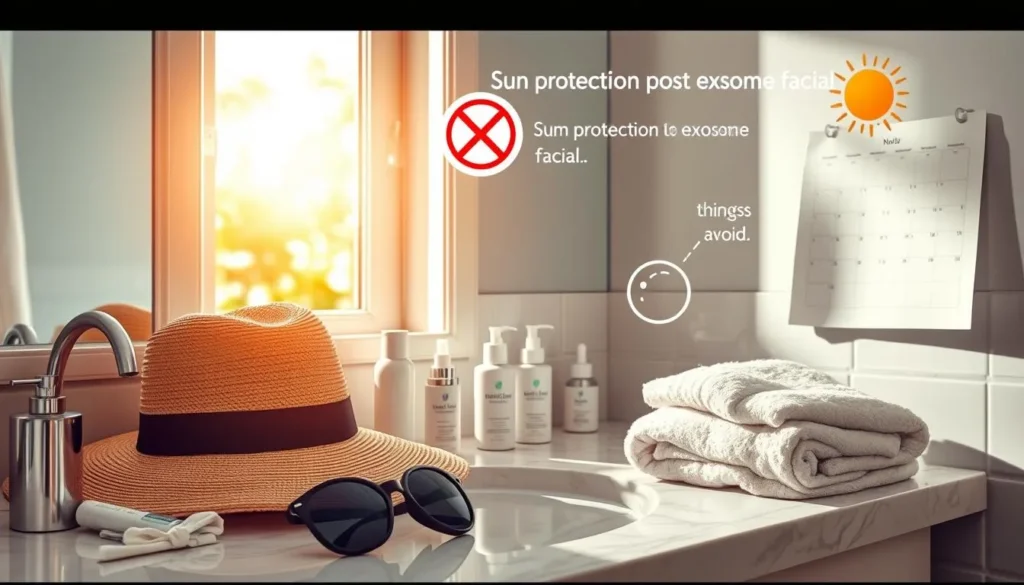
Do you really need SPF?
Yes, every day, even if it’s cloudy. Freshly treated skin burns and pigments more easily, and skipping sunscreen is one of the quickest ways to end up with dark spots.
A broad-spectrum SPF is the minimum.
Best Practices for Sun Safety
Sunscreen isn’t the whole story, though. Wear a hat or protective clothing and stay in the shade on bright days.
| Protection Method | Action Plan |
|---|---|
| Sunscreen | Apply broad-spectrum SPF 30 or higher every two hours. |
| Protective Clothing | Wear wide-brimmed hats and UV-blocking sunglasses. |
| Seek Shade | Avoid direct sunlight especially between 10 AM and 4 PM. |
Do that consistently and your results will last longer and your skin will be healthier in the long run.
Monitoring Your Skin’s Reaction
In the days after the facial, keep an eye on how your skin responds so you know whether everything is on track.
Identifying Normal vs. Abnormal Reactions
Mild redness, slight swelling and a tingling feeling are normal and should fade within a few hours to a couple of days. Following your aftercare routine helps.
Redness or swelling that lasts more than a few days, intense itching, discoloration or a bad acne flare are not normal, and you should get medical advice.
| Normal Reactions | Abnormal Reactions |
|---|---|
| Mild redness | Prolonged redness |
| Slight swelling | Severe swelling |
| Tingling sensation | Intense itching |
When to Contact a Specialist
Contact a specialist right away if you’re in a lot of discomfort, if redness and swelling are getting worse, or if you have signs of an allergic reaction like hives or trouble breathing.
Don’t wait it out if something feels wrong. A quick call is always better than guessing.
Nutritional Considerations After Your Treatment
Food plays a smaller role than aftercare, but it still helps. Eating well gives your skin what it needs to heal, while a lot of sugar and processed food can work against you.
What should you eat?
Foods that help: berries, oranges and grapes for antioxidants; spinach and kale for vitamins A, C and K; salmon, walnuts and flaxseed for omega-3s, which ease inflammation; and lean meats, beans and tofu for the protein your skin needs to repair itself.
What should you cut back on?
Foods to cut back on: processed sugar in candy, pastries and soda; dairy like cheese and whole milk, which can aggravate skin problems in some people; trans fats in fried foods and hydrogenated oils; and refined carbs such as white bread, pasta and rice.
Combine a sensible diet with your aftercare instructions and your skin will heal well and stay bright.
| Recommended Foods | Benefits for Skin Recovery |
|---|---|
| Antioxidant-rich fruits | Protects against free radicals |
| Leafy green vegetables | Promotes skin repair with vitamins A, C, and K |
| Omega-3 fatty acids | Reduces inflammation, supports cell regeneration |
| Proteins | Essential for tissue repair and skin health |
| Avoid these for Optimal Results | |
| Processed sugars | Cause inflammation, impair healing |
| High-fat dairy products | Exacerbate skin issues, slow down recovery |
| Trans fats | Contribute to inflammation, poor skin health |
| Refined carbohydrates | Spike blood sugar levels, lead to skin problems |
Planning Follow-Up Treatments
To keep the benefits going, you’ll probably want follow-up treatments, ideally planned with your skincare provider.
Timing for Additional Exosome Facials
Most experts suggest a follow-up every four to six weeks, which gives your skin time to recover fully in between.
More often than that isn’t better. Over-treating can do more harm than good.

Consulting With Your Skincare Professional
Your skincare professional can put together a plan that fits your skin and keeps your treatments safe and effective.
Checking in with them regularly also helps, since they can tell you what to avoid as your skin changes.
| Activity | Recommended Interval |
|---|---|
| Initial Exosome Facial | First Session |
| Follow-Up Treatment | Every 4-6 Weeks |
| Consultation with Professional | After Each Session |
Conclusion: Optimal Care After Exosome Facial
Getting the most out of an exosome facial mostly comes down to what you avoid: too much sun, skipping aftercare and harsh products.
Recap of Key Avoidances
To recap: stay away from heat, whether from the sun or a sauna, use a gentle cleanser and keep your skin hydrated and moisturized.
And skip makeup for at least 24 hours so your skin can heal.
Encouragement for Proper Aftercare
Aftercare is what makes results last. Done right, it improves texture and softens signs of aging well beyond the first few days.
Build a routine that supports your skin, and exosome facials can be a really useful part of it.
FAQ
So what is an exosome facial, exactly?
Think of it as a facial that sends repair signals to your skin. Exosomes are microscopic packets cells use to talk to each other, and when they’re applied to the skin they encourage it to heal and renew, so texture improves and fine lines soften.
How Do Exosome Facials Work?
The exosomes carry growth factors and proteins into the skin. Those signals help damaged cells recover and nudge the skin to make more collagen, which is where the younger look comes from.
What Are the Key Benefits of Exosome Treatments?
Better skin repair, fewer wrinkles, improved elasticity, and better texture and tone.
Why Is Post-Care Important After an Exosome Facial?
It helps your skin heal, keeps the benefits from fading early and prevents bad reactions.
What Are the Effects of Neglecting Aftercare?
Redness, irritation and even infection, along with slower healing and shorter-lived results.
What Are Common Mistakes After an Exosome Facial?
Skipping aftercare, getting too much sun and using harsh products.
Why Is It Important to Avoid Skipping the Aftercare Routine?
Without it, healing takes longer and you lose some of the benefit.
Why Should I Avoid Overexposure to Sunlight After an Exosome Facial?
Too much sun can cause dark spots and sensitivity. Sunscreen and shade protect your skin while it heals.
Why Should I Avoid Using Harsh Skincare Products Post-Treatment?
They can irritate and inflame the skin and undo the benefits. Gentle cleansers and hydrating products are the way to go.
What Are Recommended Immediate Aftercare Steps?
Cleanse gently, keep your skin hydrated and skip makeup for 24 hours.
Why Should I Avoid Heat Exposure After Treatment?
Heat can cause inflammation and slow healing, so avoid saunas, intense workouts and hot showers for a few days.
What Is the Importance of SPF Post-Facial?
It protects your skin from UV damage and helps preserve your results. Use a broad-spectrum sunscreen with at least SPF 30.
How Do I Identify Normal vs. Abnormal Reactions?
Mild redness and slight irritation that fade within a few days are normal. Severe swelling, redness that won’t go away or signs of infection need prompt professional attention.
What Foods Should I Include for Recovery?
Fruits, vegetables and lean proteins, which are rich in vitamins and antioxidants that support healing.
What Foods Should I Avoid for Optimal Results?
Processed snacks, sugary drinks and too much dairy, which can drive inflammation.
When Should I Plan Follow-Up Treatments?
It depends on your skin, but every four to six weeks is typical.
Why Is It Important to Consult With Your Skincare Professional?
A professional can tailor treatments to your skin, address any concerns and help you keep your skin healthy over time.