Where do you inject exosomes?
Where Do You Inject Exosomes?
Where are exosomes injected? It depends on what you’re treating. For skin and hair they go into the face or scalp, for joints and tendons they’re placed right at the problem area, and in some medical settings they’re given by IV.
Two things decide how well it works: the quality of the exosomes and where they end up. That’s true whether the goal is smoother skin, healthier joints or general healing, and it’s why the injection needs a skilled hand.
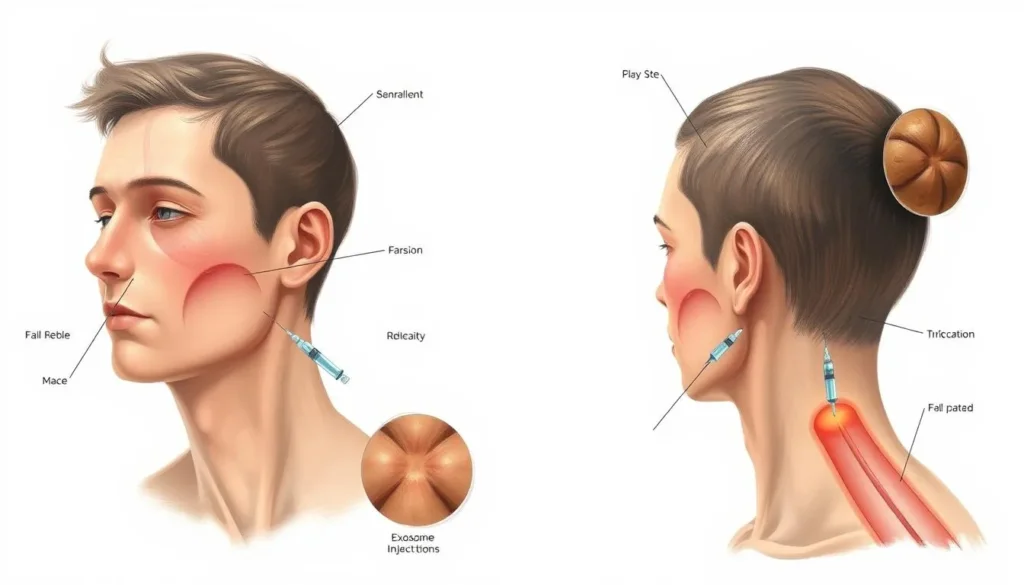
Exosome therapy in brief
Exosome therapy is still a young field. It’s built on exosomes, tiny messengers that cells use to talk to each other.
What Are Exosomes?
Exosomes are tiny particles that cells release. They are between 30 to 150 nanometers in size. They carry important stuff like proteins and genes from one cell to another.
This lets them help cells work together better. Scientists are studying them to find new ways to help people. They think exosomes could be used in many treatments.
The Role of Exosomes in Medicine
In medicine, exosomes are seen as a safer way to help cells heal. They can be given through different ways, like shots or IVs. This makes them useful for treating many diseases.
Research centers are looking at how exosomes might help repair damaged tissue and even fight cancer.
Common Injection Sites for Exosomes
Exosome therapy is a new area in regenerative medicine. It’s getting more attention because it works well and is flexible. Knowing the best places to inject exosomes can really help the treatment work better. This part talks about where exosome therapy is given, both all over the body and to specific areas.
Intravenous Injection
Intravenous (IV) injection is a common way to give exosomes all over the body. It spreads them through the blood, which can help many problems at once. IV is seen as a top choice because it makes the treatment work fast and well.
This method is great for widespread issues like autoimmune diseases and long-term inflammation.
Localized Injections
Localized exosome therapy targets specific areas that need help. It’s used for certain tissues or organs. For example, athletes or people with joint or tendon problems might get injections right where it hurts.
This way, the exosomes can work better in the exact spot. It’s good for fixing things like osteoarthritis, tendinitis, and muscle injuries.
Exosome Injections for Aesthetic Treatments
Exosome injections for aesthetics are becoming more popular. They use exosomes’ regenerative powers for better skin and hair.
Facial Rejuvenation
Exosome injections are a new way to look younger without surgery. They come from stem cells and have growth factors. These help fix and renew skin.
When used on the face, they boost collagen and make skin tighter. This reduces wrinkles and fine lines. People see a brighter, younger look in just a few weeks.

Hair Restoration
Exosome injections also help with hair loss. They wake up dormant hair follicles and improve scalp health. This is great for those with thinning hair or early baldness.
They deliver growth factors and anti-inflammatory signals to the scalp, which encourages new growth and strengthens existing hair. Early studies suggest they can improve hair density and thickness.
A study compared how happy patients were with different beauty treatments. It showed exosome injections are very effective:
| Procedure | Patient Satisfaction | Results Duration |
|---|---|---|
| Exosome Injections for Aesthetics | High | Long-lasting |
| Botox Injections | Moderate | Temporary |
| Dermal Fillers | High | Temporary |
Exosome Applications in Orthopedics
Orthopedics is where a lot of the newer work is happening, especially for joints and soft tissue, where the hope is faster recovery and better results.
Exosomes can go straight into a joint affected by osteoarthritis or cartilage damage. People often notice less inflammation, and as the tissue repairs, moving gets easier and hurts less.
The same idea works for tendon and ligament injuries. Exosomes help cells signal each other and push tissue to regenerate, and some people bounce back faster than with other treatments.
| Conditions Treated | Benefits |
|---|---|
| Osteoarthritis | Reduces inflammation, enhances cartilage repair |
| Tendon injuries | Promotes tissue regeneration, faster recovery |
| Ligament tears | Improves strength and function, reduces recovery time |
| Rotator cuff tears | Enhances repair, diminishes pain |
The Importance of Proper Injection Technique
Proper injection techniques are key in exosome therapy. They ensure the best results and avoid problems. Using the right methods helps in many medical and beauty uses.
Ultrasound guidance
Ultrasound lets the provider see in real time where the needle is, so the exosomes land exactly where they’re needed. That precision is a big part of getting good results.
What can go wrong
Things go wrong when exosomes aren’t stored or handled correctly, when the dose is off, or when they’re injected in the wrong spot. A provider who does this often knows how to avoid all three.
| Common Mistakes | Tips for Prevention |
|---|---|
| Improper exosome handling | Store and handle exosomes according to manufacturer guidelines |
| Incorrect dosing | Consult dosage recommendations based on treatment type |
| Inadequate site knowledge | Use anatomical landmarks and imaging techniques |
Is it safe?
Exosome therapy looks promising, but like any treatment it carries some risk, and you should know what those risks are before you book.
Side effects
Like any injection, there are some risks. Mild swelling, redness and soreness at the site are the most common. Allergic reactions or infection are rare.
A proper evaluation beforehand lowers those risks, and you should tell your provider about anything unusual afterward. In the U.S., exosome products aren’t FDA-approved, so it’s worth asking where your provider’s exosomes come from.
Afterward, take it easy for a few days and use a cold compress if you’re swollen or sore. Follow anything else your provider tells you.
| Risk or Side Effect | Explanation | Management |
|---|---|---|
| Swelling | Common and usually mild | Apply cold compress, rest |
| Redness | Due to needle insertion | Monitor, apply cold compress |
| Allergic Reactions | Rare but possible | Seek medical attention immediately |
| Infections | Very rare | Follow sterility protocols, monitor closely |
Side effects tend to be mild when it’s done properly, according to early studies, but there isn’t much long-term data yet.
Comparing Exosome Therapy to Other Treatments
When looking at regenerative medicine, two main treatments stand out: cell therapy and exosome therapy. Both have their own benefits and ways to fix damaged tissues. They work differently in helping the body heal.
Cell Therapy vs. Exosome Therapy
Cell therapy uses living cells to fix damaged areas. It relies on stem cells, which can turn into different types of cells to heal. But, it’s complex because of cell harvesting and culturing, and there’s a risk of the body rejecting them.
Exosome therapy works differently. It uses tiny vesicles that carry healing signals; they’re easier to store and transport and less likely to trigger an immune reaction, which makes them simpler to use in many cases.
Exosomes and PRP Injections
Another important comparison is between exosomes and PRP injections. PRP injections use a patient’s own platelets to speed up healing. They contain growth factors that help repair cells and tissues.
Both aim to improve tissue repair, just by different routes. Exosomes carry genetic signals that tell cells what to do, which makes them more targeted, while PRP relies on the growth factors in your own platelets.
| Criteria | Exosome Therapy | PRP Injections | Cell Therapy |
|---|---|---|---|
| Source | Exosomes from cells | Patient’s blood | Stem cells from bone marrow or adipose tissue |
| Mechanism | Cell-to-cell communication | Growth factor release | Cell differentiation and repair |
| Storage | Easy | Moderate | Difficult |
| Immunogenicity | Low | Low | High |
Each approach has its strengths, so the right choice depends on what you’re treating and what you want to achieve.
Research and Developments in Exosome Therapies
The field of exosome therapy is growing fast, thanks to new research. Studies and future uses show how these therapies could change medicine.
What researchers are studying
Trials are now testing exosome treatments for wound healing, heart disease and neurological conditions, looking for ways to use them safely and effectively.
Biotech advances are making these therapies more precise, and they may eventually help with long-term diseases and tissue repair. A lot depends on what the research shows over the next few years.
Here’s a look at where exosome therapies are now and where they might go:
| Current Applications | Future Applications |
|---|---|
| Wound Healing | Chronic Inflammatory Diseases |
| Cardiovascular Diseases | Regenerative Medicine |
| Neurological Disorders | Personalized Medicine |
| Orthopedic Conditions | Advanced Drug Delivery Systems |
Conclusion and Future of Exosome Injections
In this article, we’ve looked at how exosome therapy is changing medicine. It’s used for both beauty treatments and fixing bones. We’ve also talked about how to safely use these injections to get the best results.
Summary of Key Points
Exosome therapy is a new and exciting area in medicine. It’s being used to make faces look younger and to fix hair loss. It’s also helping with joint and tendon problems.
Using the right techniques when injecting is key. This includes using ultrasound to guide the injections. Safety is always the top priority, and knowing what to do after the treatment is important.
The Promising Future of Exosome Therapy
The future of exosome injections looks very promising. As more research is done, we’ll see even more uses for exosome therapy. This could make it better than current treatments.
Experts are excited about the progress being made. They think we’ll see big changes soon. This could change how we treat many medical conditions.
FAQ
Where do you inject exosomes?
Exosomes can be injected in different places, depending on the goal of the treatment. They can be given through intravenous injections for overall health benefits. Or, they can be injected directly into specific areas like joints, muscles, and tendons for targeted treatment.
What are the exosome therapy administration methods?
There are several ways to give exosome therapy. You can get it through intravenous (IV) injections, directly into affected tissues, or under the skin. The choice depends on the condition being treated and the desired results.
How effective are different exosome injection sites?
The success of exosome injection sites varies by condition. IV injections work well for systemic issues. Localized injections target specific injuries or ailments. Patient experiences show that choosing the right site is key to getting the best results.
What are the common exosome treatment locations?
Mostly large joints like knees and shoulders, plus tendons, ligaments and muscles, to improve function and help tissue repair.
How are exosomes administered in aesthetic treatments?
In aesthetic treatments they’re injected into the face to refresh the skin and into the scalp to encourage hair growth.
What are the best exosome injection spots for aesthetic purposes?
For beauty, the best spots for exosome injections are areas prone to wrinkles and fine lines on the face. The scalp is also targeted for hair restoration. Properly targeting these areas can lead to better skin tone, elasticity, and hair density.
What techniques are used to ensure proper exosome administration?
Ultrasound guidance is the main one. It lets the provider place the exosomes accurately and avoid errors like the wrong depth or site.
What are the potential risks and side effects of exosome injections?
Usually just some pain, swelling or redness where the needle went in. Serious side effects are rare. Follow the aftercare instructions and call your provider if something seems off.
How do exosome therapies compare to other treatments like PRP or cell therapy?
Exosomes are less invasive than cell therapy and act on many biological processes. Which option is best depends on your condition and goals.
What ongoing research exists for exosome therapies?
Quite a lot. Studies are looking at how well exosomes work for different conditions and how to deliver them better.