Which is better mesotherapy or biorevitalization?
Mesotherapy vs Biorevitalization: Which is Better?
Mesotherapy or biorevitalization? Both are injectable skin treatments that add moisture and help the skin make more collagen, and neither changes your facial structure or how your muscles move. The right one depends mostly on your age and what you want to fix.
Mesotherapy suits younger skin. It uses a cocktail of hyaluronic acid, vitamins, minerals, plant extracts and amino acids. Biorevitalization is aimed at people over 30 or with more visible aging, and it relies mostly on non-crosslinked hyaluronic acid, sometimes with added vitamins, amino acids or antioxidants.
Biorevitalization tends to show results right away, while mesotherapy can take up to three months to reach its full effect.
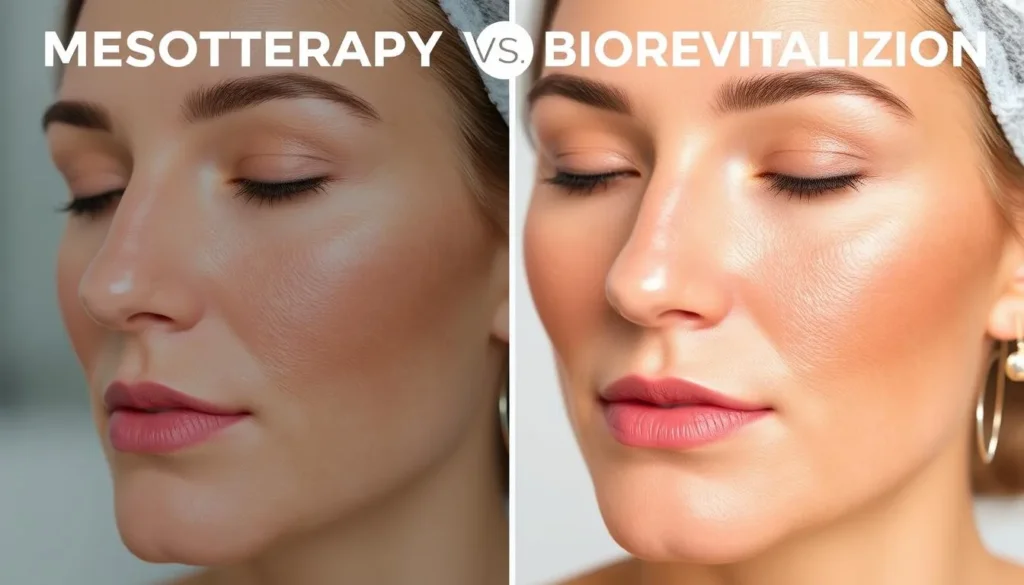
How these treatments work
Both treatments use very fine needles to place hydrating, collagen-stimulating ingredients into the skin, which improves texture and tone. They’re popular for early to moderate signs of aging.
Mesotherapy
Mesotherapy is a minimally invasive treatment that delivers nutrients into the middle layer of the skin. It’s used for aging, acne and uneven tone.
What is Mesotherapy?
The technique was developed in France in 1952 and recognized by the French Academy of Medicine in 1987. A typical course is four to eight sessions, two to three weeks apart.
Key Ingredients in Mesotherapy
The mix usually includes hyaluronic acid, antioxidants, vitamins, trace elements and amino acids, and each does a slightly different job.
| Key Ingredient | Function |
|---|---|
| Hyaluronic Acid | Enhances hydration and plumps the skin |
| Antioxidants | Neutralizes free radicals to prevent skin damage |
| Vitamins | Supports overall skin health and regeneration |
| Amino Acids | Acts as building blocks for proteins like collagen |
| Trace Elements | Enhances enzymatic functions and boosts skin vitality |
Benefits of Mesotherapy
It helps the skin produce more collagen, which softens fine lines and improves elasticity. It can also help with uneven pigmentation and acne.
Most people find it quite tolerable. You may have some redness and swelling, but it usually fades within a day or two and you can go straight back to your routine. Results build with each session.
Biorevitalization
Biorevitalization injects hyaluronic acid into the skin to hydrate and refresh it from within. Depending on the product, the formula may also contain peptides, amino acids, antioxidants or vitamins.
What is Biorevitalization?
It’s a non-surgical treatment that places small amounts of non-crosslinked hyaluronic acid into the skin. Besides adding moisture, it prompts the skin to make more of its own collagen and hyaluronic acid. It works on the face, neck, décolleté and hands.
What’s in it
Most products are built around hyaluronic acid. Some add mannitol, an antioxidant that helps protect the hyaluronic acid, along with vitamins and amino acids.
Expect a course of three to four sessions, two to four weeks apart, repeated once or twice a year. The injections themselves take 15 to 30 minutes. It’s a good fit for dry, sun-damaged or aging skin.
Benefits of Biorevitalization
Skin feels softer, looks smoother and has more glow. Hyaluronic acid holds a lot of water, so the skin gets deep hydration that also supports healing.
Downtime is short. Redness fades quickly, though small bumps at the injection points can take three to five days to settle.
| Benefits | Description |
|---|---|
| Improved Skin Hydration | Hyaluronic acid binds with water to provide deep hydration. |
| Stimulates Collagen Production | Encourages the skin to produce its own collagen and hyaluronic acid. |
| Aesthetic Corrections | Effective on face, neck, décolleté, and hands. |
| Minimal Downtime | Redness and minor side effects subside quickly post-treatment. |
Which is better: mesotherapy or biorevitalization?
It depends on your skin, your age and your goals.
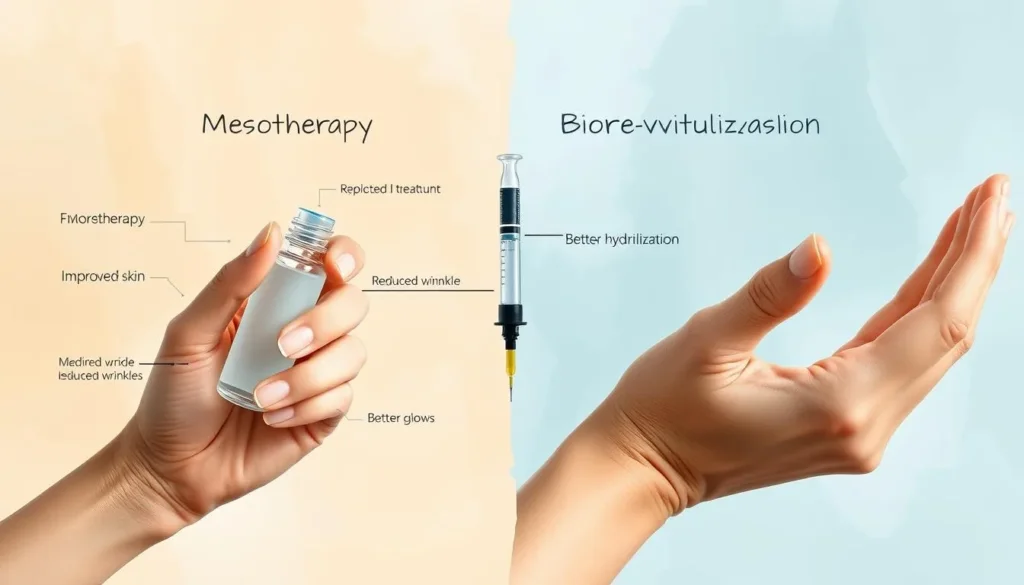
Mesotherapy uses tiny injections of hyaluronic acid, vitamins and minerals. It’s a good choice for younger people or for prevention, keeping skin hydrated and firm. Sessions take 15 to 30 minutes, and most people need four to eight.
Biorevitalization relies mainly on hyaluronic acid and suits older skin or deeper signs of aging. It hydrates deeply, softens wrinkles and usually needs fewer sessions for a longer-lasting result.
A professional who has examined your skin is the best person to help you decide.
The main things to weigh are your age, the condition of your skin, the result you want, and how often you can come in and what you want to spend.
The table below compares the two.
| Treatment Method | Main Component | Ideal For | Estimated Cost | Session Duration | Number of Sessions |
|---|---|---|---|---|---|
| Mesotherapy | Hyaluronic Acid + Vitamins | Younger individuals, preventative care | Varies by visits, ingredients, area size | 30 minutes | 4-8 treatments |
| Biorevitalization | Pure Hyaluronic Acid | Older individuals, visible signs of aging | N/A | 15-30 minutes | 3-4 per course |
Comparing Mesotherapy and Biorevitalization Techniques
Mesotherapy injects a blend of vitamins, minerals and amino acids, while biorevitalization uses a denser hyaluronic acid solution that hydrates more strongly.
Because it has more ingredients, mesotherapy is the more flexible option. Biorevitalization’s high hyaluronic acid content makes it better at firming and adding elasticity.
The details differ in a few ways:
| Technique | Mesotherapy | Biorevitalization |
|---|---|---|
| Main Component | Vitamins, Minerals, Amino Acids | Hyaluronic Acid (HA) |
| Typical Session Duration | 15-30 minutes | 15-20 minutes |
| FDA Approval | Varies by product | Skinvive by Juvederm (for cheeks) |
| Application Areas | Face, neck, hands | Cheeks, lips, neck, chest, hands, body |
| Cost | Varies by practitioner’s skill and region | Comparable to other fillers |
| Duration of Effects | Approx. 3-6 months | 4-6 months |
Biorevitalization products such as Skinvive usually need fewer sessions, with touch-ups every four to six months. Mesotherapy takes more sessions to reach its best result. Both are minimally invasive.
Who mesotherapy suits
It’s most popular with people in their late 20s and early 30s who want to keep their skin hydrated and delay visible aging.
It’s quick, side effects are mild and it fits easily into a busy schedule, and the benefits build over time.
Who biorevitalization suits
It’s mainly for people in their 30s and older who are starting to see fine lines, wrinkles and loss of firmness.
Different products suit different skin. Some high-concentration hyaluronic acid formulas have improved skin quality in women in their mid-50s, even when elasticity gains were modest.
It isn’t for everyone. Skip it if you have a bleeding disorder, a weakened immune system or a hyaluronic acid allergy, or if you’re pregnant or breastfeeding.
Expected Results and Duration of Effects
You may notice a change right after either treatment, but the best results come over time with several sessions a year.
Mesotherapy works best for younger skin as prevention. Biorevitalization, often done with products called skin boosters, is better for older skin that needs more elasticity and hydration.

Skin boosters hydrate better than creams or serums and work on the face, neck, décolleté and hands. If you’re comparing them with fillers, hyaluronic acid fillers last 6 to 12 months (some up to 18), and poly-L-lactic acid can last around two years.
In short, mesotherapy builds a cumulative, preventive effect in younger patients, while biorevitalization is usually done as a course of three or four sessions once or twice a year for people over 30. For comparison, calcium hydroxylapatite fillers can last up to 18 months.
A full-face biorevitalization session takes only 15 to 20 minutes, which makes it easy to fit in.
Skin Hydration and Firmness: Mesotherapy vs Biorevitalization
Mesotherapy’s Impact on Skin Hydration
Mesotherapy delivers vitamins, amino acids and other nutrients right into the skin, which helps it hold moisture.
It often contains hyaluronic acid too, though less than biorevitalization does, and leaves the skin looking plump and refreshed.
Biorevitalization’s Contribution to Skin Firmness
Biorevitalization uses a high dose of non-crosslinked hyaluronic acid, which makes the skin look fuller and more resilient.
Many formulas add vitamins or minerals that support collagen, so the skin gets firmer and takes on a natural glow.
| Aspect | Mesotherapy | Biorevitalization |
|---|---|---|
| Hydration | Improves moisture retention with lower concentration hyaluronic acid | Deep hydration with high concentration hyaluronic acid |
| Firmness | Moderate improvement due to vitamins and amino acids | Significant improvement due to high viscosity of hyaluronic acid |
| Ingredients | Vitamins, amino acids, minerals, coenzymes | High hyaluronic acid with vitamins and minerals |
Collagen Production: Mesotherapy vs Biorevitalization
Mesotherapy’s Role in Boosting Collagen
Mesotherapy’s blend of hyaluronic acid, vitamins, minerals, plant extracts and amino acids activates fibroblasts, the cells that make collagen.
It’s a good option for younger people who want to keep their skin elastic. A session is quick, often around 15 minutes, with little downtime.
How biorevitalization builds collagen
Change comes gradually as the hyaluronic acid draws in water and nudges the skin to repair itself. People over 30 with more visible aging tend to get the most from it.
Over time your skin makes more of its own collagen, so it feels firmer and holds moisture better. Each session is about 15 minutes, and any redness or swelling is usually gone within three to five days.
The table below sums up the differences.
| Aspect | Mesotherapy | Biorevitalization |
|---|---|---|
| Main Components | Hyaluronic acid, vitamins, minerals, plant extracts, amino acids | Pure hyaluronic acid, vitamins, enzymes |
| Ideal Candidates | Younger skin to prevent aging | Patients aged 30+ with advanced signs of aging |
| Session Duration | 15 minutes | 15 minutes |
| Maintenance Frequency | 3 to 6 treatments a year | 3 to 6 treatments a year |
| Side Effects | Redness, minor swelling (1-2 days) | Redness, minor swelling (3-5 days) |
| Downtime | Minimal | Minimal; bumps may last 3-5 days |
Recovery and results
Both treatments are minimally invasive, so recovery is much quicker than with surgery.
Mesotherapy cocktails can contain dozens of vitamins, amino acids and minerals, and people usually notice brighter, tighter skin.
Biorevitalization encourages skin renewal and keeps skin hydrated. It takes several sessions, and clinicians often track the change with standard scales such as GAIS and WSRS.
| Component | Mesotherapy | Biorevitalization |
|---|---|---|
| Hyaluronic Acid | Yes | Yes |
| Vitamins | Yes | Yes |
| Amino Acids | Yes | Some products |
| Minerals | Yes | Some products |
| Coenzymes | Yes | No |
The bottom line
Both treatments are good ways to improve your skin. Mesotherapy feeds the skin with vitamins and other nutrients to tackle fine lines and dullness. Biorevitalization uses hyaluronic acid to hydrate and firm it.
Biorevitalization in particular can make skin noticeably brighter and better hydrated after just a few sessions.
Think about what you want for your skin, then talk to a skincare professional who can recommend the right treatment for you.
FAQ
What is Mesotherapy?
An injectable treatment that delivers a mix of nutrients like hyaluronic acid and vitamins into the skin. It’s used for aging, acne and other concerns and leaves skin more elastic and hydrated.
What is Biorevitalization?
Injections of mostly hyaluronic acid, sometimes with vitamins or amino acids, that hydrate and firm aging skin.
Which treatment is better for younger skin?
Mesotherapy. It helps prevent aging by strengthening the skin’s natural barrier, so skin stays youthful longer.
Which treatment is better for mature skin?
Biorevitalization is usually the better pick if you’re over 30 or have visible aging. It gives mature skin a quick boost in firmness and hydration.
How do Mesotherapy and Biorevitalization differ in their techniques?
Both inject ingredients into the skin, but mesotherapy uses a blend of nutrients while biorevitalization centers on hyaluronic acid. Mesotherapy builds gradually; biorevitalization works faster.
What are the immediate and long-term results of these treatments?
You may see some change right away with either one, but the full effect takes time, and both need repeat sessions. Biorevitalization shows results sooner.
How do these treatments impact skin hydration and firmness?
Mesotherapy mainly improves hydration. Biorevitalization’s hyaluronic acid adds firmness and volume as well.
What role do these treatments play in collagen production?
Both increase collagen. Mesotherapy does it with its nutrient mix, and biorevitalization through hyaluronic acid, leaving skin smoother and more elastic.
Are these treatments considered minimally invasive?
Yes. Downtime is short and side effects are usually limited to redness or swelling.
How should one choose between Mesotherapy and Biorevitalization?
Go by your skin type and goals. Mesotherapy suits younger skin and prevention, while biorevitalization suits older skin with visible aging. A skincare professional can advise you.