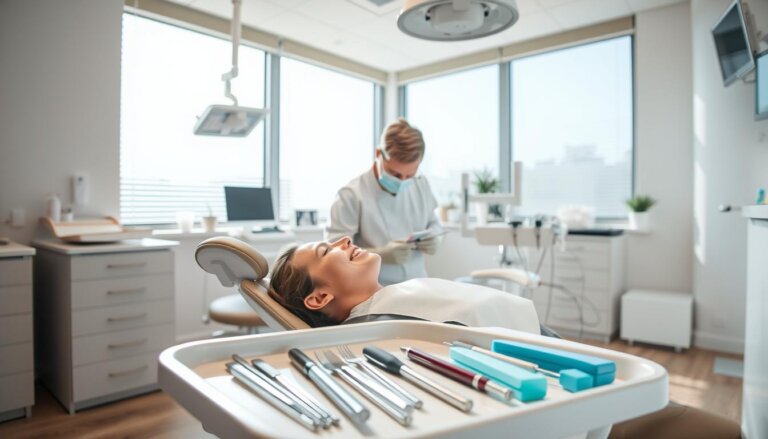
Will Fixing a Broken Tooth Improve Both Appearance and Function
Did you know nearly 30% of adults in the United States have dental trauma? This includes chips or fractures in their teeth. This statistic shows a common issue that affects both oral health and self-esteem.
A damaged tooth can ruin your smile and make chewing and speaking hard. Whether it’s from biting into something hard, an accident, or decay, getting dental care fast is key. Without it, the problem can get worse.
Modern dentistry has many treatments to fix teeth. These treatments help restore the tooth’s strength and look. This article will show how these treatments can fix both how a tooth looks and how it works.
By learning about these options, you can see how they can fix your smile and chewing. This is important for your health and how you feel about yourself.
Key Takeaways
- A significant percentage of adults face dental trauma, affecting confidence and health.
- Timely dental care is essential to prevent further damage.
- Modern dentistry provides effective treatments for structural repair.
- Restorative techniques can enhance both appearance and function.
- Understanding available options empowers individuals to make informed decisions.
Understanding Tooth Damage
Knowing about tooth damage is key for good dental care. It helps both patients and dentists spot the damage and what caused it. This is vital for the right treatment.
Types of Tooth Damage
Tooth damage comes in many forms, each needing its own fix. Here are the main types:
- Craze Lines: These are small, surface cracks that don’t harm the tooth much.
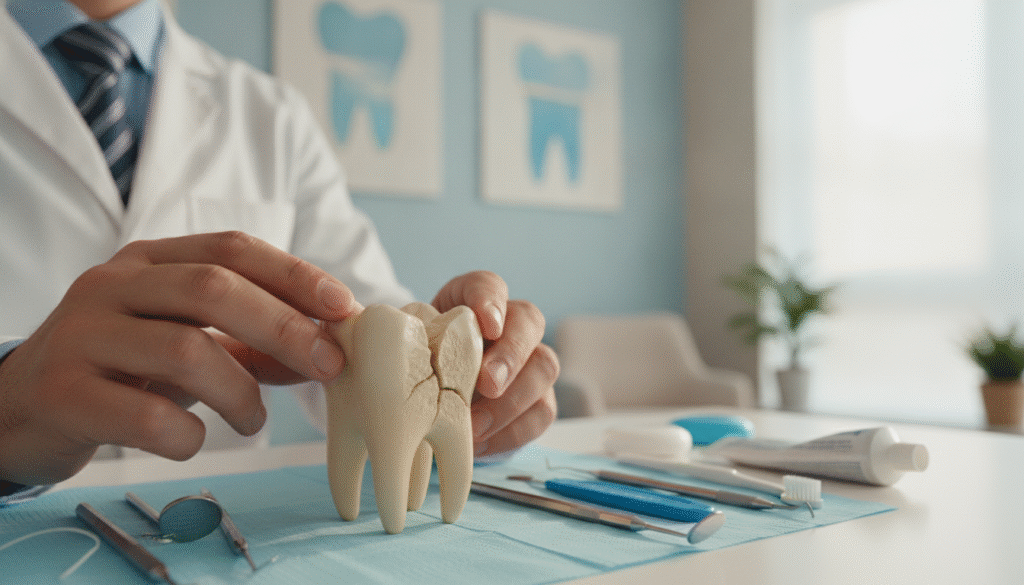
- Chips: A chip is when a small part of the tooth breaks off, often from trauma or hard bites.
- Fractures: More serious than chips, fractures go deeper into the tooth, possibly to the pulp.
- Complete Breaks: This is when the tooth splits into two or more pieces, needing quick dental help.
Common Causes of Broken Teeth
Knowing why teeth break can help prevent and treat them early. Several things can cause tooth damage:
| Cause | Description | Prevention Tips |
|---|---|---|
| Trauma | Injuries from sports or accidents can cause fractures. | Wear mouthguards during sports. |
| Hard Foods | Biting hard objects can chip or crack teeth. | Avoid chewing ice or hard candies. |
| Bruxism | Teeth grinding can wear down enamel and cause fractures. | Consult a dentist for a night guard. |
| Dental Decay | Weakening of enamel due to cavities increases fracture risk. | Maintain regular dental check-ups and good oral hygiene. |
Signs of tooth damage include sharp pain when biting, visible cracks, or rough edges. Even small fractures can hurt, making teeth sensitive or leading to infection.
The Importance of Dental Aesthetics
Dental aesthetics is more than just looks; it affects how we feel about ourselves and how we interact with others. A confident smile can make us more outgoing. But, a broken tooth can make us feel shy and nervous around people.
Studies show that dental flaws can hurt our self-esteem. People with dental issues often feel less attractive and lonely. This shows why fixing dental aesthetics, like cosmetic dentistry for broken teeth, is so important.
How Appearance Affects Confidence
Teeth are key in how our face looks. A broken tooth, like one in the front, can change our face’s balance and make us look older. Fixing a broken tooth is not just for looks; it’s also about keeping our face’s shape.
By fixing a broken tooth, we can look younger and feel more confident. This is why dental repairs are so vital.
The Role of Teeth in Facial Structure
Teeth help hold up our facial muscles and keep our face’s height right. When a tooth breaks, it can change how our face looks and works. Losing a tooth’s support can make our skin sag and change our face’s shape.
So, fixing a broken tooth is key to keeping our teeth and face looking good. It’s not just about looks; it’s about keeping our face healthy.
Dental Functionality
Teeth are key for eating and talking, showing how important they are for our health. They do more than just look good. They help us chew and speak every day. Knowing how teeth work helps us see why keeping them healthy is so important.
The Role of Teeth in Chewing
Chewing food is a complex task that needs strong teeth. Healthy teeth can break down food well, helping with digestion. But, if a tooth is damaged, it can make chewing hard.
This can cause:
- Pain during chewing: Broken teeth can hurt, making it hard to eat certain foods.
- Imbalanced chewing forces: A broken tooth can put too much stress on other teeth and the jaw.
- Long-term oral health issues: Not chewing food well can lead to digestive problems and poor nutrition.
Impact of Broken Teeth on Speech
Broken teeth can also mess with how we speak. The front teeth are important for making sounds like “s” and “f”. If these teeth are damaged, it can make speaking hard.
- Difficulty in pronunciation: It can be tough to say certain sounds right.
- Changes in speech patterns: People might speak differently, which can make them feel shy or unsure.
- Social implications: Trouble speaking can affect how we interact with others.
In short, teeth are essential for chewing and speaking. What happens to tooth function after restoration? This question leads to looking at ways to fix teeth so we can chew and speak better.
Treatment Options for Broken Teeth
There are many ways to fix a broken tooth. The right choice depends on how bad the damage is and what the patient needs. We’ll look at the main broken tooth treatment options, what they’re for, and their benefits.
Dental Crowns
Dental crowns are good for serious damage. They cover the whole tooth, protecting it and making it look right again. Crowns are made from strong materials like porcelain or zirconia. They make the tooth strong and look natural.
To get a crown, the tooth is shaped, impressions are taken, and then the crown is put on. It’s a great choice for those wanting a strong and good-looking tooth.
Veneers
Veneers are great for fixing teeth that look bad but are not too damaged. They are thin, custom-made shells that go on the front of teeth. Veneers are perfect for the front teeth because they make them look better.
Veneers hide chips, cracks, or stains, making teeth look natural and improving confidence. They don’t need to take much off the tooth, so they’re a gentle way to improve your smile.
Fillings
Fillings are a good choice for small chips or cracks. They use a special resin to fix the tooth. This is good for small damage.
Fillings are fast and can be done in one visit. They match the color of your teeth, so they look natural.
How Treatment Improves Appearance
Dental technology has changed how we fix broken teeth. Today, treatments not only fix teeth but also make them look better. New materials and methods help dentists create results that last and look real.
Improving the look of broken teeth focuses on a few key things:
- Color Matching: New materials let dentists match tooth colors perfectly, making repairs blend in.
- Translucency Gradients: New techniques make teeth look more natural by matching their shine.
- Surface Texture Replication: Procedures can copy the feel of real enamel, making repairs look more real.
Cosmetic Benefits of Repairing Teeth
Fixing broken teeth can really boost your confidence. People often feel better about themselves after getting their teeth fixed. A good fix can:
- Make your face look better by fixing unevenness.
- Make your smile more attractive.
- Make you look younger by fixing flaws.
Natural Look of Restorative Procedures
Getting a natural look from dental fixes is not just luck. It’s thanks to careful planning and special materials. Dentists use art to shape restorations, making sure they look right.
The table below shows what modern dental materials can do:
| Material Type | Durability | Aesthetic Quality | Application |
|---|---|---|---|
| Porcelain | High | Excellent | Crowns, Veneers |
| Composite Resin | Moderate | Good | Fillings, Bonding |
| Zirconia | Very High | Excellent | Crowns, Bridges |
In short, new dental fixes focus on both looks and function. Patients get treatments that not only fix but also improve their smiles. This leads to lasting confidence and comfort.
How Treatment Enhances Function
Restorative dental treatments are key in making damaged teeth work better. Fixing a broken tooth is more than just making it look good. It’s about making sure it works right too. Good dental care rebuilds strength, stops more damage, and looks natural with other teeth.
One big plus of these treatments is restoring bite alignment. A well-made crown or filling fits right back into the mouth. This makes sure the teeth work together evenly, which helps prevent more damage.
Restoring Bite Alignment
When fixing a tooth, making sure it fits right with others is very important. This keeps the mouth healthy and comfortable. If teeth don’t fit right, it can cause pain and more problems. Fixing the tooth’s position makes eating easier and more comfortable.
Improving Chewing Efficiency
Also, fixing a broken tooth can make chewing better. A fixed tooth can handle the same pressure as a healthy one. This means you can chew food better, making meals more fun and easier to eat.
| Restoration Type | Effect on Bite Alignment | Impact on Chewing Efficiency |
|---|---|---|
| Crowns | Re-establishes natural bite | Increases masticatory performance |
| Veneers | Improves aesthetic alignment | Enhances food breakdown |
| Fillings | Restores tooth structure | Maintains chewing function |
The Process of Repairing a Broken Tooth
Fixing a broken tooth starts with a dentist’s check-up. This first step is key to figure out the best fix. The dentist uses special tests to get a clear picture of the tooth’s state.
Initial Consultation
At the first visit, the dentist does several tests. These include:
- Percussion Testing: This checks the tooth and the area around it.
- Thermal Sensitivity Checks: These tests see how the tooth reacts to hot and cold.
- Radiographic Analysis: X-rays are used to check the inside of the tooth.
These tests help the dentist find the cause of the break and plan the treatment.
Treatment Procedures
After the tests, the dentist starts the treatment. The method depends on the break’s severity. Here are some common treatments:
- Bonding: For small chips, a resin is used to fix the tooth.
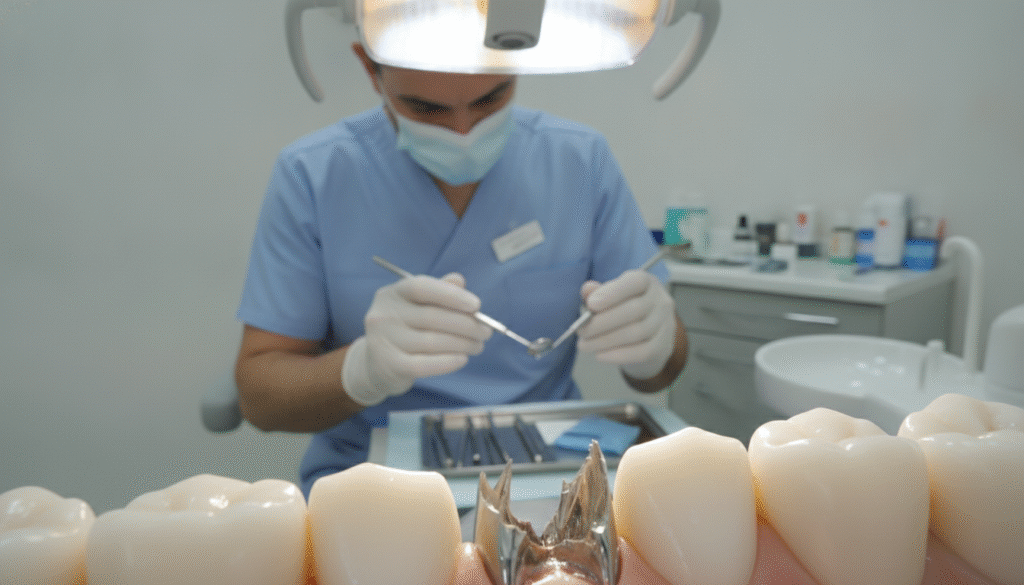
- Crown Preparation: For big breaks, a crown is needed. This involves shaping the tooth, making an impression, and placing a temporary crown.
- Root Canal Therapy: If the pulp is hurt, a root canal might be needed to save the tooth.
Each treatment aims to fix the tooth’s look and function, making it blend in with the rest of your teeth.
Post-Treatment Care
After the treatment, it’s important to take care of your tooth. You should:
- Use pain relief if you have any tooth sensitivity.
- Keep your teeth clean to avoid decay around the fixed area.
- Go back for check-ups to make sure the tooth and fix are doing well.
Following these steps helps keep your tooth fix in good shape and improves your oral health.
Cost Considerations
It’s important to know the costs of fixing a broken tooth. Patients often think about the money when choosing dental treatments. This section will talk about average costs and what insurance might cover.
Average Costs of Procedures
The price to fix a broken tooth changes with the treatment. Here’s a quick look at some common ones:
| Procedure | Average Cost | Duration of Treatment |
|---|---|---|
| Dental Bonding | $300 – $600 | 1 hour |
| Crown (Porcelain/Ceramic) | $800 – $3,000 | 2 hours |
| Composite Filling | $150 – $400 | 1 hour |
Dental bonding is usually the cheapest, using resin to fix chipped teeth. Crowns cost more but last longer and look better, making them a big investment.
Insurance Coverage and Payment Plans
Insurance can cover different treatments in different ways. Usually, things like crowns and fillings are covered more than cosmetic work. It’s smart to check with your insurance to see what they’ll pay for.
Many dentists offer payment plans and financing through other companies. These options help make getting the care you need easier, without worrying about money.
Risks of Not Repairing a Broken Tooth
Ignoring a broken tooth can lead to serious problems. Even a small chip in the enamel can let bacteria into deeper layers. This can cause infections that might need root canals or tooth extractions.
Untreated fractures can also cause more damage. When you chew, the forces on a broken tooth can make cracks worse. This can lead to serious fractures that might make the tooth unusable.
Potential for Further Damage
Once a tooth is damaged, things can get worse. Bacteria can get into the tooth’s inner parts, causing pain and more problems. This can lead to serious issues that harm the tooth’s health.
Impact on Oral Health
Not fixing a broken tooth can harm more than just that tooth. The teeth around it might move, causing misalignment and more dental problems. Also, the risk of gum disease goes up because of the bacteria in the damaged area.
It’s important to act fast. Fixing a broken tooth quickly can stop it from becoming a bigger problem. Taking care of your teeth helps keep your smile and function in check.
| Issue | Potential Consequences | Treatment Options |
|---|---|---|
| Small Chip | Bacterial invasion, infection | Fillings |
| Crack Above Gumline | Increased fracture risk | Crowns, Veneers |
| Crack Below Gumline | Vertical root fracture | Extraction, Root Canal |
For more information on broken tooth repair options, talk to your dentist. They can help find the best treatment for you.
Preventive Measures for Tooth Damage
Preventing tooth damage is possible with regular brushing and dental visits. Keeping teeth strong and healthy needs a proactive plan. By using good oral care, you can lower the chance of dental problems later.
Good oral hygiene is key. It includes:
- Brushing teeth at least twice a day with fluoridated toothpaste.
- Flossing daily to remove plaque and food particles between teeth.
- Using mouthwash to help kill bacteria and freshen breath.
Regular dental check-ups are also vital. These visits help dental professionals:
- Spot early signs of wear or damage.
- Do professional cleanings to remove tartar buildup.
- Give fluoride treatments to strengthen enamel.
For those who grind their teeth at night, a custom mouthguard is helpful. It protects teeth and any dental work. Also, avoid chewing ice or using teeth to open packages to prevent fractures.
Being mindful of what you eat is also important. Eating less sugary snacks and acidic drinks helps prevent decay. Here’s a table with key preventive steps:
| Preventive Measure | Description | Frequency |
|---|---|---|
| Brushing | Use fluoridated toothpaste to clean teeth. | Twice daily |
| Flossing | Remove plaque and food particles between teeth. | Daily |
| Dental Check-Ups | Professional cleaning and examination. | Every 6 months |
| Mouthguard | Protects teeth from grinding. | As needed |
By taking these steps, you can keep your teeth healthy and strong for a long time.
Choosing the Right Dentist
Finding the right dentist is key for fixing a broken tooth. A good cosmetic, family, or general dentist is important. They help fix the tooth’s look and make sure it works right.
Experience matters a lot when picking a dentist. A seasoned dentist knows how to fix the tooth right. They pick the best materials and do the job well.
Importance of Experience
Look at a dentist’s background and training. Experienced dentists handle problems better. They give care that fits your needs. At Penn Dental Medicine, they focus on patient care and high standards.
Questions to Ask During Consultation
Ask important questions during your visit. Here are some:
- What is your experience with adhesive dentistry?
- What types of materials do you typically use for restorations?
- How do you handle complications during treatment?
- Can you provide examples of similar cases you have treated?
- What is your approach to post-treatment care?
These questions help you choose wisely. They make sure the dentist meets your needs.
| Criteria | Importance | Considerations |
|---|---|---|
| Experience | High | Years in practice, types of cases handled |
| Materials Used | Medium | Quality and type of restorative materials |
| Post-Treatment Care | High | Follow-up procedures and patient support |
Patient Experiences and Testimonials
Many people share how dental treatments have changed their looks and confidence. They often say they’re happy with their dental work. The feedback shows not just better looks but also better function.
Those who got work on the front teeth say they feel more confident right away. They talk about how their smile makes them want to be more social. This boost in confidence is clear in their stories.
But, those who got work on the back teeth talk about feeling less pain and eating better. They say they can enjoy their favorite foods again. This makes their life better overall.
Positive Feedback from Treatment
Patients often praise how well their dental work looks and lasts. They say their crowns and veneers look just like their real teeth. This shows how good modern dental tech is.
Long-Term Benefits Observed
Patients also talk about the long-term good they get from their treatment. They say their teeth work well for years without any problems. This shows that investing in dental care is worth it.
| Patient Feedback | Type of Treatment | Reported Benefits |
|---|---|---|
| “My smile has changed my life!” | Anterior Restoration | Increased confidence and social interaction |
| “I can eat without pain now!” | Posterior Crown | Relief from discomfort and improved chewing |
| “The results look so natural!” | Veneers | Enhanced aesthetics and durability |
Conclusion
Fixing a broken tooth can greatly improve how you look and feel. Many people say it boosts their confidence and makes life better. Today’s dentistry offers fixes like crowns and veneers that look just like real teeth.
It’s important to fix a broken tooth quickly. Waiting too long can cause more problems, like pain and more dental issues. Getting help fast keeps your smile strong and healthy. Healthy teeth help you eat, speak, and feel good about yourself.
We urge you to take action for your dental health. If you’re worried about a broken tooth or other dental problems, make an appointment. For more details or to book a visit, call us or check out this link. Your teeth are key to your health, and we’re here to help you get the smile you want.