
Can I Drink Cold or Hot Beverages with a Cracked Tooth?
Did you know nearly 1 in 5 adults have dental pain from cracked teeth? This fact shows how common this issue is. A cracked tooth can expose the sensitive pulp inside, making it react to temperature changes.
Studies by the American Association of Endodontists show cracked teeth hurt when exposed to hot or cold. The pain is sharp and intense. Many wonder if it’s safe to drink temperature-changing drinks.
It’s key to understand tooth cracks. Even small ones can make teeth very sensitive. Drinking can suddenly change the temperature, hurting the nerve endings. The pain’s intensity depends on the crack’s size and where it is, plus if the pulp is inflamed or infected.
It’s important to notice these symptoms early. Ignoring them can lead to worse problems. So, watch how your teeth react to temperature changes.
Key Takeaways
- Cracked teeth can lead to heightened sensitivity to temperature.
- Even small cracks may cause intense pain when consuming hot or cold items.
- Prompt dental evaluation is critical to prevent further issues.
- The severity of discomfort varies based on the crack’s characteristics.
- Awareness of symptoms can guide timely treatment decisions.
Understanding Cracked Teeth
It’s important to know the signs and causes of cracked teeth to keep your mouth healthy. Cracks can happen for many reasons. Knowing these can help you spot problems early and manage them well.
What Causes Cracked Teeth?
Cracked teeth come from different things, like:
- Bruxism: Grinding or clenching your teeth can cause cracks.
- Hard Foods: Eating hard things, like ice or hard candies, can break your teeth.
- Temperature Changes: Drinking hot or cold drinks quickly can stress your teeth.
These things can lead to cracks that might not be easy to see right away.
Common Symptoms of a Cracked Tooth
Cracked teeth can make you feel different ways, like:
- Intermittent Pain: You might feel pain when you chew or bite.
- Temperature Sensitivity: You might feel more pain from hot or cold drinks.
- Elusive Discomfort: Some people feel pain that comes and goes, making it hard to find the problem.
These signs are important to notice. They can help you figure out if you have a crack and need to see a dentist.
Types of Cracks: Hairline to Complete Fracture
Cracks in teeth can be different in how bad they are:
- Hairline Cracks: These are small and might not hurt right away.
- Crazing: These are fine lines on your teeth but usually don’t hurt your teeth’s function.
- Complete Fractures: These go all the way through your tooth and might hurt the nerve. You need to see a dentist right away.
Even tiny cracks can make your teeth very sensitive to temperature. So, it’s key to watch your teeth closely.
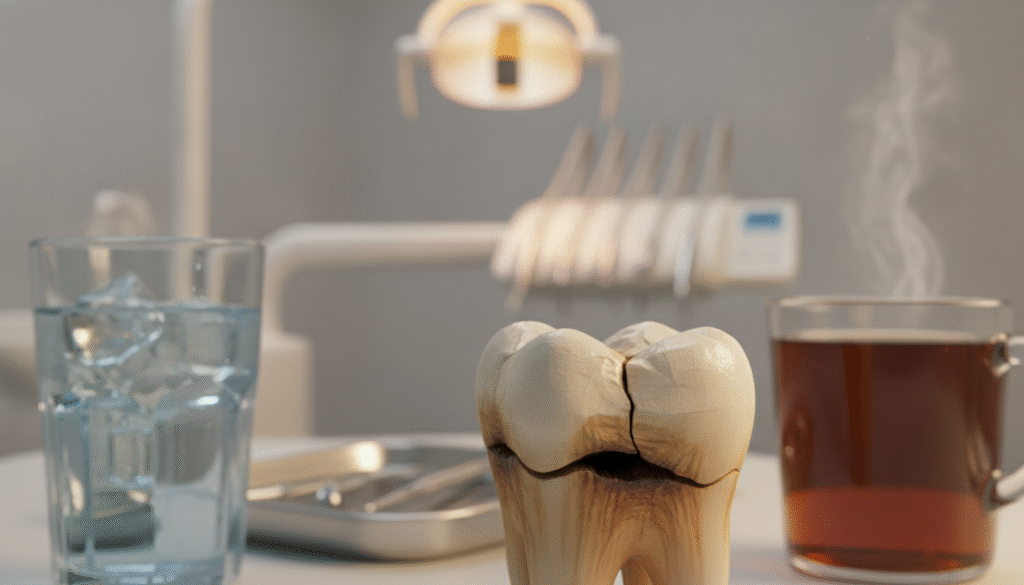
How Temperature Affects Cracked Teeth
Extreme temperatures can really hurt cracked teeth, making them more sensitive. It’s important to know how this works if you have a cracked tooth. We’ll look at why hot and cold can hurt, why it happens, and the role of tooth nerves.
Sensitivity to Hot and Cold
People with cracked teeth often feel more pain from hot and cold. When the enamel is damaged, it shows the dentin underneath. This dentin is very sensitive to temperature changes.
A hot coffee or cold water can cause sharp pain. This is because the nerves in the tooth react to these changes.
Reasons for Increased Discomfort
The main reason for more pain in cracked teeth is the hydrodynamic theory. It says that fluid movement in the dentinal tubules can cause pain with temperature changes. When hot or cold substances touch the tooth, they make the fluid move. This movement stimulates the nerve endings, causing sharp pain.
Role of Tooth Nerves
Tooth nerves are key in how temperature affects cracked teeth. When a tooth is cracked, the nerves can become more sensitive. This sensitivity often means there’s a problem with the tooth itself.
It’s important for people to see a dentist if they have ongoing pain. This can help find and fix the issue.
| Temperature Exposure | Type of Pain | Duration of Discomfort |
|---|---|---|
| Hot Beverages | Sharp, Immediate Pain | Short-lived, Immediate Reaction |
| Cold Beverages | Intense, Lingering Pain | Can Last Minutes |
| Room Temperature | Minimal to No Pain | None |
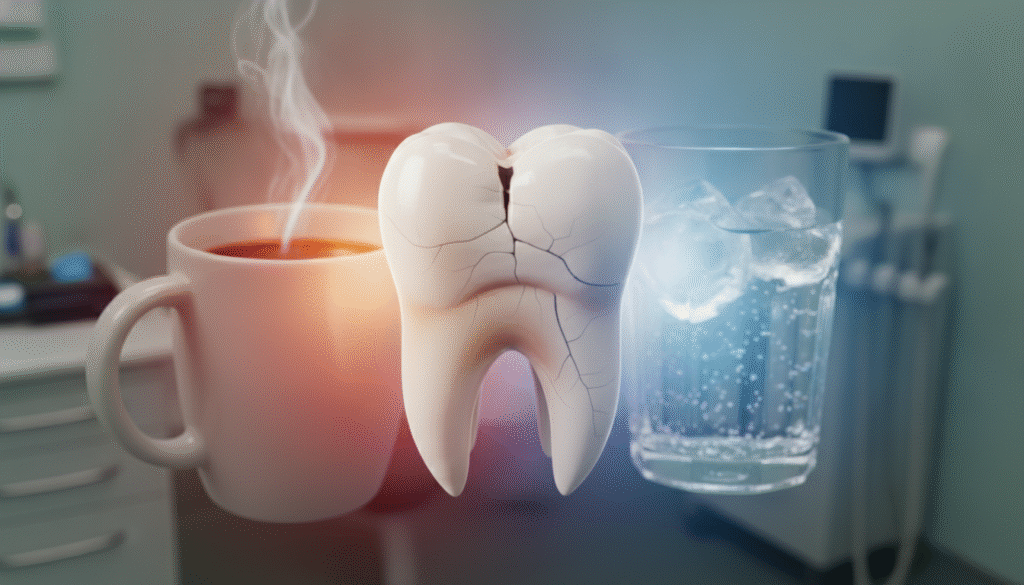
Risks of Drinking Hot Beverages
Drinking hot beverages can be risky for people with cracked teeth. The heat can cause discomfort and lead to more problems. It’s important to know these risks to take care of your teeth.
Effects on Tooth Integrity
Heat can stress a cracked tooth’s structure. This stress can harm both the enamel and dentin. As the tooth expands, cracks may get worse.
Potential for Aggravating Pain
Hot drinks can make pain worse for those with cracked teeth. If your tooth is already sore, heat can make it hurt more. This is true if the tooth has a cavity or exposed inner layer.
Heat and Tooth Structure
Heat can also affect the tooth’s pulp. If the pulp is inflamed, hot drinks may cause irreversible pulpitis. This is a serious condition that needs immediate dental care. So, it’s best to avoid hot drinks if you feel pain.
Risks of Drinking Cold Beverages
Drinking icy drinks can make a cracked tooth worse. It’s important to know the risks to manage pain and keep your mouth healthy.
Cold Sensitivity Explained
Cold sensitivity happens when a drink’s cold triggers a tooth reaction. This is because the tooth’s dentinal fluid contracts, sending pain signals. A study found that
“Ice-cold drinks can trigger sudden tooth pain. The cold can reach sensitive areas inside the tooth and cause a sharp reaction.”
How Cold Can Exacerbate Pain
Cold can make a tooth crack move slightly. This movement irritates the tooth’s pulp, causing more pain. Even small cracks can hurt a lot when it’s cold. Remember, cold drinks might numb you at first but can make things worse over time.
Effects on Damaged Nerves
Cold can really hurt damaged nerves. If the pulp is swollen, cold can make nerves too sensitive. This is called reactive hyperalgesia. It means even small things can cause sharp pain. So, it’s best to stick to room-temperature drinks to avoid pain.
Managing Discomfort from Temperature Sensitivity
Knowing how to ease pain from temperature sensitivity is key for those with cracked teeth. People with this problem look for ways to lessen their pain. Luckily, there are quick fixes and oral care tips that can help until you see a dentist.
Temporary Solutions for Pain Relief
Using desensitizing toothpaste is a good way to handle cracked tooth pain. These toothpastes, with ingredients like potassium nitrate or stannous fluoride, can block pain signals. But, it might take a few weeks to see the full effect.
Also, applying a cold compress can help by reducing swelling and numbing the area. It gives quick relief. Staying away from very hot or cold drinks is also wise. Drinking room-temperature water is best because it’s gentle and keeps your mouth clean. Lukewarm, unsweetened herbal tea is another option that’s soothing for sensitive teeth.
Oral Care Tips for Cracked Teeth
Keeping your mouth clean is very important if you have cracked teeth. Here are some tips:
- Brush gently with a soft-bristled toothbrush to avoid further irritation.
- Floss carefully around the affected tooth to prevent additional damage.
- Rinse with warm salt water to reduce inflammation and promote healing.
When to See a Dentist
While these tips can help for a while, knowing when to see a dentist is important. You should go to a dentist if you have:
- Persistent pain that does not subside.
- Swelling in the gums or face.
- Fever accompanying tooth pain.
- Pain that lingers for more than a minute after exposure to hot or cold stimuli.
Following these steps can help manage pain well. But, remember, these are just temporary solutions. Getting professional dental care is the best way to fix the root cause of cracked teeth.
Hydration Considerations
Drinking enough water is key, even more so with a cracked tooth. It keeps your mouth moist, which is good for your teeth. Not drinking enough can make your mouth dry and hurt more.
Choosing the right drinks is important. You want to pick ones that won’t make your tooth hurt more. Here are some tips:
Importance of Staying Hydrated
- Saliva Production: Drinking water helps make saliva. Saliva cleans your mouth and protects your teeth.
- Preventing Irritation: Drinking water can also stop irritation from drinks that are too sweet or sour.
- Overall Health: Drinking enough water is good for your whole body, not just your mouth.
Choosing Between Cold and Hot Beverages
Extreme temperatures are not good for cracked teeth. Here’s what to do:
- Room-Temperature Water: This is the safest choice for drinking.
- Slightly Warm Drinks: Herbal teas that are lukewarm can be soothing.
- Milk: Choose milk that’s not too cold. It’s less acidic and might hurt less.
Alternative Drink Options
Even though you need to drink, some drinks are better avoided:
- Avoid Sugary Beverages: Drinks with sugar can make your tooth hurt more and cause cavities.
- Limit Acidic Drinks: Drinks like citrus juices and sodas can irritate cracked teeth.
- Opt for Herbal Teas: Herbal teas without caffeine are usually safe if they’re not too hot or cold.
When to Avoid Hot or Cold Drinks
Knowing when to avoid hot or cold drinks is key for good oral health. If you have a cracked tooth, be extra careful with what you drink. Look out for signs that you should stay away from extreme temperatures.
Signs You Should Limit Temperature Exposure
Watch for these signs:
- Lingering Pain: If you feel pain after drinking hot or cold drinks, it might mean a bigger problem.
- Spontaneous Pain: Sudden pain without reason could mean the pulp is damaged.
- Disrupted Sleep: If you can’t sleep because of temperature sensitivity, it’s a clear warning to avoid extreme temperatures.
When you notice these symptoms or they get worse, it often means serious damage to the tooth pulp. Ignoring these signs can cause even more problems.
Long-Term Considerations for Cracked Teeth
Drinking hot or cold beverages too often can cause long-term issues. Here are some possible problems:
| Issue | Description |
|---|---|
| Crack Propagation | Thermal trauma can make cracks worse. |
| Bacterial Infiltration | Increased sensitivity can let bacteria get deeper into the tooth. |
| Pulpal Necrosis | Continuous damage can kill the tooth’s nerve tissue. |
While some mild sensitivity can be managed, constant symptoms need quick changes in diet and a visit to the dentist. Putting oral health first is vital for keeping your teeth healthy for a long time.
Dental Treatments for Cracked Teeth
Understanding dental treatments for cracked teeth is key to recovery. The treatment depends on the crack’s depth and if the pulp is affected. If you feel pain from drinking hot or cold beverages, getting help quickly is important.
There are several treatments for cracked teeth. They help fix the tooth’s structure and reduce sensitivity. Here’s a look at the most common ones:
| Treatment | Description | Indications |
|---|---|---|
| Bonding | A composite resin applied to fill minor cracks. | Superficial cracks with no pulp involvement. |
| Crown Placement | A protective cap placed over the tooth. | Moderate cracks to restore function and prevent further damage. |
| Root Canal Therapy | Removal of infected pulp tissue followed by sealing. | Deep cracks affecting the tooth’s pulp. |
| Pulpotomy | Partial removal of the pulp to alleviate pain. | Inflamed pulp in primary teeth. |
| Pulpectomy | Complete removal of pulp tissue. | Severe infections requiring tooth preservation. |
Knowing when to see a dentist is critical. Look out for these signs:
- Persistent thermal pain
- Visible fracture lines
- Swelling around the affected tooth
Getting treatment quickly is important. It helps avoid worse problems like tooth loss. After treatment, the tooth might not hurt from hot or cold drinks anymore.
Lifestyle Changes After a Cracked Tooth
A cracked tooth can change your lifestyle to keep your mouth healthy. These changes help you feel better now and keep your teeth strong for the future. By making new habits, you can lessen pain and protect your teeth.
Modifying Beverage Choices
Changing what you drink is a key step after a cracked tooth. Stay away from drinks that are too hot or cold. Drinking room-temperature drinks can make your tooth less sensitive.
Also, pick drinks that are not acidic or sugary. This helps avoid hurting your tooth more. Rinsing with water after sugary or acidic drinks is also good. It cleans your mouth and keeps it healthy.
Dietary Adjustments for Oral Health
What you eat is important for your teeth after a crack. Try to avoid hard foods that can hurt your tooth. Eating softer foods is easier on your tooth and less painful.
Chewing on the other side of your mouth can also help. It puts less pressure on the cracked tooth. This makes eating more comfortable and safer for your tooth.
Maintaining Good Oral Hygiene
Keeping your mouth clean is key with a cracked tooth. Brush gently to not hurt your tooth more. Using fluoride mouthwash can make your enamel stronger and prevent cavities.
Flossing regularly is also important. It gets rid of plaque and food that can cause problems. Don’t brush right after acidic drinks because it can weaken your enamel.
By making these changes, you can take care of your teeth better. These steps help you feel better and stay healthy overall.
Understanding Tooth Sensitivity Post-Diagnosis
It’s important to know about tooth sensitivity after a diagnosis to manage pain well. People often feel different levels of sensitivity after fixing a cracked tooth. This part talks about the difference between lasting and short-term sensitivity, how long symptoms last, and why seeing a dentist is key.
Permanent vs. Temporary Sensitivity
Tooth sensitivity can be either short-term or long-lasting. Short-term sensitivity comes from recent dental work or reversible pulpitis. Long-term sensitivity happens after treatments that change the tooth’s nerve, making it less sensitive to cold or hot.
Duration of Symptoms
The time sensitivity lasts can vary a lot. Many people find their sensitivity goes away in days or weeks after treatment. But, if a cracked tooth isn’t fixed, it can cause ongoing pain. It’s important to watch these symptoms closely.
Counseling with Dental Professionals
Talking to dental experts is key to understanding your symptoms and options. Patients should share their experiences and get advice from dentists or endodontists. This can help clear up any confusion and give peace of mind.
| Type of Sensitivity | Causes | Duration | Recommended Action |
|---|---|---|---|
| Temporary | Recent dental work, reversible pulpitis | Days to weeks | Monitor symptoms, consult dentist |
| Permanently | Endodontic treatment, nerve removal | Ongoing | Seek professional advice |
Long-Term Effects of Ignoring Cracked Teeth
Ignoring a cracked tooth can lead to serious problems. It might seem like a small issue, but it can cause big health issues. It’s important to know these effects to keep your teeth healthy.
Risk of Infection
One big risk is infection. Bacteria can get into the crack and cause problems like pulpitis or abscesses. These infections can spread and affect your whole body’s health.
Potential for Further Damage
A cracked tooth can get worse if not fixed. The crack might grow, making the tooth too damaged to save. This can mess up the alignment of other teeth, making dental problems worse.
Financial Implications of Delayed Treatment
Fixing a cracked tooth early can save money. Early treatments like crowns or root canals are cheaper than later surgeries or implants. Thinking about the cost of treatment is part of taking care of your teeth.
Conclusion: Best Practices for Beverage Consumption
Knowing how to drink wisely is key for those with cracked teeth. Making smart choices can boost your comfort and keep your teeth healthy. Here are some top tips to follow:
Summarizing Do’s and Don’ts
- Do: Choose room-temperature water to stay hydrated without causing discomfort.
- Do: Use a straw when drinking to help bypass the affected area.
- Do: Rinse your mouth with water after consuming any beverages.
- Don’t: Drink ice-cold beverages that can trigger sharp pain.
- Don’t: Consume steaming hot drinks that may exacerbate sensitivity.
- Don’t: Indulge in sugary sodas or acidic juices that can worsen tooth damage.
Importance of Listening to Your Body
Listening to your body is vital. Pain is a warning sign that something might be wrong. Ignoring it can cause lasting damage and serious dental problems. Always watch how your body reacts to different temperatures and substances.
Seeking Professional Advice
Lastly, getting professional advice is key. If you have ongoing pain or discomfort, see a dentist right away. They can find the cause and suggest treatments to keep your teeth healthy.
FAQs About Cracked Teeth and Beverage Choices
Many patients have questions about cracked teeth and how drinks affect them. It’s key to understand these questions for better care and treatment.
Common Questions from Patients
One big question is if a tooth can hurt from both hot and cold drinks. Yes, it can. If a nerve is hurt or exposed, it can hurt from both hot and cold.
Another question is why only some teeth, like the front ones, hurt from cold drinks. This is because the enamel on front teeth is thinner. So, they are more likely to feel temperature changes.
Some patients worry about sensitivity that comes and goes. Fluctuating pain is not always a big deal. It might be because of certain behaviors or habits. But, if the pain gets worse or doesn’t go away, see a dentist.
Myths vs. Facts about Tooth Sensitivity
There are many myths about tooth sensitivity. For example, some think sensitivity always means a cavity. But, it can also be from cracked teeth or gum recession.
Another myth is that desensitizing toothpaste fixes sensitivity right away. It can help over time, but it’s not a quick solution for all sensitivity problems.
Importance of Patient Education
Teaching patients about dental health is very important. When patients know more, they can get help sooner and avoid more problems.
Learning about cracked teeth and drinks helps patients make better choices for their teeth. This knowledge is key to good oral health.
Additional Resources for Dental Care
Looking into trusted sources can help you manage your dental health better. It’s important to find reliable info and professional help for cracked teeth. Here are some top resources to help you on your dental journey.
Recommended Dental Services
For cracked teeth, getting specialized care is key. Check out Purchase Endodontics in Paducah, KY. They have the skills to diagnose and treat cracked teeth, giving you the right support and options.
- Endodontic specialists offer tailored evaluations and treatment plans.
- Look for practices with positive patient reviews and a focus on patient care.
- Check if the clinic is accredited by professional dental associations.
Professional Guidance for Patients
Knowing what to expect at the dentist can reduce stress. Here are some tips for your visit:
- Document Symptoms: Keep a record of your symptoms to discuss with your dentist.
- Ask Questions: Prepare questions about your condition and treatment options.
- Follow Pre-Appointment Instructions: Adhere to any guidelines provided by your dental office.
Books and Online Content on Oral Health
For more knowledge, check out these authoritative sources:
- American Association of Endodontists – Offers patient guides and resources.
- National Institute of Dental and Craniofacial Research – Provides research and information on dental health.
- Peer-reviewed journals – Explore articles on dental health advancements and treatment options.
Encouraging Regular Dental Check-ups
Keeping your teeth healthy is very important, even more so with cracked teeth. Going to the dentist regularly is key to avoiding bigger problems. Many cracks don’t show symptoms early on. A dentist can spot them early with special tools like transillumination and bite tests.
Importance of Preventative Care
Preventive care helps avoid serious dental problems. Regular dentist visits can catch issues early, like needing a crown before a crack gets worse. This can prevent more complicated treatments later.
How Regular Check-ups Can Help
Dental check-ups help find problems early and offer personalized care. A dentist can give advice based on your dental history and current health. This builds trust, helping you share any small symptoms you might have.
Building a Relationship with Your Dentist
Having a good relationship with your dentist makes talking about your teeth easier. When you feel comfortable, you’re more likely to get help right away. Regular visits help you understand your teeth better, improving your health overall.
Start taking care of your teeth by booking your next dentist visit. Make regular check-ups a regular part of your routine for better health.

