Zoom Whitening vs. Take-Home Trays: Which Works Better?
Both work. Zoom in-office whitening gives you a noticeably brighter smile in a single visit of about two hours, while custom take-home trays reach a similar shade more gradually, usually over one to two weeks of daily wear. Which one is better for you comes down to timing, sensitivity and honesty about whether you’ll actually wear trays every night, and plenty of people end up using both.
At our Upper East Side practice, professional teeth whitening in the chair means Zoom! or SinSational Smile, a shorter in-office system. Whichever route you lean toward, an exam comes first. An untreated cavity, a cracked tooth or receding gums can change the plan, and a dentist can tell you up front whether your kind of discoloration is likely to respond.
How does Zoom whitening work?
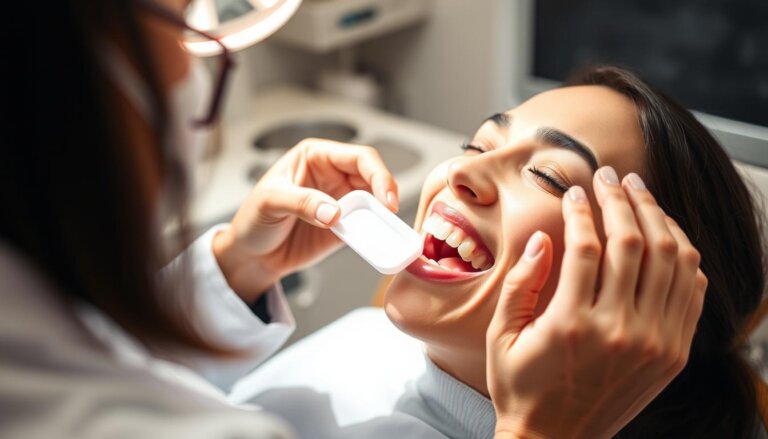
After your lips and gums are covered with a protective barrier, a hydrogen peroxide gel much stronger than anything sold for home use is painted onto the front of your teeth. A blue LED lamp is then positioned in front of your mouth, and the gel is applied in several cycles of roughly fifteen minutes each. How much the light itself adds is debated in the research, but nobody disputes that the peroxide does the heavy lifting. For you, the experience is mostly lying back with a cheek retractor in place, listening to a podcast, and trying not to think about the iced latte you’re not supposed to have afterward.
The appeal is obvious. You walk in at lunchtime and walk out a couple of hours later with the bulk of the change already done, which is why in-office whitening is the usual answer when there’s a date on the calendar. Our guide on how far before a wedding to schedule whitening explains how to time it so the shade has settled before the photographer arrives.
How do take-home whitening trays work?
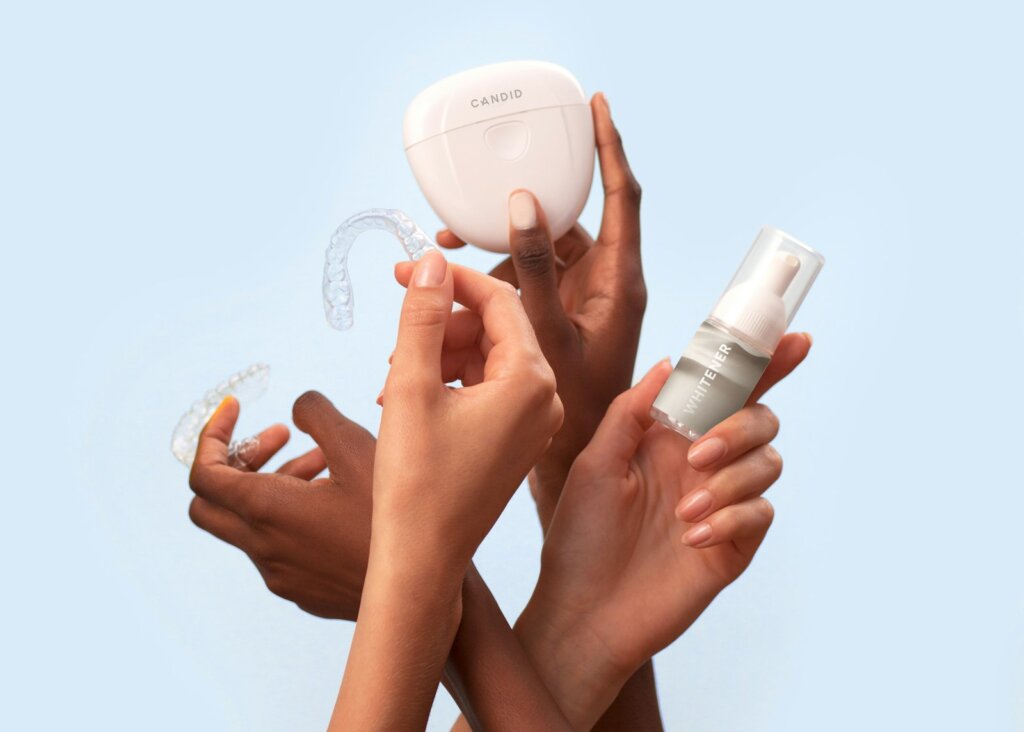
Custom trays start with a scan or impressions of your teeth, which a lab uses to make thin, flexible trays that hug each tooth. At home you put a small dot of whitening gel into each tooth’s spot in the tray and wear it for anywhere from thirty minutes to overnight, depending on the product, for about ten to fourteen days. The gels are carbamide peroxide or lower-strength hydrogen peroxide, so each session does less than an in-office visit, but the sessions add up.
Fit is the whole point. A tray molded to your teeth keeps the gel where it belongs and off your gums, which is the main difference from one-size drugstore trays that slosh gel around. The ADA’s teeth whitening page describes dentist-supervised home bleaching as a good option for people who prefer a slower pace, noting that it can take anywhere from a few days to a few weeks.
Which one gives better results?
By the end of a full course, the two often end up in pretty much the same place. The studies that have looked at them tend to show very similar shade changes, with in-office whitening just getting there quicker. Your starting point is more important than the method. Yellow teeth will generally respond well, brown teeth are less predictable and the gray discoloration that you can get from childhood antibiotics (tetracycline for instance) can be difficult to shift with either method. Neither will alter the color of crowns, veneers or fillings, so any existing dental work in the front of the mouth should be taken into account as part of the plan.
It’s also worth separating stain from color. A professional cleaning polishes off surface stain from coffee and red wine, which can make teeth look brighter on its own, but it doesn’t change the shade of the tooth underneath. Our post on whether cleanings can whiten teeth explains where one ends and the other begins.
What about sensitivity and cost?
The stronger gel used in the chair is more likely to cause a day or two of sensitivity to hot and cold afterward. Trays use lower concentrations, so sensitivity tends to be milder, though it can flare and fade over the course of treatment; the advantage is that you can skip a night or shorten wear time when it builds. On cost, an in-office session is the bigger single expense. Trays involve an up-front cost for the custom trays plus gel, after which refills are inexpensive, which makes them the cheaper way to maintain a shade over the years.
Should you combine Zoom and trays?
Often that’s the smartest version of both. A common plan is an in-office session to make the big jump, followed by trays to push the shade a little further or to hold it, with a few nights of touch-ups every few months to undo the work of daily cold brew. People who know they won’t keep up with trays tend to do better with periodic in-office visits instead, and that’s a perfectly reasonable choice too.
As a rough guide, Zoom tends to suit people on a deadline and anyone who has bought trays before and left them in a drawer. Trays suit people who don’t mind a nightly routine, want to spend less over time, or have sensitive teeth and like having the option of a gentler gel and a night off when they need it.
Frequently asked questions
Is Zoom worth it over take-home trays?
If you’re working to a deadline or you know you’re not going to wear trays consistently, it usually is. If you have the time and want to spend less, trays will get to a similar result, just more slowly.
How long does professional whitening last?
It varies with coffee, tea, red wine and smoking. Occasional tray touch-ups are the simplest way to keep a shade from drifting.
Are drugstore whitening strips just as good?
They use lower concentrations and don’t fit as precisely, so results are slower and less even. If you use them, look for the ADA Seal of Acceptance.
Plan your whitening on the Upper East Side
A quick exam can show which approach fits your teeth, your schedule and any existing dental work. VisoDent NY is at 903 Park Ave, New York, NY 10075, on the Upper East Side. Call 212-991-9095 to book.