
Do I Need to Avoid Chewing on a Tooth After It’s Been Repaired?
Did you know that nearly 75% of adults will get a dental restoration at some point? This shows how important it is to know how to care for your teeth after a repair. Modern dentistry has made big strides, making materials that last and look good. But, your teeth need time to heal.
After a tooth repair, it’s key to let the material bond with your tooth. Even though dental materials are tough, they need time to settle in. This is when your body is healing, and too much pressure can mess up the bond.
Putting too much pressure too soon can cause problems like leaks, cracks, or even failure. Knowing how to care for your teeth after a repair is key to keeping your dental work lasting. In this article, we’ll look at the best ways to take care of your teeth after a repair. This will help you make smart choices for your dental health.
Key Takeaways
- Most adults will undergo dental restoration at some point.
- Modern materials are durable but require time to integrate.
- Excessive force can compromise the bond of the repair.
- Understanding healing responses is vital for post-repair care.
- Proper care can enhance the longevity of dental work.
Understanding Dental Repairs and Their Importance
Dental repairs are key to keeping your mouth healthy. They help keep your teeth strong and prevent more problems. Knowing about the different repairs, why you might need them, and the benefits of getting them early is important for good oral care.
Types of Dental Repairs
Dental repairs fall into two main groups: direct and indirect restorations. Direct restorations include:
- Composite fillings: These are tooth-colored materials used to fill cavities.
- Amalgam fillings: Made from a mixture of metals, these are durable and often used in back teeth.
Indirect restorations are more complex, such as:
- Inlays and onlays: These are custom-made fillings that fit into or cover the tooth.
- Crowns: Full-coverage restorations that encase the entire tooth.
Common Reasons for Needing Repair
Teeth need repair for many reasons, including:
- Dental caries: Decay that compromises tooth structure.
- Traumatic fractures: Injuries that damage the tooth.
- Replacement of failing restorations: Older fillings or crowns that no longer function effectively.
In some cases, a tooth may need to be extracted if it is badly decayed or loose due to gum disease. Getting dental repairs early can often stop the need for extraction.
Benefits of Timely Dental Interventions
Getting dental issues fixed quickly has many benefits:
- Restoration of structural integrity: Repairs help maintain the tooth’s strength and function.
- Protection against bacterial invasion: A well-executed repair seals the tooth, reducing the risk of further decay.
- Preservation of dental pulp vitality: Keeping the pulp healthy is key for the tooth’s long life.
- Maintaining tooth position: Timely repairs help keep teeth aligned within the dental arch.
In summary, understanding the importance of dental repairs and taking tooth repair precautions can greatly improve post-repair tooth care. By focusing on early interventions, you can keep your teeth healthy for many years.
The Healing Process After Tooth Repair
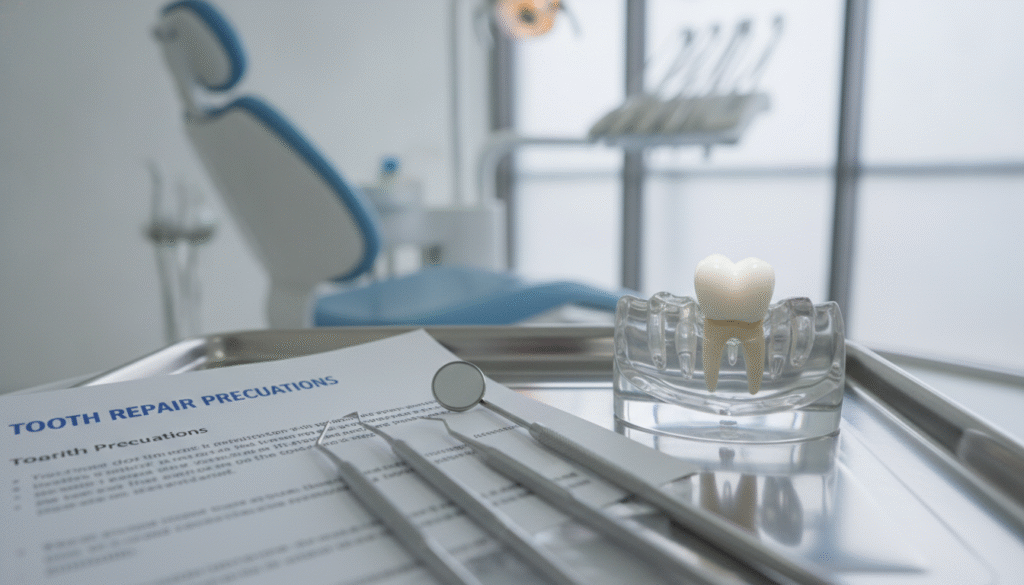
After a dental repair, your tooth goes through healing phases. Knowing these phases is key for good post-repair tooth care. Each stage helps your tooth get back to normal.
What Happens to Your Tooth Post-Repair?
Right after a repair, your tooth starts changing. The healing process includes:
- Hemostasis: A blood clot forms at the repair site, starting the healing.
- Inflammation: You might feel swelling and mild pain as your body reacts to the repair.
- Proliferation: New tissue starts forming, helping your tooth heal.
- Maturation: The new tissue gets stronger, making sure your tooth works right again.
In these stages, the periodontal ligament and pulp tissue might get inflamed, more so after deep repairs. The odontoblastic layer creates reparative dentin to protect your tooth, a process that takes weeks.
Typical Healing Times
Healing times vary based on the repair’s extent. Sensitivity to cold or pressure is common, a sign of reversible pulpitis. This usually goes away in days to weeks.
Also, the maturation of bonding agents and the full setting of some cements are important. They tell us when a tooth can handle chewing again. Knowing these times helps you care for your repaired teeth better.
Potential Risks of Chewing on a Repaired Tooth
It’s important to know the risks of chewing on a tooth after it’s been fixed. The bonding materials used in repairs are weak at first. If you don’t take the right steps, problems can arise.
Chewing can weaken the bond between the tooth and the repair. In the first day or two, the bond is at risk of breaking down. This can cause small gaps, leading to:
- Microleakage
- Post-operative sensitivity
- Recurrent caries
There’s also a chance of the repair material or the bond breaking. Eating hard foods can make these problems worse. It might even cause the tooth to crack.
Teeth that are already weak from decay or preparation are at high risk. This is true for teeth with big repairs that don’t have a full crown yet. So, it’s key to follow tooth repair precautions and eating tips after dental treatment for a good recovery.
Guidelines for Chewing After Repair
Knowing when to start chewing again after a tooth repair is key for healing. After dental work, many wonder how to eat normally again. Following these tips can help your tooth heal well and work right.
When Is It Safe to Resume Chewing?
For fillings, you can usually chew normally once the numbness goes away. But be careful because the tooth might be sore. For crowns or veneers, eat soft foods until they’re fixed for good. This keeps the temporary fix safe.
Recommended Foods to Eat Initially
Start with soft foods that don’t hurt the tooth. Here are some good choices:
- Yogurt
- Mashed potatoes
- Macaroni and cheese
- Scrambled eggs
- Smoothies (use a spoon, not a straw)
These foods are easy on your teeth and give you the nutrients you need without pain.
Foods to Avoid Post-Repair
While you’re healing, avoid foods that could harm your repair. Stay away from:
- Hard items (e.g., nuts, hard candies, ice)
- Chewy items (e.g., caramel, taffy)
- Sticky items (e.g., gummy bears)
These foods can mess up the fix or even crack your tooth. Following these rules can make your recovery better.
Signs You Should Limit Chewing
It’s important to know when to stop chewing to keep your teeth healthy. After a tooth repair, your body might send warning signs. Paying attention to these signals can help prevent more problems and keep your dental work lasting longer.
Pain or Discomfort When Chewing
Feeling pain or discomfort while chewing is a clear sign to slow down. This discomfort can show up in different ways:
- Throbbing pain: This pain might get worse over time, showing there’s a problem with the repair.
- Radiating pain: Pain that spreads to your ear, jaw, or temple could mean the repair is failing or there’s pulpitis.
This pain is serious and should not be ignored. It could mean the repair is too stressed or the pulp tissue is hurting. Instead of using painkillers, try eating softer foods and see your dentist.
Sensitivity to Temperature or Pressure
Being sensitive to temperature or pressure is another sign to chew less. Here’s what to watch for:
- Sharp, fleeting sensitivity: This cold sensitivity that goes away quickly might just be reversible pulpitis.
- Lingering, throbbing pain: If hot sensitivity lasts, it could be a sign of serious, irreversible pulpitis.
These symptoms are important signs that need attention. Catching them early can often save your tooth and avoid more serious treatments. If you notice these signs, call your dentist right away.
Care Tips for Repaired Teeth
Taking good care of your repaired teeth is key to keeping them strong and working well. Good post-repair care can make your dental fix last longer. This part will cover important oral hygiene steps and why seeing your dentist regularly is a must.
Proper Oral Hygiene Practices
Keeping your teeth clean after a repair is very important. Here are some important steps to follow:
- Use a soft-bristled toothbrush: This gentle brush helps clean around the repair without hurting it.
- Floss with care: Be careful not to snap the floss against the gum line of a new crown.
- Consider interdental brushes: These tools are great for getting plaque out of tight spots.
- Water flossers: Use these on a low setting to clean well without harming your teeth or gums.
Even though you should brush your teeth after a tooth is pulled, brush gently. It’s important to clean around the healing area carefully. This helps avoid problems like tooth decay at the edges of the repair, which is a common reason for repairs to fail.
Follow-Up Dental Appointments
Going back to the dentist for check-ups is not just a routine visit. It’s a must for keeping your teeth in top shape. At these visits, your dentist will:
- Check if the repair is holding up well.
- Make sure your bite is right.
- Look at your gums to catch any issues early.
- Take X-rays to find any hidden problems.
These checks are vital for your repair to last. By following these care tips and going to your dentist for check-ups, you can keep your teeth healthy and your repair strong.
The Role of the Dentist in Your Recovery
Seeing your dentist is key to a good recovery after a tooth repair. They are your main ally in making sure the repair lasts. Regular visits and talking openly can really help your recovery.
At a post-repair check-up, your dentist will check many things. They will look at how well the tooth is healing. This includes:
- Evaluating occlusal harmony through articulation paper marking.
- Checking marginal integrity with an explorer.
- Conducting a radiographic evaluation of the adhesive layer and periapical tissues.
These checks are important to spot any problems early. Your dentist might also tell you when to start gentle rinsing. If you’re unsure, always reach out to your dental team.
Importance of Post-Repair Check-Ups
Post-repair check-ups are key to keeping your repaired tooth healthy. These visits help your dentist make sure the repair is working well. They also check if your dental care after the repair is good. Regular checks can stop problems and give you peace of mind.
Questions to Ask Your Dentist
To get the most from your dental visits, ask your dentist these questions:
- What is the expected lifespan of this material, given the size and location of the repair?
- Are there any specific wear patterns I should be concerned about?
- How can I tell the difference between normal post-operative sensitivity and a sign of failure?
Asking these questions helps you take charge of your dental health. Remember, proactive communication is key for care tailored to you and catching problems early.
Understanding Different Types of Repairs
Different dental repairs have unique purposes and affect chewing in different ways. Fillings and crowns are two common types. Each is designed to solve specific dental problems.
Fillings fix teeth damaged by decay. They can be made from materials like composite resin or amalgam. A filling is placed in the cavity, relying on the tooth’s structure for support. This method doesn’t make the tooth stronger, so eating hard foods should be done with care.
Crowns, on the other hand, cover the whole tooth. They provide a protective layer that spreads out chewing forces. This makes the tooth much stronger, allowing for more confident chewing.
Fillings and Crowns: Key Differences
It’s important to know the differences between fillings and crowns. Here’s a comparison of these dental repairs:
| Feature | Fillings | Crowns |
|---|---|---|
| Coverage | Partial coverage of the tooth | Full coverage of the tooth |
| Fracture Resistance | Limited enhancement | Significant enhancement |
| Durability | Moderate lifespan | Long-lasting |
| Chewing Ability | Requires caution with hard foods | Can withstand normal chewing forces |
How They Affect Chewing Ability
The impact on chewing is significant. A patient with a large filling needs to be careful with hard foods. This is to avoid damaging the filling. On the other hand, a well-cemented crown can handle normal chewing forces, allowing for a more varied diet.
It’s key to understand these differences when choosing dental care. Following tooth repair precautions and eating tips after dental treatment can greatly improve recovery and oral health.
The Impact of Material Used in Repairs
Knowing what materials are used in tooth repairs is key for good care after. The choice between composite fillings and amalgam affects how long and well the repair lasts. Each material has its own benefits and drawbacks that affect the repair and the patient’s experience.
Composite Fillings vs. Amalgam
Composite fillings are made from resin and inorganic fillers. They look good and stick well to the tooth. But, they need careful application to avoid tooth sensitivity after dental work.
Amalgam, on the other hand, is strong and lasts long. It’s made of mercury, silver, tin, and copper. It doesn’t stick to the tooth, so the cavity needs to be bigger. But, it’s strong and often lasts longer than composite fillings.
Longevity and Durability of Different Materials
The life of dental materials depends on their properties. Composite fillings can last years but may need to be replaced sooner. Amalgam fillings can last over a decade with good care.
Ceramic materials like lithium disilicate and zirconia are also used for crowns. They are strong and look good. But, they need careful handling during the first stages to avoid problems.
In summary, picking the right material for dental repairs is important. It ensures the repair lasts and works well. Patients should talk openly with their dentists about what’s best for them, including care after the repair.
When to Seek Immediate Dental Advice
Knowing the signs of trouble after a dental fix is key to your health. Spotting when to call your dentist can greatly aid your healing. Certain symptoms mean you need to see a dentist right away.
Signs of Complications After Repair
Watch out for these signs of trouble:
- Worsening Pain: If pain gets worse after 2 to 3 days, it might be a big problem.
- Excessive Swelling: Swelling that gets bigger after 72 hours could mean an infection.
- Fever: Fever is a sign of infection that needs quick action.
- Foul Taste or Odor: This could mean there’s a problem with the repair.
- Nausea or Vomiting: These symptoms could be a sign of a serious issue.
- Difficulty Swallowing: Trouble swallowing could mean a serious problem.
Emergency Situations to Watch For
Also, be on the lookout for these emergency cases:
- Visible Fracture: If you see a crack or the repair comes loose, get help fast.
- Spontaneous Pain: Pain that just happens, like at night, might mean serious damage.
- High Restoration: If the repair gets in the way of how your teeth fit together, it could cause more problems.
Waiting too long for treatment can turn a simple fix into a bigger problem. Always put your dental health first by getting help when you see these warning signs.
Patient Experiences and Testimonials
Many people feel different emotions after dental repairs. It’s normal to feel some discomfort or worry. Common worries include tooth sensitivity after dental work and concerns about the tooth’s stability.
Some people notice their teeth more after dental work. This can make them more sensitive to hot or cold foods. It’s important to remember that these feelings are common.
Common Concerns After Dental Repairs
Patients often worry about their dental work lasting. They might fear that a filling or crown could fall out while eating. This fear can make them hesitant to eat normally.
To help with these worries, here are some eating tips after dental treatment:
- Start with soft foods that require minimal chewing.
- Avoid sticky or hard foods that could disrupt the repair.
- Gradually reintroduce regular foods as comfort increases.
Success Stories of Proper Recovery
Many patients have shared their positive experiences. One patient followed a strict diet after getting a large filling. They stuck to soft foods and good oral hygiene, and their repair lasted over 10 years.
These stories show that following your dentist’s advice is key. Patients who take care of themselves during recovery often have fewer problems. They are also happier with their dental work.
| Patient Concern | Common Sensation | Recommended Action |
|---|---|---|
| Tooth Sensitivity | Mild discomfort when consuming hot or cold foods | Use desensitizing toothpaste |
| Feeling of Tightness | Pressure between teeth | Allow time for adjustment |
| Anxiety about Durability | Worry about dislodging repair | Follow dentist’s eating guidelines |
Conclusion: Best Practices for Repaired Teeth
Keeping your teeth clean after a repair is very important. After a tooth is fixed, you need to chew carefully. The time it takes to go back to normal eating depends on the repair type and materials.
Start with soft foods to avoid putting too much pressure on the fixed area. It’s also important to watch how your tooth feels while it’s healing. If it hurts or feels sensitive, don’t chew until you talk to your dentist.
Following your dentist’s instructions is key to a good recovery. Good oral hygiene helps the healing and lowers the chance of problems. If you’re unsure about anything, contacting your dentist is a smart move for your dental health.
In short, knowing how to chew after a dental fix is important. By listening to your dentist and taking good care of your teeth, you can have a smooth recovery. This way, you can enjoy your restored smile.

