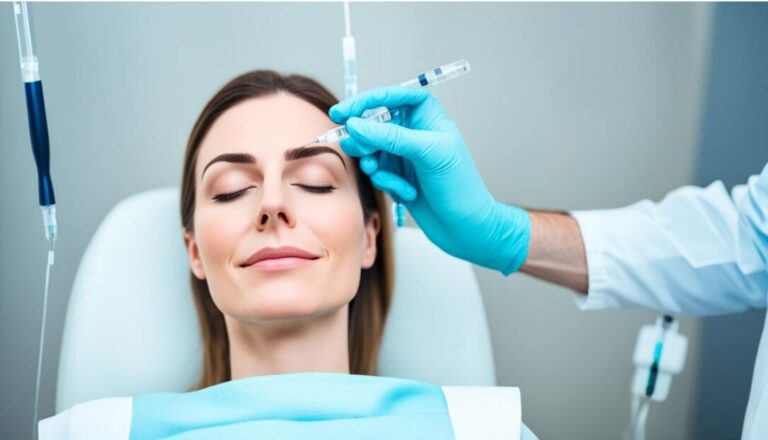
Does PRP for Hair Loss Work?
If your hair is thinning rather than gone, PRP has a reasonable chance of helping. Studies of platelet-rich plasma injections show less shedding and modest gains in density for many people with early pattern hair loss. Areas that have been bald for years won’t come back, and the results need maintenance sessions to last.
In short, it works for the right person when it’s done the right way. If you’re weighing PRP hair restoration at our Upper East Side practice, here’s how to tell whether you’re likely to be that person.
What does the research show about PRP for hair loss?
Nearly all the good data comes from androgenetic alopecia, the inherited kind that shows up as a widening part in women and as a thinning crown or receding temples in men. Researchers have run randomized trials pitting PRP against saline, a few of them treating half the scalp with each, and when those trials are pooled in meta-analyses, PRP generally comes out ahead on hair density.
How far ahead is harder to pin down. Many trials enrolled only a few dozen people, every clinic seems to prepare PRP its own way (different centrifuges, spin times, platelet counts), and session schedules range from monthly to every few months. The American Academy of Dermatology calls PRP a potentially safe and effective option that needs repeat sessions, and its overview of hair loss diagnosis and treatment is a sensible place to compare it with the alternatives.
Why would injecting part of your own blood help at all? Platelets carry growth factors. Concentrated and placed around tired follicles, they seem to keep follicles in their growing (anagen) phase longer and coax shrinking ones into making thicker strands. The mechanism isn’t fully mapped, but the effect shows up in trials.
Who tends to respond best?
People who are still in the thinning stage. If you can see scalp under the bathroom light that you couldn’t see three years ago, but there’s still fine hair there, you’re in the zone where PRP has something to work with. Those weak, miniaturized follicles are the target. A completely bald area has no follicles left to wake up, and PRP won’t change that.
Two common examples: a woman whose part has slowly widened over a couple of years, and a man whose barber keeps pointing out a thin spot at the crown. In both cases the follicles are shrinking but still there, and each year of waiting lets them shrink a bit more.
Some hair loss needs a different first step. Shedding from thyroid problems, low iron, a crash diet, or a rough illness a few months back calls for a medical workup, and scarring forms of alopecia need a dermatologist. A few health conditions and medications also rule PRP out, so read our post on who is not a good candidate for PRP before booking.
What results are realistic, and when do they show?
The first change most people notice has nothing to do with new hair: there’s simply less of it in the drain and on the shoulders of a navy coat. That usually comes two to three months after the first session. Density follows more slowly, and month four to six is a fair time to judge.
Take photos before the first session, in the same spot by a window, at the same time of day, with your hair parted the usual way. Repeat every six weeks or so. Because you see your scalp every day, slow change is hard to notice, but photos taken months apart make it clear.
Success looks like a narrower part, a thicker ponytail, or a crown that doesn’t shine under overhead lights anymore. Getting back the hairline you had at 20 usually isn’t realistic. If that’s the goal, a hair transplant surgeon can tell you what’s possible.
Does PRP work better with minoxidil?
Often, yes. PRP isn’t meant to replace proven medications, and several studies of PRP combined with topical minoxidil have found better results than either one alone. Men may also be offered finasteride by their physician. Think of PRP as one layer of a plan rather than the whole plan.
Pattern hair loss is ongoing, too. Stop everything, and the underlying process carries on where it left off. That’s not a flaw unique to PRP; it’s true of every non-surgical treatment.
How many PRP sessions do you need?
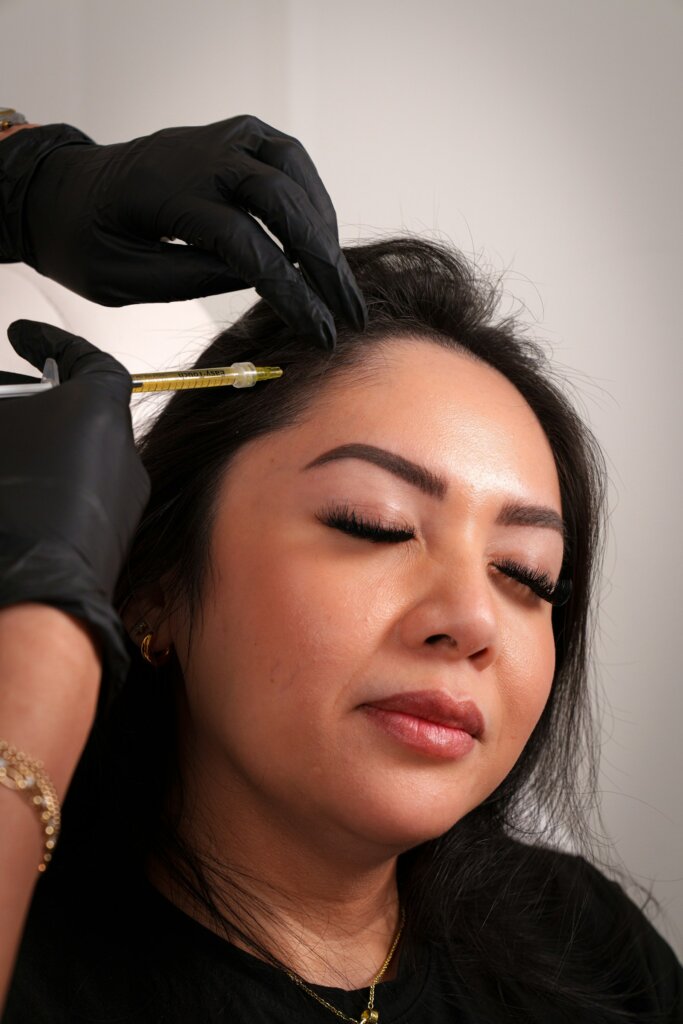
Our protocol at VisoDent NY is monthly for the first three to four months, then a maintenance session about every six months. Plan on 30 to 40 minutes per visit. A small tube of your blood spins in the centrifuge for roughly 15 minutes while numbing cream works on your scalp, and then the plasma goes in as a grid of tiny injections, about every half inch, over the thinning area.
Afterward you can head back to the office. The usual complaints are a tender scalp and a mild ache that evening, and every so often a bit of swelling slides down toward the forehead overnight, gone in a day or two. Skip hair color and chemical treatments for a few days (your provider will give you exact aftercare). Still unsure the time and money add up? Our article on whether PRP is really worth it lays out the trade-offs.
Frequently asked questions
Is PRP for hair loss permanent?
Not on its own. The genetic and hormonal process behind pattern hair loss keeps running, so most people hold their results with a maintenance visit every several months.
Does PRP hair treatment hurt?
Numbing cream takes the edge off. Most people feel brief pinches during the injections and some scalp tenderness for a day.
Can PRP regrow a receding hairline?
It may thicken thinning hair at the temples, but it can’t restore areas that have been bald for a long time. Your provider can assess which areas still have follicles to work with.
Ask about PRP hair restoration on the Upper East Side
At VisoDent NY, a PRP consultation starts with a close look at your scalp, the pattern of your thinning and your history, so you know what to expect before the first session. Visit us at 903 Park Ave, New York, NY 10075, or call 212-991-9095 to book on the Upper East Side.