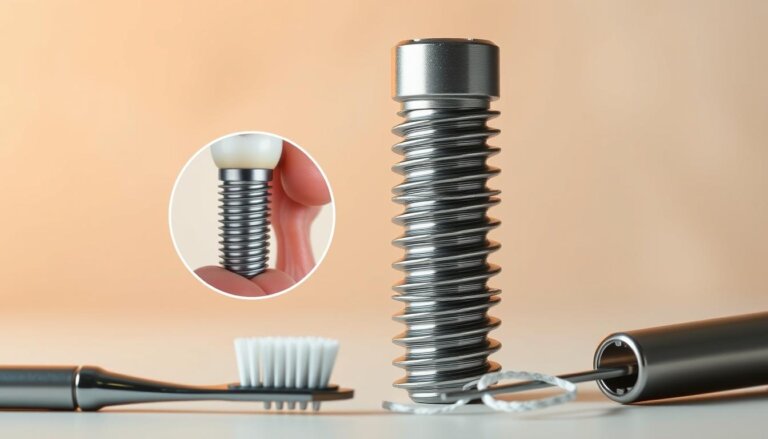
Signs of a Failing Dental Implant
The classic signs of dental implant failure are an implant or crown that has moved, pain or swelling returning after the healing phase, gums around the implant bleeding, receding or oozing pus, and discomfort when you bite on that side. One of those on its own doesn’t necessarily mean the implant is gone. Any one of them, though, is a reason to see your dentist this week rather than at your next cleaning.
Failure is rare. In a 2019 review of the long-term studies published in the Journal of Dentistry, the 10-year implant survival rate came in at around 96%. Rare doesn’t mean never, though. If you have an implant, or you’re considering dental implants at our Upper East Side practice, here’s what you need to be aware of.
Early vs. late implant failure: what’s the difference?
Dentists categorize failures by time of occurrence, as the causes are different.
Early failure occurs in the first few months, prior to osseointegration (the fusion of the jawbone to the titanium post). The usual causes are infection at the surgical site, a post that wasn’t stable on day one, chewing pressure during the healing phase, smoking and poorly controlled diabetes. Some degree of soreness and swelling in the first week is to be expected. Pain that is getting progressively worse on day five is not normal. Neither is swelling that comes and goes, or a healing cap that starts to feel wobbly.
Late failure is the sort of thing that manifests itself only after the crown is on and you’ve been eating with it for months, sometimes years. The bone did in fact bond. What then happens is something wears it away, usually infection of the gum and bone around the implant, or excessive force from clenching and grinding.
What does peri-implantitis look like?
Peri-implantitis is the implant equivalent of gum disease. It’s a bacterial condition which is slow-acting and is one of the principal reasons why implants are lost many years after they’ve been placed. It starts off as peri-implant mucositis, which is simply inflammation of the soft tissue only (the collar of gum around the implant). The tissue becomes red, a little swollen and will bleed when the hygienist runs the probe around it. The bone is not yet involved at this stage, so a professional cleaning, improved home care and a recheck in six to eight weeks is often enough to get it under control.
Ignored, mucositis will progress. The bacteria work down the threads of the implant, the pocket around it gets deeper and the bone starts to recede. You don’t usually notice anything specific other than perhaps a bad taste on one side, some pus when you press on the gum, or a grayish shadow of metal appearing above the gumline. Pain is unusual, as there’s no nerve in the titanium post, so you don’t get the warning that a decaying tooth would give you.
At your checkups your dentist will measure the pockets around the implant and will compare X-rays over the years. A little bone remodeling in the first year is perfectly normal, but steady loss after that is not. Our guide on how to care for dental implants covers the home routine.
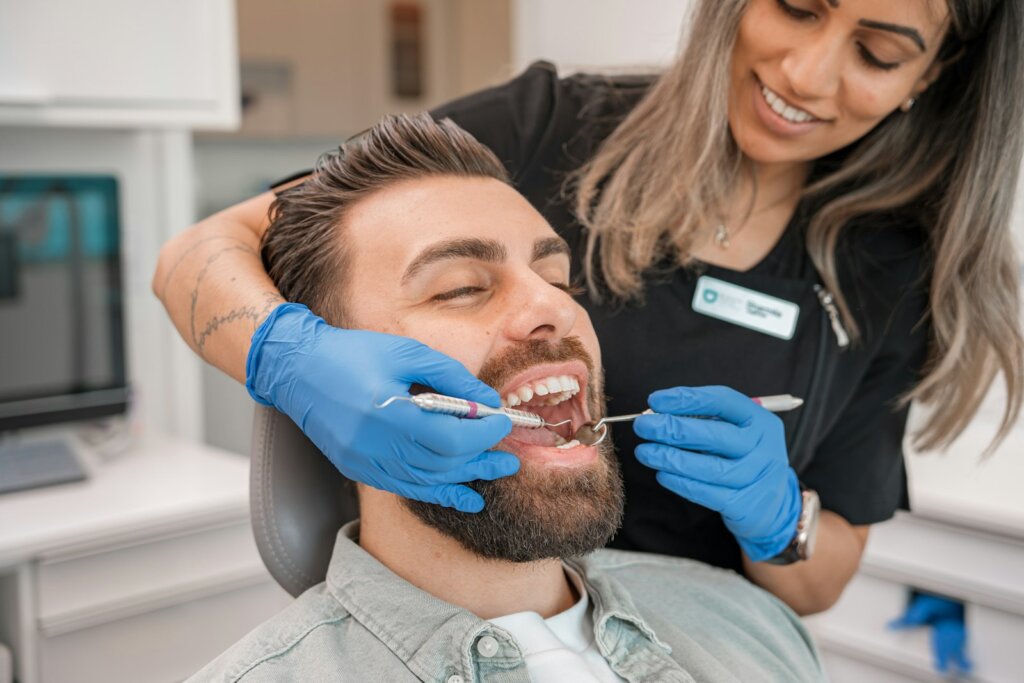
Is it the crown that’s loose, or the implant?
When something wiggles, that’s the question.
An implant tooth has three parts: the post in the bone, the abutment (the connector) and the crown on top. Most of the time, if a crown suddenly feels loose it’s either a screw that’s backed out or cement that’s let go. That’s a mechanical problem. It’s rather unsettling, particularly if you’re halfway through a grain bowl at your desk, but it’s generally something that can be sorted out in one visit by either tightening or replacing the screw or recementing the crown.
If the post moves, it’s a different ball game. A healthy, properly integrated implant won’t move at all, not even the minute give of a natural tooth. If the post is moving, the bone bond is gone, and in almost every instance that implant is going to have to be removed. Don’t spend two weeks fiddling with it with your tongue and don’t go around trying to screw anything tighter yourself.
Other warning signs worth a phone call
Pain on biting is a major one, like a sharp twinge on that side when you bite into a pizza crust. So is gum that is clearly a deeper red than the gum on the other side of your mouth, or a small pimple-like bump on the gum adjacent to the implant (a fistula, where infection is draining). Pay attention, too, if your bite changes and your teeth no longer meet as they did last month.
Numbness is its own thing. If you’re still numb or tingling in your lower lip or chin the day after a lower implant, the nerve in the lower jaw may have been irritated, and your surgeon will want to hear from you that day.
What raises the risk of implant failure?
Smoking is by far the best-documented risk. Nicotine constricts the small blood vessels in the gums and bone, so the surgical site is going to get less oxygen and fewer infection-fighting cells as it heals. Diabetes is only really an issue if it’s poorly controlled, which is why some surgeons will ask for a recent A1C before they book you in. The ADA’s patient page on implants actually mentions both of these, stating that chronic conditions such as diabetes and tobacco use can interfere with healing.
Grinding is a mechanical issue in that an implant has no ligament to absorb the shock like a natural tooth does. The force of clenching at night goes straight into the screw and the bone around it. A custom night guard helps, as it spreads that load out.
What to do if you think your implant is failing
Call the office and describe exactly what you see: which tooth, whether it’s the crown that’s moving or the whole tooth, whether it’s painful and for how long. Until you see the dentist, chew on the other side and keep brushing the area gently as you normally would. The reason for this is that if you avoid the sore spot with the toothbrush you tend to make the inflammation worse. If the crown comes off, keep it in a small container or in a zip-top bag rather than a napkin and take it with you.
Treatment is dictated by the diagnosis. A loose abutment screw is generally straightforward to retighten or replace, and mucositis is managed with a thorough scaling and a more intensive follow-up. Peri-implantitis with bone loss may require cleaning and decontamination of the implant surface, antibiotics and, in some cases, surgery to get to the area and regenerate the bone. An implant that is moving has to be removed and, once the site has healed, replaced. Your dentist will determine what the best course of action is for you.
Frequently asked questions
Can a failing dental implant be saved?
Often, if it’s picked up at the mucositis stage or turns out to be a loose screw. An implant that’s moved has lost its bond to the bone and will need to be replaced.
Does a failing implant always hurt?
No. Bone loss around an implant is typically painless, so it’s usually picked up on routine examinations and X-rays.
Can you get a new implant after one fails?
Usually. The site takes time to heal (sometimes with a bone graft first) and the reason for the initial failure has to be sorted out before putting in a new implant.
Get your implant checked on the Upper East Side
If your implant feels different, have it looked at. At VisoDent NY, appointments are scheduled one patient at a time at 903 Park Ave, New York, NY 10075, on the Upper East Side. Call 212-991-9095 to book an evaluation.