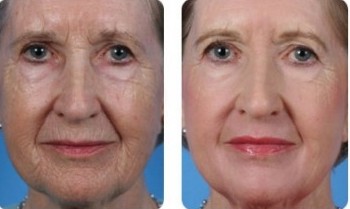
What Is ProFractional Laser Treatment?
ProFractional is Sciton’s erbium laser for resurfacing the skin in very small amounts. It creates thousands of microscopic holes (each smaller than a hair) in the skin and leaves the skin in between them completely undisturbed. Those tiny wounds heal in a matter of days, and the healing process produces new collagen. The result is that scars, fine lines and that rough, sun-damaged texture all gradually improve.
Think of it as the middle ground. Stronger than a peel, far easier than the old “hide at home for two weeks” lasers. If you’ve been reading about the ProFractional laser treatment at our Upper East Side practice, this is what’s actually going on.
How does a fractional laser actually work?
Old-school resurfacing would just burn off the entire top layer of skin. It worked, it just left people pink, oozing and stuck in the house. In 2004, a group at Massachusetts General Hospital published a much smarter approach, which they called fractional photothermolysis: you hit the skin in a grid of tiny dots, leaving the bridges of healthy skin between them. Those bridges then heal the dots from the sides very quickly.
Sciton’s is at 2,940 nm. Why does the wavelength matter? Water absorbs that particular wavelength very strongly (far more than it does a CO2 laser’s), so the beam just vaporizes a nice little column and doesn’t cook much of the surrounding skin. Less stray heat generally translates to a shorter red phase. It doesn’t mean zero risk.
Two dials do most of the work. One is depth (from barely-there for dull skin right through to deep channels that actually go right into the dermis for pitted scars). The other is density (the proportion of skin that gets hit). Shallow and sparse gives you a long weekend of pinkness. Deep and dense is a proper week off and a much greater change.
What can ProFractional treat?
Texture, mostly. That’s what it’s best at. People tend to book it for:
- fine lines around the eyes and mouth, and crepey skin
- rolling and boxcar acne scars
- surgical or injury scars that have healed flat and pale
- enlarged pores and rough, uneven skin
- sun damage from years of summers on Fire Island or the Hamptons
Some things it won’t fix. A hollow under the cheekbone is lost volume, so that’s filler territory. Jowls are sagging, so that’s a tightening device. Flushing and broken capillaries are dealt with via light-based therapy. If you’re comparing your options, our overview of laser skin resurfacing will sort the main laser types for you.
What does the treatment feel like?
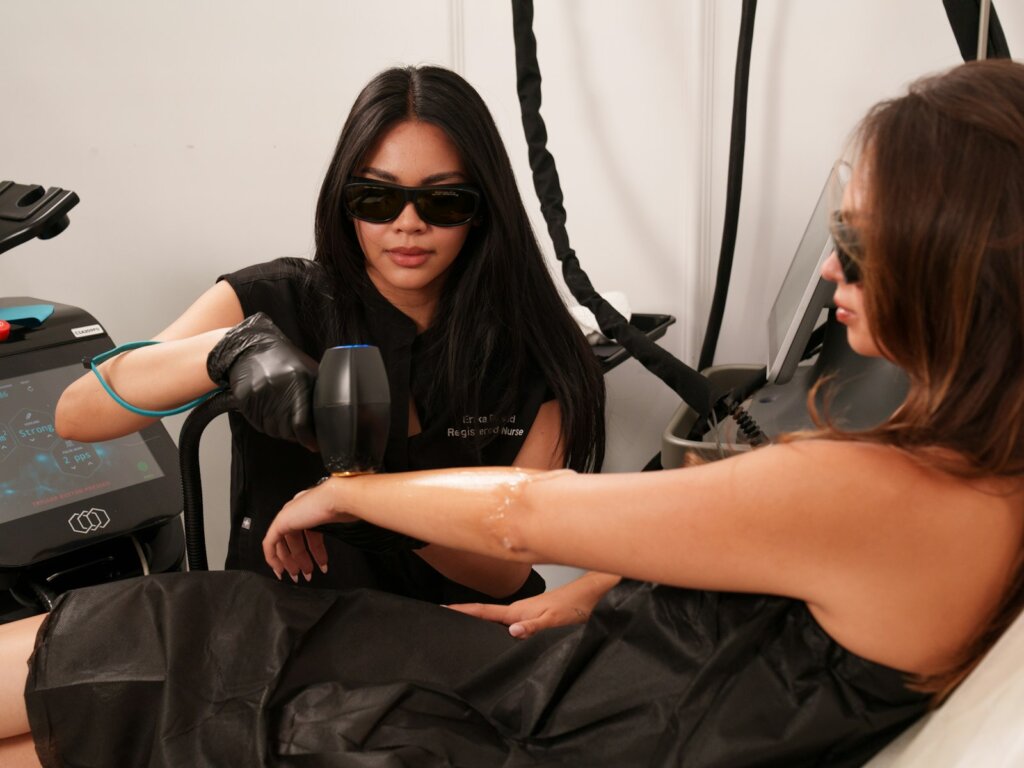
The waiting is the worst part really. The numbing cream takes about 45 minutes to an hour to really take hold, and that’s a good length of time to clear your emails. The laser itself is just a series of hot, quick pinpricks (some people liken it to a rubber band snapping on the skin) and there’s a very faint burnt smell that nobody expects. On a full face, the laser is generally only on for 20 to 30 minutes.
Settings don’t have to be the same all over the face. The eyelid area has some of the thinnest skin on the body, so that gets a very light touch. A cluster of boxcar scars on one cheek can get deeper channels in the same session.
When it’s done, you’ll look sunburned. Up close there’s a very faint grid, like the mesh of an old window screen. Cool compresses will take the heat out that first evening. A lot of people will simply grab a cab home up Park Ave rather than going back to the office, which is absolutely the sensible thing to do.
How much downtime should you plan for?
Ask anyone who’s had it and they’ll tell you “it depends how deep they went.” Frustrating, but true. At the lighter end of the scale you’re probably looking at one or two pink days, then a fairly rough sandpapery stage as the tiny dark specks of treated skin start to flake off. Many people are presentable at work by day 4 or 5 and can get away with wearing a bit of mineral makeup once their provider has given the go-ahead.
Deeper scar treatments are a completely different ball game. The swelling peaks around day two, the peeling is more pronounced and some pinkness can persist for a few weeks after the skin has healed (though it’s easily covered by that stage). A wedding at the Plaza or a string of holiday parties on the horizon? Book at least two weeks in advance, closer to a month for deep work. Late fall and winter are ideal for this laser, partly because no one in Manhattan is going to be expecting you to have a beach glow in January.
How many sessions, and when will you see results?
By week two the new surface skin has settled and it looks fresher and smoother. The collagen takes longer (3 to 6 months) and that’s the bit which actually softens the scars and lines. A photo taken in the spring tells you so much more than one taken the Monday after. Lighter treatments are often done over a short series (a few weeks apart); a deeper scar treatment might be just one session, occasionally two. It all comes down to skin thickness, scar type and how much time off you can afford.
Who should wait or avoid it?
Get cold sores? Say so. Laser work around the lips can actually reactivate the virus, so an antiviral will typically be started a day or so in advance. Isotretinoin in the past few months, an active infection, pregnancy, a new tan acquired on a trip to Tulum, a history of keloids: all of those are reasons to wait, or at least to consider the settings very carefully. Medium and deeper skin tones can often be treated (with more conservative settings), as they’re more likely to go on to develop temporary dark patches.
Prep is pretty much the usual routine for energy treatments. Retinoids and exfoliating acids are stopped a few days prior, no waxing, no tanning, and your practitioner needs to know about all your medications and supplements (fish oil included). Our guide on what to avoid before skin tightening covers all the same ground. For a wider, neutral picture, see the American Academy of Dermatology’s guide to skin conditions lasers can treat.
Frequently asked questions
Is ProFractional the same as Fraxel?
No. They’re both fractional lasers from different companies. A lot of the Fraxel settings are non-ablative (they heat the tissue without actually removing it). ProFractional actually does remove tiny columns of tissue.
Does ProFractional hurt?
With numbing, it’s prickly and hot rather than painful for most people. The deeper the setting, the more it stings.
Can ProFractional be used on the neck or chest?
Often, with lighter settings. The skin there is thinner and takes longer to heal than on the face.
See if ProFractional suits your skin
At VisoDent NY, we look at your skin and your calendar and go from there. Depth is set to match. We’re at 903 Park Ave, New York, NY 10075, on the Upper East Side. Call 212-991-9095 to book.