What Is Virtue RF Microneedling?
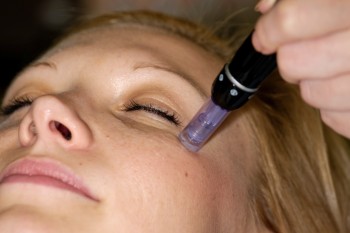
Virtue RF is an FDA-cleared radiofrequency microneedling device. Very fine needles slip into the skin and release heat at their tips, deep in the dermis, which prompts your skin to build new collagen and elastin. It’s used for acne scars, enlarged pores, fine lines, rough texture and mild looseness on the face, neck, hands and body.
That’s the definition. What most people actually want to know is how it differs from the microneedling they’ve already heard of, whether it hurts, and how many weeks until the mirror agrees it was worth it. If you’re considering Virtue RF at our Upper East Side practice, here is the plain version.
How does Virtue RF work?
Regular microneedling, the pen version you may have had at a spa, makes rows of tiny punctures. Skin reads each one as a small wound and patches it with new collagen. On fine texture that can be enough. On a rolling acne scar left over from high school it usually isn’t, because the punctures are shallow and the repair signal is weak.
The difference with Virtue RF is heat. The needles go in to a depth chosen for each area, shallow under the eyes and deeper over a scarred cheek, and then the tips give off radiofrequency energy. The dermis warms up from inside while the surface is mostly left alone. You might notice a little firmness within a week. The real payoff comes later, as new collagen fills in over three to six months, and that’s what softens scars.
Virtue RF drives its needles with a robotic motor rather than a hand-pushed stamp. The point is consistency. Each insertion goes in straight, at the programmed depth, which tends to mean less scratching and bleeding than a pen-style device dragged across the skin. If you’re curious how that compares with a standard pen, our post on Dermapen microneedling covers the older approach.
What can Virtue RF treat, and what can’t it?
It shines on texture problems. Rolling and boxcar acne scars, pores that look like a strawberry under bathroom lighting, crepey skin on the neck, fine lines around the mouth, the papery look the backs of your hands get after years of steering-wheel sun. It can also help mild laxity along the jaw, the early stage where skin is starting to soften but hasn’t really dropped.
It won’t lift sagging skin in any big way. Jowls that hang past the jawline or deep neck folds need a surgical consult. Brown spots and visible capillaries respond better to light treatments, and the deep “11” lines between the brows come from muscle, so Botox is the usual fix. We’ll tell you at the consultation if another treatment fits better.
What is a Virtue RF appointment like?
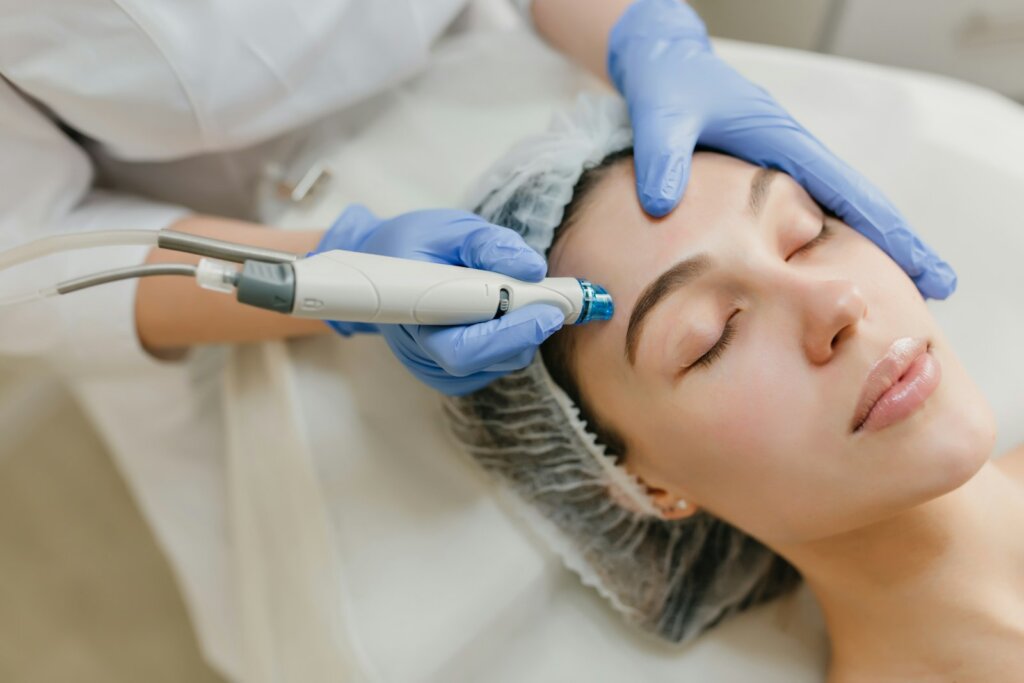
Numbing cream goes on first and stays on for 30 to 45 minutes, so bring headphones. Treating the full face takes about half an hour, or closer to an hour if you add the neck and chest.
The handpiece feels hot and prickly. It stings more on the jaw and forehead than on the cheeks, and you can stop for a break anytime. Afterward your skin will be pink for a while.
How much downtime is there, and when do results appear?
Expect redness for a day or two. On the first morning you may see a faint grid pattern or a little puffiness under the eyes, and both usually fade by evening. Most people are back at work the next day, but don’t book it right before a wedding or a photo shoot.
For the first 24 hours, put nothing on your skin: no makeup, acids, retinol or scented serums. Skip saunas, hot yoga and hard workouts for a day or two. Wear sunscreen every day for at least two weeks, because treated skin burns more easily, which is one reason many New Yorkers start in fall or winter.
Changes in scars and pores show up after four to six weeks. Thinking about adding growth-factor serums? Our article on microneedling with exosomes asks whether that’s worth paying for.
Who should, and shouldn’t, get Virtue RF?
Adults with acne scars, rough texture or skin that’s just beginning to loosen are the usual candidates. Since the heat sits below the surface and doesn’t target pigment, skin tone is less of an issue than with many lasers, though darker skin can still develop temporary dark spots, so the settings are chosen carefully.
Tell your provider if you’re pregnant, have a pacemaker or other implanted device, scar easily (keloids), get cold sores, or took isotretinoin recently. If you get cold sores, you may be given an antiviral first. Active acne or irritated skin in the area usually means waiting. For a neutral read before the consultation, see the American Society for Dermatologic Surgery’s overview of microneedling.
Frequently asked questions
Does Virtue RF microneedling hurt?
Most people say uncomfortable, not painful, once the numbing cream has kicked in. The jaw and forehead are the worst of it, and any soreness after is gone by evening.
How many Virtue RF treatments will I need?
Plan on three or four, about a month apart, then a maintenance visit once or twice a year. Deep scars sometimes take more.
Ask about Virtue RF on the Upper East Side
At VisoDent NY, we start by looking at your skin and talking through what you want to change, then set the depth and number of sessions around that. We’re at 903 Park Ave, New York, NY 10075. Call 212-991-9095 to book on the Upper East Side.