Will a Replacement Tooth Look Natural and Match My Other Teeth?
Will a replacement tooth look natural and match my other teeth? In most cases, yes. A well-made implant crown is matched to the color, shape and translucency of the teeth around it, and once the gum heals, most people can’t tell which tooth is new. The result depends a lot on the dentist and the lab.
Your dentist starts with impressions or a digital scan, so the crown fits your bite and your smile.
What are your options?
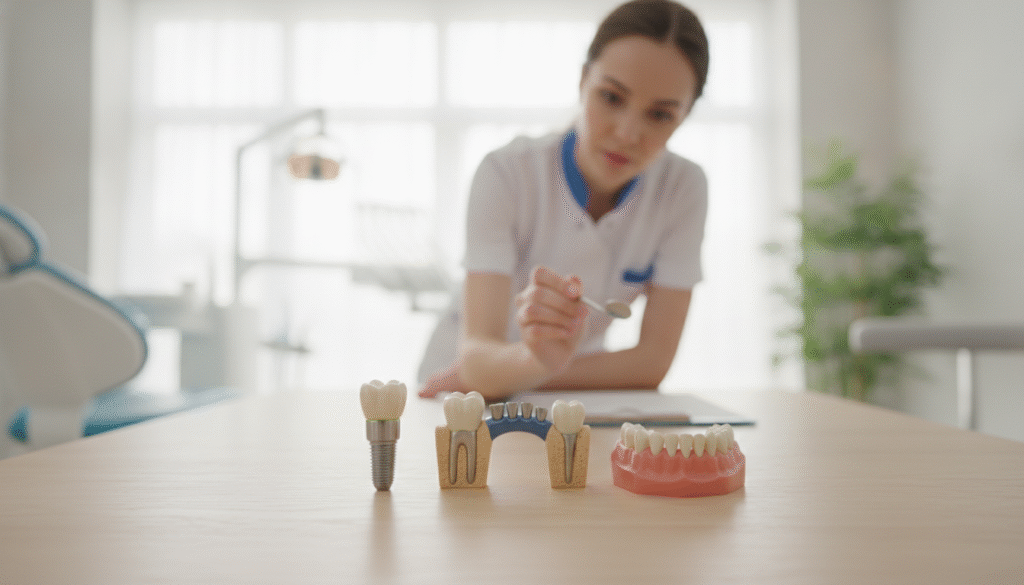
The main choices are implants, fixed bridges and removable dentures. An implant has a post in the jawbone, a connector called an abutment and a crown on top.
A bridge relies on the teeth beside the gap, and dentures sit on the gums and come out for cleaning. Implants usually look and feel the most natural. The table compares them.
| Feature | Dental Implants | Bridges | Dentures |
|---|---|---|---|
| Stability | High | Moderate | Low |
| Natural Appearance | Excellent | Good | Fair |
| Longevity | Long-term (10+ years) | 5-15 years | 3-10 years |
Whichever you choose, the details below decide how well it blends in.
What makes a replacement tooth look real?
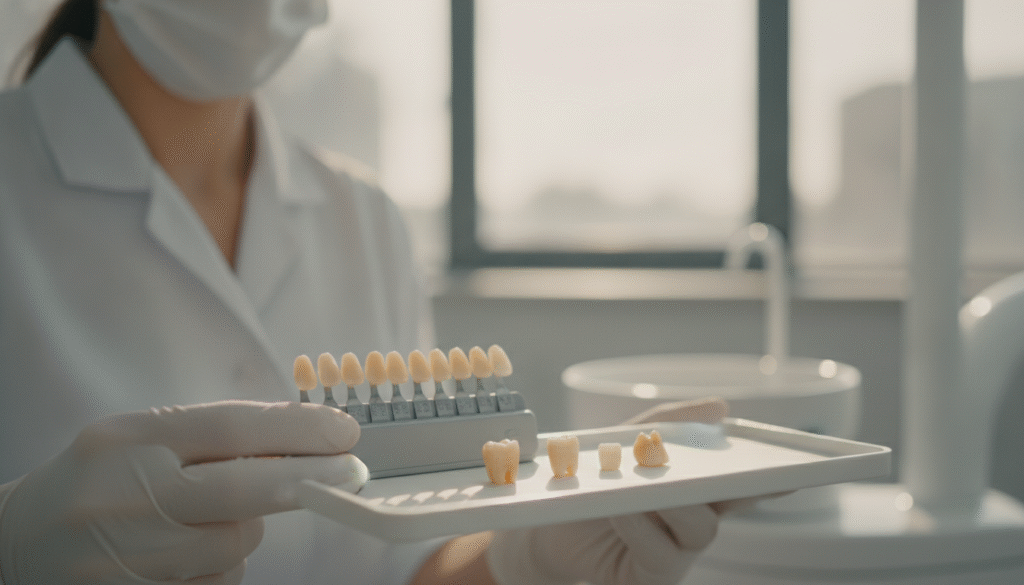
Color is the hardest part. A standard shade guide is a start, but front teeth usually need a detailed color map that shows how the shade, brightness and translucency change across the tooth.
Shape and size matter too. A tooth that’s slightly too big, too small or the wrong shape at the edge will stand out.
Porcelain and zirconia reflect light much like enamel. A skilled lab technician then adds texture and small color variations so the tooth doesn’t look flat.
The table sums up these factors.
| Factor | Description | Importance |
|---|---|---|
| Color Matching | Creating a detailed color map for accurate shade selection. | Ensures seamless integration with existing teeth. |
| Shape and Size | Careful consideration of contour and morphology. | Maintains aesthetic harmony and natural appearance. |
| Material Choice | Using high-quality porcelain or zirconia. | Mimics natural enamel for realism. |
How does technology help?
A cone beam CT scan and an intraoral scanner capture your mouth in detail, so the implant and crown can be planned digitally.
With CAD/CAM, the abutment and crown are designed and milled to fit precisely.
Newer ceramics like lithium disilicate and zirconia are strong and translucent, which helps them look like natural teeth.
What does your dentist do to get a match?
Materials only go so far. The dentist’s eye for color and shape makes the biggest difference, so it’s worth choosing someone experienced with front-tooth work.
Many dentists photograph your teeth with cross-polarized light to see the true color without glare, then check the crown with a try-in paste before cementing it. It can take more than one try-in to get it right. The table shows the main techniques.
| Technique | Description | Benefits |
|---|---|---|
| Shade Selection | Creating a color map for accurate matching | Ensures a natural appearance |
| Cross-Polarized Photography | Eliminates glare to reveal true color | Enhances accuracy in color matching |
| Try-In Appointments | Using temporary paste to check fit | Allows for adjustments before final cementation |
What should you expect?
Even the best crown won’t be identical to a natural tooth. It may reflect light a little differently up close, but in normal conversation it should blend in.
After the implant is placed, it takes a few months to fuse with the bone. Then the abutment and crown go on, and the gum around it often looks even more natural as it settles.
How do you keep it looking natural?
Porcelain and zirconia resist stains better than enamel, but coffee, red wine and tobacco can still dull them. Brush twice a day, floss around the implant and don’t use your teeth as tools. A night guard helps if you grind.
At checkups, your dentist checks the crown and the gum around it and cleans it without scratching the ceramic.
Will the metal show?
No. The post sits in the bone under the gum. Only the tooth-colored crown shows.
With good care, a crown can look great for years, though it may need replacing after 10 to 15 years because of wear or chipping.
If a neighboring natural tooth is chipped or a slightly different shape, teeth bonding can help even things out so everything matches.
How do you get started?
Talk to your dentist. Many offices can show you a digital preview of your new smile before anything is made.